



Cocaine vs methamphetamine are both powerful stimulants that flood the brain with dopamine, creating intense highs and driving rapid addiction. Yet these two drugs produce strikingly different experiences, long-term effects, and withdrawal patterns. Understanding how they differ is crucial for anyone struggling with stimulant addiction, their loved ones, or those trying to recognize when occasional use is becoming dangerous dependence.
Key differences between cocaine and methamphetamine
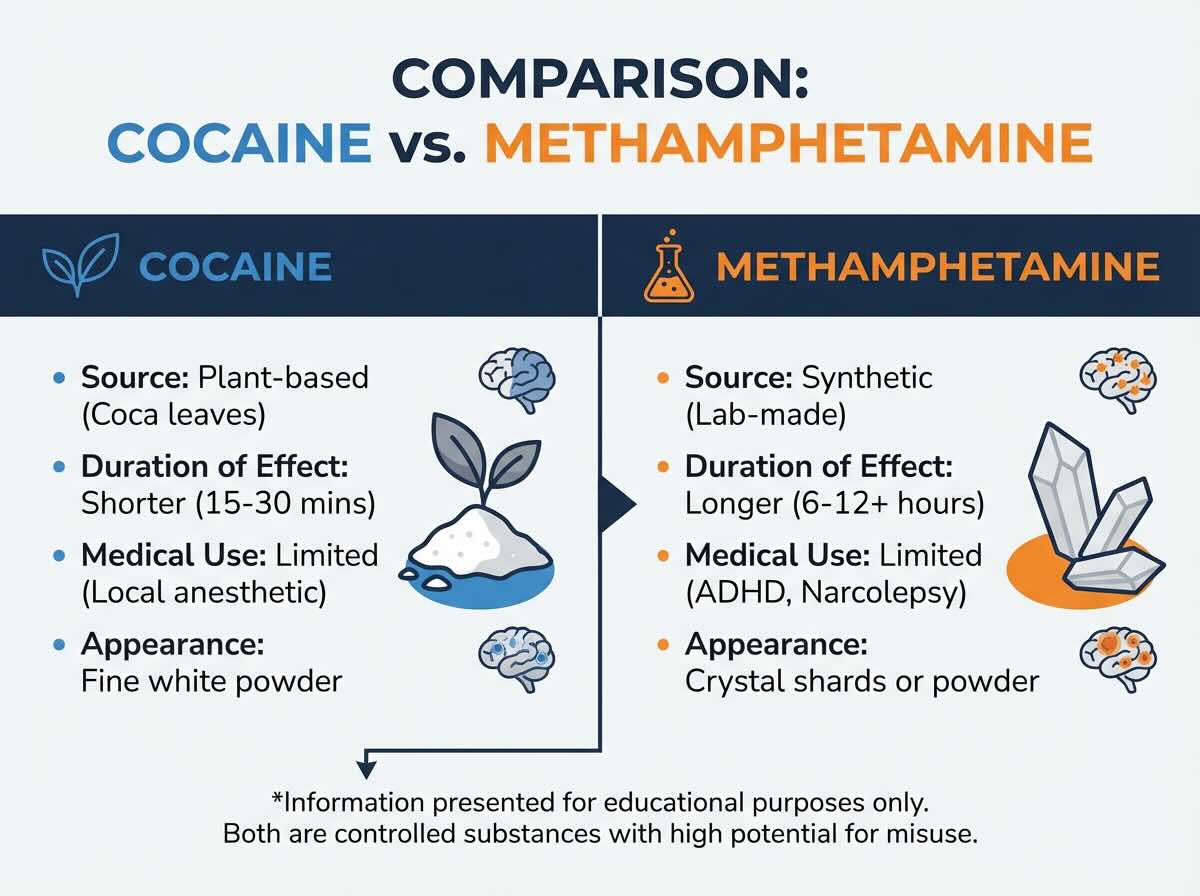
- Duration of high: Cocaine produces a high lasting 15 to 30 minutes when snorted, while methamphetamine can produce a high lasting 8 to 12 hours.
- Mechanism of action: According to research published in the European Journal of Pharmacology, methamphetamine directly releases dopamine in the brain and also metabolizes to d-amphetamine, which has a long half-life of 9 to 12 hours. Cocaine works by blocking the reuptake of dopamine, but does not create new dopamine.
- Brain activity patterns: Neuroimaging research from the National Center for Research Resources shows that cocaine causes increased BOLD signal (brain activity) in reward regions, while methamphetamine causes decreased BOLD signal in the same areas despite producing similar dopamine elevations.
- Withdrawal timeline: According to clinical research on psychostimulant withdrawal, cocaine withdrawal typically lasts a few days to a week, while methamphetamine withdrawal begins within 24 hours and can last 2 to 4 weeks or longer.
- Cardiovascular damage: A review published in the American Heart Association journal Circulation indicates that methamphetamine use is strongly linked to pulmonary hypertension and long-term cardiomyopathy, while cocaine carries higher immediate risk of heart attack in the first hour after use.
- Addiction severity: Research from the National Institute on Drug Abuse shows that methamphetamine tends to produce more severe psychological dependence and longer lasting cognitive impairment than cocaine.
- Typical use pattern: Because cocaine’s high is brief, users typically binge it in rapid succession (multiple doses within hours). Methamphetamine’s long duration leads to extended binges lasting days or weeks without sleep.
How cocaine and methamphetamine work in the brain
Both cocaine and methamphetamine produce their stimulant effects by increasing dopamine in the brain, but they accomplish this through fundamentally different mechanisms that explain many of their contrasting effects.
Cocaine works by blocking the reuptake of dopamine. Think of dopamine reuptake as the brain’s recycling system for dopamine after it has done its job. Cocaine prevents this recycling, leaving dopamine in the synapse longer and creating an intensely pleasurable feeling. However, because cocaine does not create new dopamine, once the drug is metabolized and cleared from the body, dopamine levels crash rapidly. This quick rise and fall is why cocaine users experience the intense high followed by an equally intense crash.
Methamphetamine works differently. According to research published in the European Journal of Pharmacology, methamphetamine directly triggers the release of dopamine in the nucleus accumbens and other reward centers. Additionally, methamphetamine metabolizes to d-amphetamine, which has a much longer half-life than methamphetamine itself, prolonging dopamine elevation in the brain. This sustained dopamine elevation explains why methamphetamine’s high lasts so much longer than cocaine’s.
Neuroimaging research from the National Center for Research Resources reveals another striking difference: when cocaine is present, brain regions involved in reward and addiction show increased neural activity (positive BOLD signal). When methamphetamine is present, those same regions show decreased neural activity (negative BOLD signal). This suggests that despite both drugs elevating dopamine, they affect the brain’s wiring and functioning in opposite directions.
Duration of the high and use patterns
The dramatic difference in how long cocaine and methamphetamine last profoundly shapes how people use them and the harm they cause.
Cocaine produces a high lasting approximately 15 to 30 minutes when snorted. Smoked or injected cocaine produces an even faster onset and quicker offset, often lasting only 5 to 15 minutes. This short window creates a powerful drive to use repeatedly. Users frequently take multiple doses in succession, a pattern called “binges,” consuming cocaine every 5 to 15 minutes throughout a session lasting hours.
Methamphetamine produces a high lasting 8 to 12 hours or longer, according to clinical literature on stimulant use patterns. Because the high persists so long, users do not feel compelled to redose as frequently. However, the extended stimulation prevents sleep, appetite suppression extends for hours, and the prolonged state of euphoria and heightened alertness often leads users to extend their use session to multiple days without stopping. Some users report “meth runs” lasting 3 to 5 days of continuous use without sleep.
This difference has major implications. The frequent redosing pattern of cocaine users creates acute cardiovascular strain during binges as the heart is bombarded with repeated stimulant doses. Methamphetamine’s extended high leads to severe dehydration, malnutrition, sleep deprivation, and sustained cardiovascular stress over prolonged periods.
Short-term effects: intoxication and immediate risks
When someone uses cocaine, the effects arrive within seconds to minutes and peak intensely. According to research in the journal Psychopharmacology, users experience a rush of energy, euphoria, increased alertness, and confidence. The cardiovascular effects are immediate: rapid heart rate, elevated blood pressure, and constricted blood vessels.
The danger during this window is acute: the combination of constricted blood vessels and elevated cardiac demand can trigger a heart attack even in young, healthy people with no prior heart disease. Research published in Circulation shows that the risk of myocardial infarction increases 24-fold in the hour after cocaine use. Seizures, strokes, and respiratory failure can also occur acutely.
Methamphetamine’s intoxication develops more gradually. The onset takes 5 to 30 minutes depending on route of use, and effects build over time rather than peaking suddenly. Users report euphoria, extreme confidence, hypersexuality, increased energy, and a sense of invincibility. They often experience rapid thoughts, increased talkativeness, and a decreased need for sleep. Methamphetamine users commonly engage in compulsive behaviors like repetitive cleaning, taking things apart and reassembling them, or other stereotyped movements.
The acute cardiovascular risks with methamphetamine are similar to cocaine (heart attack, stroke, arrhythmias), but the mechanism differs. According to research from the University of New South Wales, methamphetamine causes elevated catecholamine levels that trigger vessel spasm, narrow blood vessels, and stress the heart muscle. The risk of acute cardiac events persists longer than with cocaine because the drug remains in the system longer.
Stimulant Intoxication: Cocaine vs. Methamphetamine
Cocaine: The Sudden Surge
Onset: Seconds to minutes.
Key Effects: Rush of energy, intense euphoria, heightened confidence, and immediate alertness.
Acute Risks
24x Risk Increase
of myocardial infarction (heart attack) within the first hour of use, even in young, healthy users.
- Constricted blood vessels
- Acute respiratory failure
- Seizures & Strokes
Methamphetamine: The Gradual Burn
Onset: 5 to 30 minutes (building over time).
Key Effects: Hypersexuality, invincibility, compulsive behaviors (cleaning/disassembling), and rapid thoughts.
Acute Risks
Prolonged Cardiac Stress
High catecholamine levels trigger vessel spasms and heart muscle stress that last longer than cocaine.
- Extended vessel narrowing
- Heart arrhythmias
- Stereotyped movements
Physiological Mechanism
While both substances stress the cardiovascular system, the delivery of that stress differs. Cocaine’s danger lies in its sudden peak and massive spike in blood pressure. Methamphetamine’s danger lies in its persistence; because the drug remains in the system significantly longer, the heart and brain are subjected to elevated toxicity for hours rather than minutes.
Long-term effects and organ damage
Both cocaine and methamphetamine cause lasting damage to the heart, brain, and other organs, but the pattern and severity differ.
Cardiovascular damage. According to a comprehensive review in Circulation: Arrhythmia and Electrophysiology, cocaine users face high immediate risk of heart attack, heart failure, arrhythmias, and sudden cardiac death, particularly in the first hour after use. Cocaine-induced cardiomyopathy involves inflammation, scarring, and weakening of the heart muscle.
Methamphetamine causes a different cardiovascular profile. According to research from the University of New South Wales, long-term methamphetamine users face increased risk of cardiomyopathy (weakened heart muscle) that develops gradually over months or years of repeated use. Additionally, methamphetamine is uniquely linked to pulmonary hypertension (elevated pressure in lung blood vessels), a condition that cocaine does not typically cause. A study screening over 4,000 methamphetamine users showed that 18 percent had heart failure and over 10 percent had abnormal heart biomarkers.
Brain damage and cognitive impairment. Both drugs damage the brain, but research shows different patterns. According to the NIH’s Methamphetamine page, chronic methamphetamine use causes pronounced impairment in memory, attention, learning, and executive function. Some of these changes may be partially reversible with abstinence, but others persist. Brain imaging shows structural changes in the striatum and other reward areas.
Cocaine also causes memory deficits and impulsivity, but the degree of cognitive damage appears less severe than with methamphetamine, possibly because methamphetamine’s longer half-life and sustained dopamine elevation create more prolonged neurotoxic stress.
Psychiatric complications. Both drugs can trigger psychosis, paranoia, and mood disorders. Methamphetamine psychosis tends to be more severe and prolonged. According to the NIH, methamphetamine-induced psychosis can persist even after use stops, sometimes for months, whereas cocaine-induced psychosis typically resolves as the drug clears.
Physical deterioration. Methamphetamine is notorious for causing “meth mouth” (severe tooth decay) due to dehydration, acidic environment in the mouth, poor oral hygiene during binges, and grinding of teeth. Methamphetamine also causes severe weight loss, skin sores and infections (from repeated injection or compulsive skin picking), and nasal tissue destruction (if snorted). Cocaine causes nasal tissue damage and perforation but typically does not cause the same level of physical deterioration as methamphetamine.
Addiction severity and psychological dependence
Both cocaine and methamphetamine are highly addictive, but methamphetamine appears to create more severe psychological dependence and higher relapse rates.
According to clinical research on addiction trajectories, cocaine users often develop addiction quickly, but many can achieve abstinence with treatment. About 33 percent of people treated for cocaine addiction achieve sustained abstinence in the year following treatment.
Methamphetamine addiction appears more tenacious. Research shows that only 23 to 39 percent of people treated for methamphetamine addiction achieve sustained abstinence in the year following treatment. The reasons likely involve methamphetamine’s longer half-life, sustained dopamine elevation, greater neurological changes, and more severe protracted withdrawal.
Both drugs produce strong cravings triggered by environmental cues (places, people, or situations associated with use), but the strength and persistence of these cravings appears greater with methamphetamine.
Withdrawal: Timeline and Symptoms
While both substances are stimulants, their withdrawal profiles differ significantly in duration, physical intensity, and clinical management.
1 Cocaine Withdrawal
Primary Nature: Heavily Psychological
- Early Symptoms: Fatigue, irritability, and “anhedonia” (inability to feel pleasure).
- Peak Risk: Days 3 – 7, when cravings and depression are most intense.
- Physical Risk: Low; no dangerous physical complications like seizures.
2Methamphetamine Withdrawal
Primary Nature: Physical & Psychological
- Early Symptoms: The “Crash”, hypersomnia (excessive sleep), hallucinations, and paranoia.
- Peak Risk: Weeks 2 – 4, as cravings intensify once the initial exhaustion wears off.
- Physical Risk: Moderate; involves body aches, chills, and severe cardiac stress.
| Phase | Cocaine Timeline | Methamphetamine Timeline |
|---|---|---|
| Acute Phase | Hours to 7 days. | 1 to 14 days (includes the initial “Crash”). |
| Sub-Acute | Symptoms usually resolve within 1–2 weeks. | 2 to 4 weeks; anxiety and cognitive fog often worsen. |
| Protracted | Rarely experienced. | Can last months; lingering depression and sleep issues. |
Recognizing stimulant addiction
Cocaine and methamphetamine addiction often present with different visible signs that can help identify a problem.
Cocaine users frequently display nasal damage (nosebleeds, perforated septum if snorted), rapid mood swings, sudden anxiety or paranoia during use and depression during comedown, significant weight loss, and poor self-care during binges. The pattern is often episodic: intense binges followed by periods of relative normalcy.
Methamphetamine users typically show more severe and persistent physical deterioration: severe dental decay, premature aging of the skin, open sores or scabs (from skin picking or injection sites), extreme weight loss and malnutrition, and tremors or jerky movements. Sleep deprivation is visible (dark circles, extreme fatigue). The psychological signs are often more pronounced: intense paranoia, obsessive behaviors, and erratic aggression or violence.
Both groups often have difficulty maintaining employment, relationships, housing, and legal standing. Both may engage in illegal behavior to fund their use.
The key difference is that methamphetamine addiction typically causes more visible, profound changes to physical appearance and behavior over shorter time periods.
Cocaine vs. Methamphetamine: Key Differences
| Feature | Cocaine | Methamphetamine |
|---|---|---|
| Duration of High | Brief (15 – 30 minutes) | Long-lasting (8 – 12 hours) |
| Mechanism | Blocks dopamine reuptake. | Directly releases dopamine & metabolizes into d-amphetamine. |
| Brain Activity | Increased BOLD signal in reward regions. | Decreased BOLD signal in reward regions. |
| Withdrawal | Typically 3 days to 1 week. | 2 to 4 weeks (can be protracted for months). |
| Cardiac Risk | Acute risk of heart attack within 1 hour. | Pulmonary hypertension & chronic cardiomyopathy. |
| Use Pattern | Bingeing in rapid succession (hours). | Extended binges lasting days or weeks. |
*Data sources: NIDA, PubMed Central, AHA Journal Circulation.
Addiction Treatment Cocaine vs Meth
Because cocaine and methamphetamine withdrawal present different challenges, treatment approaches differ.
Cocaine addiction treatment focuses on psychological and behavioral components since physical withdrawal is not medically dangerous. Cognitive-behavioral therapy, motivational interviewing, contingency management (rewarding abstinence), and support groups form the cornerstone. Medications targeting depression or anxiety during early recovery can help. Many cocaine users can successfully detox in outpatient settings with intensive outpatient counseling.
Methamphetamine addiction treatment typically requires more intensive medical supervision, especially during the first week. Medical detox provides monitoring for severe depression or suicidal ideation, sleep support, and basic medical care during the crash phase. According to clinical protocols, medical detox for methamphetamine typically lasts 5 to 7 days, followed by residential addiction treatment to address the psychological and behavioral components. The extended protracted withdrawal phase means that ongoing mental health support, sometimes for months after detox, is often necessary.
Both cocaine and methamphetamine addiction benefit from residential treatment that addresses co-occurring mental health conditions (depression, anxiety, trauma, ADHD), builds coping skills, addresses relationship damage, and provides structure and peer support during the vulnerable early recovery period.
| Feature | Cocaine Treatment | Methamphetamine Treatment |
|---|---|---|
| Primary Focus | Psychological and behavioral components; physical withdrawal is rarely medically dangerous. | Intensive medical supervision and stabilization, especially during the “crash” phase. |
| Detox Setting | Often successful in outpatient settings with intensive counseling. | Inpatient medical detox (typically 5 – 7 days) to monitor for suicidal ideation. |
| Therapeutic Tools | CBT, Motivational Interviewing, and Contingency Management (rewards for abstinence). | Long-term residential treatment to address deep-seated behavioral changes. |
| Recovery Timeline | Focus on early recovery support and managing mood-related symptoms. | Extended support required for months to manage “protracted withdrawal.” |
Note: Both addictions benefit from comprehensive residential treatment that addresses co-occurring conditions like depression, anxiety, trauma, and ADHD.
Resources
- PubMed Central: Cocaine and methamphetamine induce opposing changes in brain activity
- Circulation: Arrhythmia and Electrophysiology: Stimulant Drugs of Abuse and Cardiac Arrhythmias
- PubMed Central: Clinical Management of Psychostimulant Withdrawal
- NIH StatPearls: Methamphetamine
- University of New South Wales: Cardiotoxicity Associated with Methamphetamine Use
- Canadian Journal of Cardiology: Drugs of Misuse and Vascular Dysfunction