

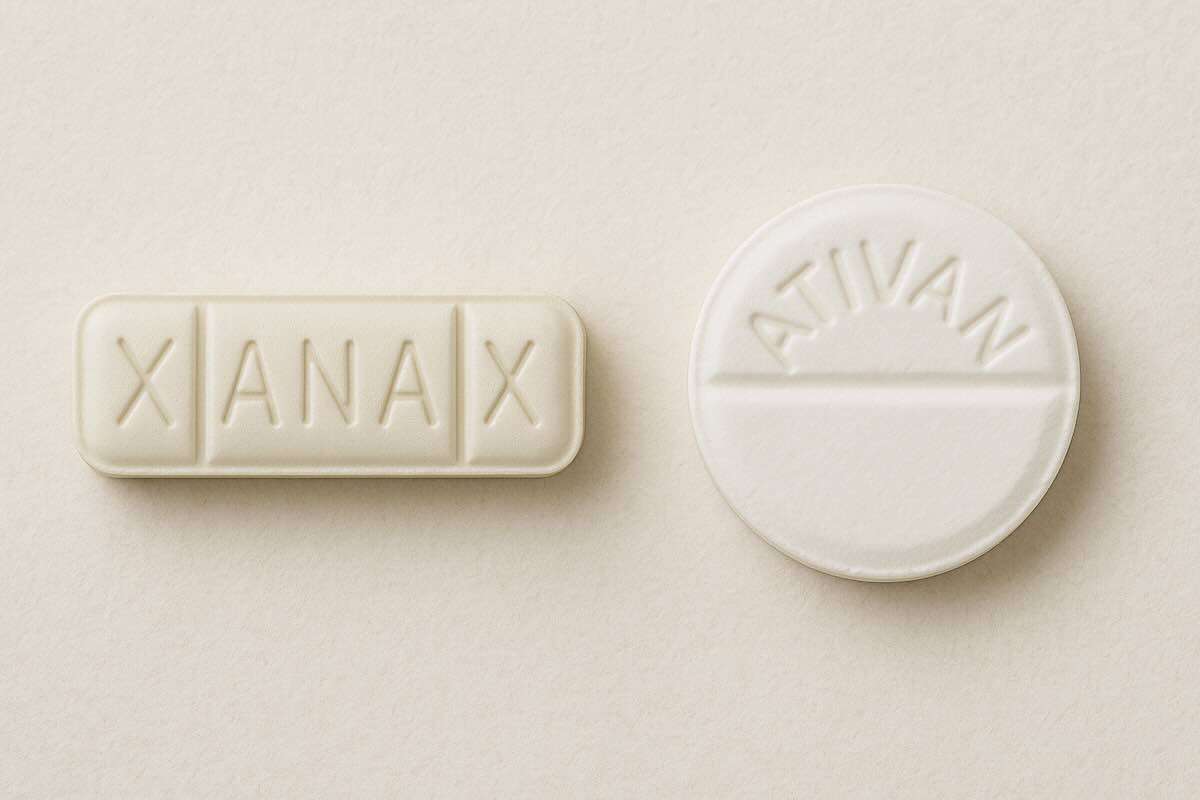
Xanax vs Ativan: Key Differences Between Two Common Benzodiazepines
Xanax (alprazolam) and Ativan (lorazepam) are both widely prescribed benzodiazepines used to manage anxiety disorders. Though they belong to the same drug class, their differences in onset, duration, metabolism, and clinical use guide treatment decisions, especially in patients with specific health concerns like liver conditions or age-related sensitivities.
Pharmacological Comparison
Xanax is known for its rapid onset of action, typically 15 to 30 minutes making it effective for acute anxiety or panic attacks. In contrast, Ativan takes 30 to 60 minutes to begin working but has a longer duration of action, lasting between 10 to 20 hours compared to Xanax’s 6 to 12 hours. This means Ativan may offer more consistent anxiety control throughout the day without the need for frequent dosing.
Another important distinction is how these drugs are metabolized. Ativan does not rely on liver enzymes for metabolism, making it a safer choice for elderly patients or those with compromised liver function[1].
Dosing Guidelines
Standard initial dosing for Xanax is typically 0.25 to 0.5 mg taken three times daily. Ativan dosing is more flexible, adjusted based on response, but often capped at 4 mg per day for anxiety or agitation[2].
Dependence and Withdrawal Risk
Both Xanax and Ativan carry a risk of dependence, especially when used long-term. However, Xanax’s shorter half-life may increase the likelihood of severe withdrawal symptoms when the medication is discontinued abruptly[1].
Clinical Efficacy in Anxiety Disorders
A comparative study published in 1989 found both medications effective in treating panic disorder, though higher doses were necessary compared to their use in generalized anxiety disorder[3]. Xanax is generally considered more potent and fast-acting, while Ativan provides stronger sedative effects and may be more effective in managing sleep-related symptoms.
Additional Uses and Considerations
Both medications are used to manage a range of anxiety conditions, including generalized anxiety disorder, panic disorder, and insomnia. Ativan’s sedative profile makes it a more frequent choice for sleep disturbances. Xanax, meanwhile, is sometimes prescribed off-label for depression and social anxiety.
A 2021 review in the Annals of Clinical Psychiatry noted that SSRIs and benzodiazepines are both effective for panic disorder, but SSRIs are typically preferred for long-term treatment due to their safety profile[4].
Limitations of Benzodiazepines
Despite their efficacy, benzodiazepines have notable limitations. A 2008 review from The Mount Sinai Journal of Medicine emphasized their lack of antidepressant properties and potential for misuse[5]. For long-term anxiety management, SSRIs and SNRIs are commonly considered first-line treatments.
Key Points to Consider
- Clonazepam is a high-potency benzodiazepine that can be effective in treating anxiety disorders, but it may cause physical dependence, withdrawal, and sedation[6].
- The use of clonazepam should be limited to the acute treatment of anxiety disorders, and the dosage should be tapered off gradually to avoid withdrawal symptoms[6], [5].
- Clonazepam may not be effective as monotherapy in treating obsessive-compulsive disorder (OCD), but its effectiveness in specific subgroups of OCD patients with co-morbid anxiety disorders or as an augmentation strategy added to SSRIs remains to be determined[7].
Modern Treatment Trends
A 2021 meta-analysis in PLoS Medicine confirmed that SSRIs and SNRIs show similar efficacy in treating anxiety, obsessive-compulsive, and stress-related disorders, with improved patient adherence[6]. Additionally, a 2022 study in the Journal of Affective Disorders demonstrated that combining SSRIs with cognitive behavioral therapy (CBT) produced better outcomes in adolescents compared to SSRI monotherapy, particularly in those with milder symptoms[7].
References
- Official FDA Drug Label for Clonazepam (PO)– FDA, 2025
- Treatment of panic disorder and agoraphobia with clonazepam.– The Journal of Clinical Psychiatry, 1986
- Clonazepam as a therapeutic adjunct to improve the management of depression: a brief review.– Human Psychopharmacology, 2009
- Tapering clonazepam in patients with panic disorder after at least 3 years of treatment.– Journal of Clinical Psychopharmacology
- Treatment strategies in anxiety disorders – an update.– Therapeutische Umschau, 2009
- A double-blind, placebo-controlled trial of clonazepam in obsessive-compulsive disorder.– The World Journal of Biological Psychiatry, 2003