
DMT, short for N,N-Dimethyltryptamine, is a powerful hallucinogenic drug that produces some of the most intense and disorienting altered states of consciousness known to exist. Unlike many other drugs of abuse, DMT creates experiences so profound and bizarre that users often describe them as stepping into an entirely different reality, complete with geometric patterns, entity encounters, and a complete dissolution of the self and the world as they know it. For some, this is an attraction; for others, it becomes a terrifying descent into a psychological state that can trigger lasting trauma, psychosis, or medical emergencies.
Key facts about DMT
- An extremely potent hallucinogen: DMT is far more intense than LSD or psilocybin; it completely rewires how the brain perceives reality in minutes, producing profound hallucinations and ego dissolution.
- Found in nature and made in labs: DMT occurs naturally in trace amounts in some plants and animals, but the drug is typically synthesized in illegal labs and sold as crystals or liquid.
- Acts on serotonin receptors: DMT primarily activates the 5-HT2A receptor in the brain, the same target as LSD and psilocybin, but it also interacts with additional brain systems in ways that make its effects uniquely intense.
- Extremely fast onset and offset: When smoked or injected, effects begin within seconds and peak within minutes; most effects subside within 15–30 minutes.
- Routes of use: People typically smoke DMT crystal, inject it intravenously, drink it in ayahuasca brew (a South American plant preparation), or snort it as powder.
- Produces entity encounters and hyperspace imagery: Users commonly report encountering intelligent beings, traveling through geometric dimensions, or experiencing a complete separation from self and body.
- Can trigger severe psychological crises: Intense panic, paranoia, psychosis, violent behavior, and suicidal thoughts have been documented, especially in vulnerable individuals or during chaotic use.
- Cardiovascular and respiratory risks: DMT raises heart rate and blood pressure; cardiac arrest and respiratory arrest have been reported, particularly at high doses or in people with heart conditions.
- Serotonin syndrome when combined with other drugs: Mixing DMT with antidepressants, MDMA, or other serotonergic substances can trigger a life-threatening condition marked by agitation, hyperthermia, and seizures.
- Potential for persisting psychological effects: Some users report long-lasting flashbacks, anxiety, depersonalization, or even persistent psychosis long after a single use.
- Schedule I controlled substance in the U.S.: DMT has been federally illegal since 1971; possession is a felony, though the DEA is now funding research into its potential therapeutic uses for depression and PTSD.
- Often contaminated with unknown substances: Street DMT may contain fentanyl, heroin, or other adulterants, dramatically increasing overdose risk and unpredictability.
What DMT is and where it comes from
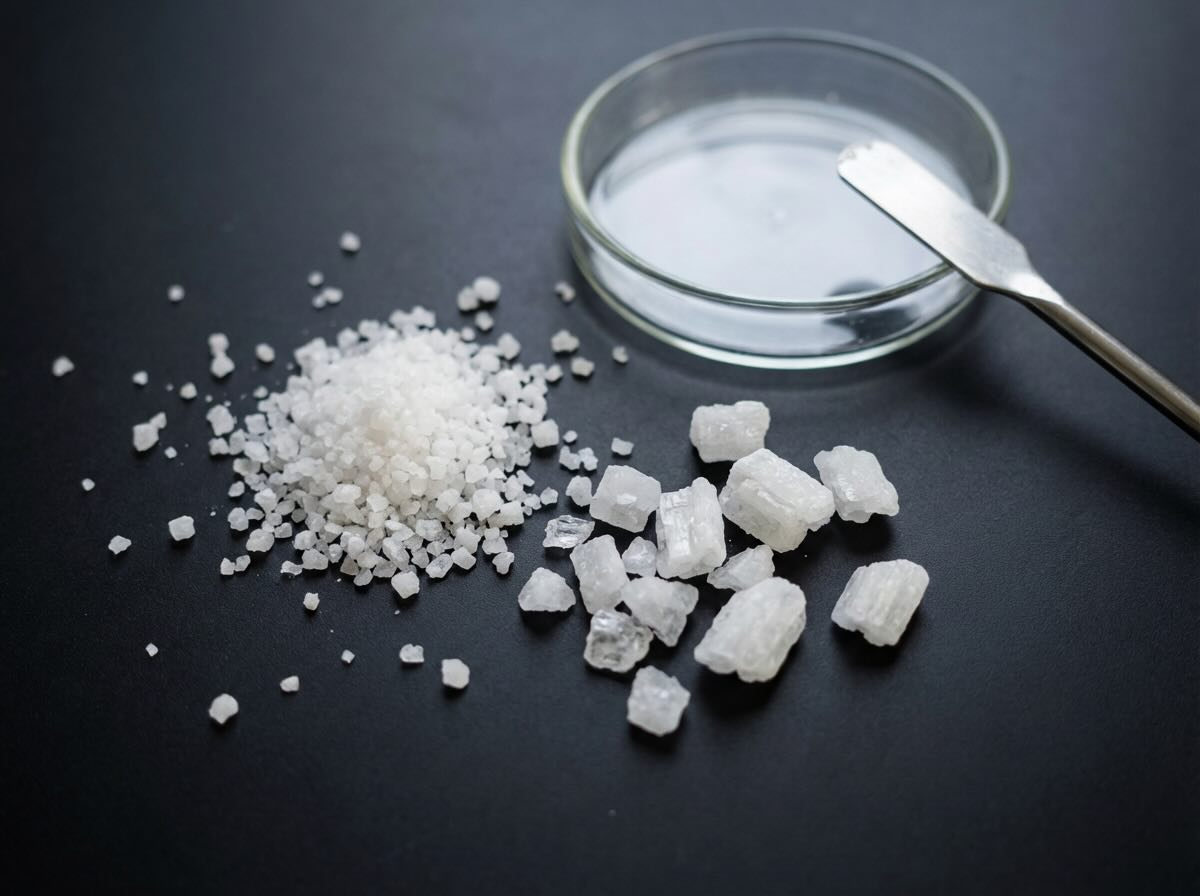
DMT (N,N-Dimethyltryptamine) is a naturally occurring alkaloid found in trace amounts in some plants, animals, and even the human brain, though in quantities that have no psychoactive effect. However, the DMT that people use as a drug is almost always synthesized in illegally and appears as white, yellow, or off-white crystals that can be smoked, or as a clear or brownish liquid that can be injected or consumed in ayahuasca brew.
DMT gained popularity as a recreational hallucinogen in the 1960s and was made a Schedule I controlled substance in 1971, the same year the Controlled Substances Act was enacted. Today, it is encountered on illicit markets across all 50 U.S. states and is often sold alongside other hallucinogens and research chemicals.
The appeal of DMT lies partly in its brevity, the entire experience lasts roughly 15 to 30 minutes when smoked and partly in the intensity and alien quality of the hallucinations it produces. Street names include “The Spirit Molecule,” “The Businessman’s Trip,” and “Dimitri,” reflecting the mythology that has grown around it among recreational users online.
What does DMT smell and taste like?
DMT is notorious for its distinct and often off-putting odor, which many users compare to the smell of burnt plastic, mothballs, or “new sneakers.” This chemical scent is heavy and pervasive, often lingering in a room long after the drug has been used. When smoked or vaped, the taste is equally harsh and metallic; it is frequently described as acrid and “plastic-like,” often causing immediate coughing or a numbing sensation in the back of the throat upon inhalation.
How do people abuse DMT?
Because DMT is not active when swallowed alone (stomach enzymes break it down before it reaches the bloodstream), users have developed several ways to bypass the digestive system. The most common method of abuse is smoking or “freebasing” the crystal form using a glass pipe. It is also increasingly common for DMT to be dissolved into e-liquid and used in DMT vape pens, which allow for rapid, discrete consumption that can lead to dangerously high doses.
In other settings, DMT is injected intravenously for an instantaneous and total loss of consciousness, or snorted as a powder, though the latter is reported to be extremely painful. When consumed as Ayahuasca, the drug is brewed with a secondary plant containing MAOIs, which prevents the stomach from breaking the DMT down, resulting in an experience that lasts for several hours rather than minutes.
Each of these methods carries a high risk of “ego death” and profound psychological disorientation.
How DMT affects the brain
DMT works primarily by activating the 5-HT2A serotonin receptor, the same target as LSD and psilocybin. However, unlike those classical psychedelics, DMT also interacts with sigma-1 receptors, TAAR1 receptors, and directly affects dopamine, norepinephrine, and cholinergic systems, a complex pharmacological profile that may explain why its effects are so distinct and intense.
Brain imaging studies using EEG and fMRI during controlled research settings show that DMT causes a dramatic collapse of normal brain networks. The boundaries between distinct brain regions that normally operate independently blur and merge into what researchers call “global functional connectivity.” This means the entire brain is communicating and firing in synchrony in ways it normally never does, which correlates with the reports of profound altered consciousness and complete loss of the sense of self.
The visual cortex becomes hyperactive despite the user’s eyes being closed, creating vivid hallucinations as if they were actually seeing something. The default mode network (involved in self-referential thinking and introspection) becomes severely dysregulated, explaining why users feel a complete separation from their identity.
This is not a subtle shift in perception like cannabis or a gentle expansion of thought like a low dose of LSD, this is a wholesale rewiring of brain function that happens in seconds.
The DMT experience: hyperspace, entities, and ego death
The subjective experience of DMT is almost impossible to describe in words, which is one reason users return to it repeatedly and why the community around it has developed an almost cultlike mystique. Most descriptions include the following elements:
- Initial rush (0 – 2 minutes): Rapid heart rate, shortness of breath, body vibrations, tingling, or a sensation of electricity running through the body.
- Onset of hallucinations (1 – 5 minutes): Geometric patterns, fractals, and colors that seem impossible to exist in normal reality. Users often describe seeing intricate tessellations, spirals, or kaleidoscopic tunnels.
- Entity encounters (peak experience, 5 – 15 minutes): A common and deeply significant feature of the DMT experience is the encounter with perceived “beings” entities that users describe as conscious, intelligent, sometimes benevolent and sometimes menacing. These are reported so consistently that they have become central to DMT lore online. Users may feel they are communicating with these entities, receiving information, or being shown secrets about the nature of reality.
- Ego dissolution: A profound sense of the self dissolving entirely users lose awareness of their body, their name, their life, and any sense of human identity. Some report feeling they are “pure consciousness” or “everywhere and nowhere at once.”
- Peak intensity (10 – 20 minutes): The full sensory and emotional payload of the drug, in which visual hallucinations, entity contact, and ego dissolution occur simultaneously in ways that feel completely real.
- Return to baseline (15 – 30 minutes): Effects gradually subside, and users slowly re-anchor to physical reality. Many report confusion, awe, and a feeling of having experienced something profound and life-changing.
For some users, especially those with a spiritual or esoteric interest, these experiences feel transcendent and meaningful. For others, they are terrifying.
The dark side: panic, psychosis, and psychological trauma
While some people seek out DMT for its reported spiritual or consciousness-expanding properties, the drug carries serious psychiatric risks that are not always acknowledged in recreational communities online.
Because DMT creates such a complete and rapid alteration of consciousness, people who are vulnerable to mental health problems or who take it in an unsafe setting can experience a psychological breakdown rather than a transcendent experience. High doses, rapid onset, and the unpredictability of the experience can trigger:
- Intense panic and fear: A sense of losing your mind or dying; feeling trapped in a nightmare you cannot wake from.
- Paranoia and persecution: Belief that entities or forces are attacking you or trying to harm you.
- Acute psychosis: Hallucinations, delusions, confused thinking, and loss of touch with reality that may persist for hours or days after the drug’s effects should have worn off.
- Violent or self-harming behavior: Because the user is completely disoriented and may not recognize their surroundings, they can unintentionally hurt themselves or others, jumping out windows, running into traffic, or attacking people nearby.
- Suicidal ideation: The intensity of a bad trip, combined with complete ego dissolution, can trigger suicidal thoughts during or immediately after use.
- Persistent flashbacks and trauma: Some users report episodes days or weeks after use in which the intense sensations or emotions of the trip resurface involuntarily, creating anxiety or PTSD-like symptoms.
People at higher risk of these severe outcomes include those with a personal or family history of psychosis, schizophrenia, bipolar disorder, or untreated anxiety; those currently depressed or in a vulnerable psychological state; and those using DMT in chaotic, unsupervised, or threatening environments.
The rising danger of DMT vape pens
In recent years, the illicit market has seen a surge in “DMT pens” vape cartridges containing DMT dissolved in e-liquid. While marketed as a more convenient or “controlled” way to use the drug, these devices introduce a unique set of hazards. Because vaping allows for rapid, repeated hits, users can easily ingest far more DMT than intended, leading to “white-outs” or overwhelming psychological crises that occur before the person even has time to put the pen down.
Beyond the drug itself, DMT vape pens often contain harmful thinning agents, Vitamin E acetate, or synthetic flavors that can cause acute lung injury. Furthermore, because these cartridges are produced in unregulated labs, they are frequently cross-contaminated with other dangerous substances, including synthetic cannabinoids or fentanyl. The discreet nature of these pens also increases the likelihood of accidental ingestion by others or use in unsafe environments where the sudden onset of effects can lead to physical injury.
For a deeper look at the specific health implications, chemical additives, and the long-term consequences of using these devices, you can read this extensive article on DMT vape pen uses and risks.
Physical and cardiovascular risks
While DMT is sometimes described as having “low overdose potential” compared to opioids or stimulants, this is misleading. DMT does cause significant physiological stress, particularly to the cardiovascular system.
Documented acute physical effects include elevated heart rate (sometimes exceeding 120 – 140 beats per minute), elevated blood pressure, rapid breathing, dilated pupils, muscle tension, and increased body temperature. For someone with undiagnosed heart disease, arrhythmias, high blood pressure, or other cardiovascular vulnerabilities, these changes can precipitate a cardiac event.
Medical case reports and DEA information describe instances of cardiac arrest and respiratory arrest following DMT use, particularly at high doses or in combination with other substances. While a fatal overdose from DMT alone is rare, it is not impossible, and the combination of severe psychological distress, the user’s disorientation, and cardiovascular strain creates multiple pathways to a medical emergency.
Seizures, though uncommon, have also been documented, particularly in people with seizure disorders or when DMT is combined with other substances.
Dangerous drug combinations and contamination
The dangers of DMT multiply significantly when combined with other substances. Some of the most hazardous interactions include:
- Monoamine oxidase inhibitors (MAOIs): When DMT is consumed in ayahuasca brew, the preparation typically contains MAOI plants. These dramatically slow the metabolism of DMT, extending and intensifying the experience and dramatically increasing the risk of serotonin syndrome, a potentially fatal condition characterized by extreme agitation, hyperthermia (dangerously high body temperature), rapid heart rate, seizures, and organ failure.
- Antidepressants (SSRIs, SNRIs): Combining DMT with serotonergic psychiatric medications can trigger serotonin syndrome.
- MDMA (ecstasy): Both drugs affect serotonin; combining dmt with mdma dramatically increases the risk of serotonin syndrome and cardiovascular collapse.
- Other psychedelics: Combining DMT with LSD, psilocybin, or other hallucinogens can amplify psychological risks and create unpredictable reactions.
- Stimulants (cocaine, methamphetamine): Combined cardiovascular stress can trigger cardiac events.
- Opioids: Heroin, fentanyl, or other opioids mixed into street DMT dramatically increase overdose risk, respiratory depression, and death.
A critical and often overlooked danger is contamination. Street DMT is frequently adulterated with fentanyl, heroin, synthetic cathinones, or other dangerous substances. Users have no way of knowing what is actually in their product, making every use a game of chance.
Long-term psychological effects and persistent changes
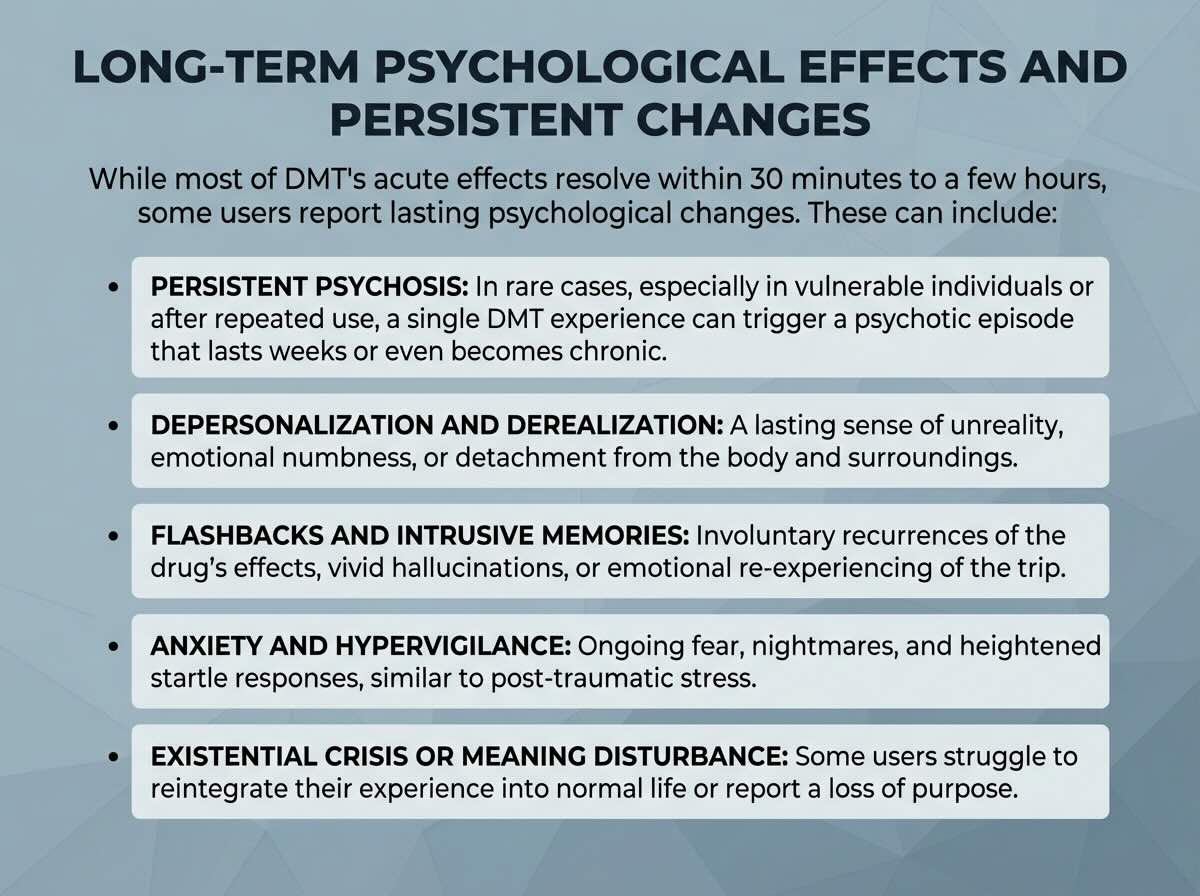
While most of DMT’s acute effects resolve within 30 minutes to a few hours, some users report lasting psychological changes. These can include:
- Persistent psychosis: In rare cases, especially in vulnerable individuals or after repeated use, a single DMT experience can trigger a psychotic episode that lasts weeks or even becomes chronic.
- Depersonalization and derealization: A lasting sense of unreality, emotional numbness, or detachment from the body and surroundings.
- Flashbacks and intrusive memories: Involuntary recurrences of the drug’s effects, vivid hallucinations, or emotional re-experiencing of the trip.
- Anxiety and hypervigilance: Ongoing fear, nightmares, and heightened startle responses, similar to post-traumatic stress.
- Existential crisis or meaning disturbance: Some users struggle to reintegrate their experience into normal life or report a loss of purpose and motivation.
- Coma or death in severe cases: While rare, prolonged or heavy use has been documented in association with coma and fatality.
The brain mechanisms behind these persistent effects are not fully understood, but they appear to involve lasting changes in neural connectivity and serotonin regulation.
Is DMT addictive?
DMT is not considered physiologically addictive in the way opioids or alcohol are, there is no classic physical withdrawal syndrome when someone stops using it. However, DMT can become psychologically compulsive, particularly in users who interpret their experiences as spiritually significant or who become obsessed with chasing increasingly intense or “breakthrough” doses.
Some users develop a pattern of frequent use, binge sessions, or escalation to IV administration to intensify the experience. This is driven by the profound nature of the experiences and the psychological reinforcement they provide, rather than physical dependence. For vulnerable individuals or those with addictive personality traits, this psychological pull can be powerful and difficult to resist.
Legal status and ongoing research
DMT has been a Schedule I controlled substance under U.S. federal law since 1971, meaning it is illegal to manufacture, distribute, or possess without federal research authorization. Possession is a felony.
However, there is a notable exception: the União do Vegetal (UDV), a Brazilian religious sect, was granted a legal exemption to use ayahuasca (which contains DMT) in their religious ceremonies, based on First Amendment protections. Outside this narrow exemption, DMT use and possession is illegal throughout the United States.
Notably, as of 2026, the DEA has significantly increased its production quotas for DMT for legitimate research purposes, raising the allowed amount from 20,000 grams in 2025 to 25,000 grams in 2026. This reflects growing federal recognition that DMT may have therapeutic potential for treatment-resistant depression and PTSD, similar to other psychedelics undergoing clinical trials.
However, this research is conducted only in controlled, clinical settings under strict oversight, not on the street.
References
- Hallucinogens: DrugFacts (overview of classic psychedelics, risks, and physiology) National Institute on Drug Abuse.
- DMT Fact Sheet (control status and risks) U.S. Drug Enforcement Administration.
- MAOI safety (drug–drug and food interactions) DailyMed (general MAOI labeling summaries).
- Ayahuasca, DMT and psychopharmacology: a review Frontiers in Pharmacology.
- Polysubstance use risks U.S. CDC.
- National Helpline SAMHSA (support resources).