

A DMT pen is a battery-powered vaporizer loaded with N,N-dimethyltryptamine (DMT), a DEA Schedule I hallucinogen that produces one of the most intense short-acting psychedelic experiences of any known substance. Also called a DMT vape, DMT cart, or DMT cartridge, the device heats a liquid DMT solution to produce inhalable vapor, delivering effects within seconds.
DMT is a naturally occurring tryptamine compound found in certain plants and produced in trace amounts by the human body. The vape pen format has made it more accessible than traditional smoking or ayahuasca ceremonies. Possessing a DMT pen is a federal criminal offense in the United States regardless of state law.
Key Takeaways
- A DMT pen delivers N,N-dimethyltryptamine through vaporization, producing hallucinogenic effects within 10 to 15 seconds of the first inhale.
- DMT is classified as a DEA Schedule I controlled substance under the Controlled Substances Act of 1970; possessing a DMT vape pen constitutes a federal criminal offense in all 50 states.
- According to the National Institute on Drug Abuse, approximately 2.6 million Americans reported hallucinogen use including DMT in 2021, reflecting a significant rise from prior years.
- DMT vape pen effects last 5 to 30 minutes, but hallucinogen persisting perception disorder (HPPD) can produce persistent visual disturbances lasting weeks, months, or years after use.
- Unregulated DMT cartridges purchased from unlicensed sources cannot be verified for purity or accurate dosing, increasing unknown contamination risk.
What Is a DMT Pen?
A DMT pen is a portable electronic device that vaporizes N,N-dimethyltryptamine for inhalation, functioning identically to commercial nicotine or cannabis vape devices in external appearance but containing a federally controlled Schedule I psychedelic compound.
What Is a DMT Cart?
A DMT cart (short for DMT cartridge) is the removable component of a DMT vape pen that holds the DMT solution. The cartridge contains DMT extracted from plants such as Psychotria viridis or Mimosa hostilis and dissolved into a solvent base, typically propylene glycol or vegetable glycerin. When attached to a battery-powered heating element, the DMT cart vaporizes at approximately 400°F (204°C) for inhalation.
DMT carts are sold exclusively through illegal unregulated channels. No licensed US pharmacy or dispensary carries DMT cartridges, no FDA-approved DMT cart product exists, and buyers cannot verify actual DMT content, solvent safety, or the absence of adulterants in any purchased cart.
DMT Pen vs. Smoking DMT: Key Differences
DMT vape pens replaced traditional glass pipe smoking as the dominant consumption method because vaporization lowers the temperature threshold required to activate the compound. Smoking freebase DMT requires temperatures approaching 1,500°F, which destroys a significant portion of the active compound through combustion. A DMT vape pen operating at 400°F preserves more N,N-dimethyltryptamine and reduces inhalation harshness.
The critical behavioral difference is accessibility. DMT pens require no torch, no glass pipe, and no technical preparation skill, which directly increases the frequency of exposure and the risk of compulsive re-dosing patterns.
What Is a 5-MeO-DMT Vape Pen?
A 5-MeO-DMT vape pen contains 5-methoxy-N,N-dimethyltryptamine, a structurally related but pharmacologically distinct tryptamine compound. Its effects are reported as significantly more intense than N,N-DMT and are characterized by complete ego dissolution and total loss of body awareness rather than the complex visual hallucinations associated with N,N-DMT. 5-MeO-DMT occurs naturally in the Bufo alvarius toad and in several plant species and is also produced synthetically.
Like N,N-DMT, 5-MeO-DMT is a DEA Schedule I controlled substance. Possessing a 5-MeO-DMT vape pen carries identical federal criminal penalties to any other form of DMT possession.
How a DMT Vape Pen Works in the Brain and Body
DMT vape pens produce their effects by delivering N,N-dimethyltryptamine to the brain within seconds of inhalation, where it acts as a potent agonist at serotonin 5-HT2A receptors concentrated in the prefrontal cortex and sensory processing regions. This 5-HT2A receptor activation disrupts default mode network activity, producing the profound perceptual distortions and ego dissolution characteristic of the DMT experience.
Research indicates DMT also binds to sigma-1 receptors, which are implicated in both neuroprotective and hallucinogenic mechanisms. The clinical significance of this sigma-1 receptor binding remains under active investigation. Both DMT and MDMA exert primary effects through serotonergic pathways, though DMT’s concentrated 5-HT2A agonism generates a fundamentally different and more rapid experiential profile.
As an endogenous trace amine, N,N-dimethyltryptamine is produced in small amounts by the human body, including the pineal gland. Physiological concentrations do not produce psychedelic effects. The concentrations delivered by a single DMT pen inhalation exceed endogenous production levels by several orders of magnitude, triggering the receptor activation responsible for the hallucinogenic experience.
DMT Vape Pen Effects: Onset, Peak, and Duration
DMT vape pen effects begin within 10 to 15 seconds of the first inhalation, reach their peak at 2 to 5 minutes, and fully resolve within 5 to 30 minutes, making DMT one of the shortest-acting psychedelics known.
The DMT Vape Experience Timeline
The effects of a DMT pen session follow a predictable three-phase pattern based on the pharmacokinetics of inhaled N,N-dimethyltryptamine:
The three phases of the DMT vape experience are:
- Onset (0 to 60 seconds): Rushing auditory distortions, rapid onset visual field changes, elevated heart rate, strong physical pressure sensation, and progressive disorientation from the surrounding environment
- Peak (2 to 5 minutes): Fully immersive hallucinogenic state with complex geometric visuals, perceived contact with autonomous entities, ego dissolution, and complete disconnection from physical surroundings; the user cannot communicate, respond, or safely navigate their environment during this phase
- Resolution (10 to 30 minutes): Gradual return of body awareness, fading visual distortions, and emotional processing; residual altered perceptions and emotional intensity can persist for up to one hour
Psychological Effects
N,N-dimethyltryptamine produces psychological effects ranging from profound subjective meaning to acute terror within the same dose range, depending on individual neurobiological sensitivity, mental health history, and environmental context. Common reported experiences include three-dimensional geometric hallucinations, perceived non-human entity contact, radical time distortion, out-of-body sensations, and states described as either transcendent or catastrophic.
The same dose can produce opposite psychological outcomes in the same individual on different occasions. Unpredictability of response is a documented feature of 5-HT2A receptor agonist psychedelics, not an exception.
Physical Effects
Inhaled N,N-dimethyltryptamine elevates heart rate and blood pressure within the first minute of onset, posing specific danger to individuals with undiagnosed or existing cardiovascular conditions.
The physical effects of DMT vaporization include:
- Cardiovascular effects: Rapid heart rate increase, blood pressure elevation, potential arrhythmia risk in susceptible individuals, and chest tightness during peak effects
- Neurological effects: Involuntary muscle tension, nausea, dizziness, and in high doses or re-dosing scenarios, seizure activity
- Respiratory effects: Temporary reduction in breathing rate during peak; potential lung irritation from inhaled solvents including propylene glycol and vegetable glycerin in unregulated carts
Is a DMT Pen Legal?
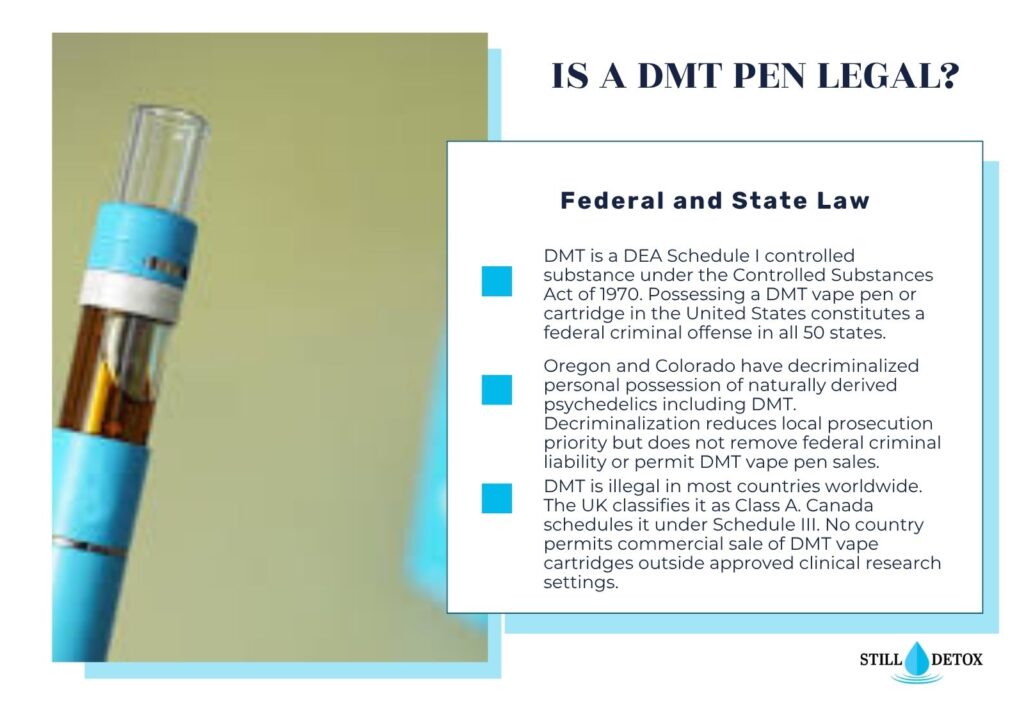
DMT pens are illegal under federal law in the United States, where N,N-dimethyltryptamine is classified as a Schedule I controlled substance with no currently accepted medical use and a high potential for abuse.
DMT Vape Pen Legal Status Under Federal Law
The Drug Enforcement Administration classifies DMT under Schedule I of the Controlled Substances Act of 1970, alongside heroin, LSD, and psilocybin. Schedule I classification prohibits possession, manufacture, distribution, and sale in any form. A DMT vape pen, vape cartridge, or any DMT cart containing the compound constitutes illegal Schedule I possession and is prosecuted identically to any other form of DMT.
Federal penalties for first-offense Schedule I possession include up to one year imprisonment and fines starting at $1,000. Distribution charges carry significantly higher penalties, including mandatory minimum sentences. The discreet appearance of DMT vape pens provides no legal protection. Individuals exploring recovery options can review substance abuse treatment resources at Still Detox.
State Decriminalization: Oregon, Colorado, and Others
Several US jurisdictions have moved toward decriminalization of naturally derived psychedelics including DMT. Oakland, California decriminalized naturally occurring plant-based psychedelics in 2019. Oregon’s Measure 110 and Colorado’s Proposition 122 (2022) both decriminalized adult personal possession of certain natural psychedelics including DMT.
Decriminalization means local law enforcement deprioritizes prosecution of personal possession. It does not make DMT legal, does not permit sale or manufacture of DMT vape pens, and does not eliminate federal criminal exposure. Federal law supersedes state decriminalization measures whenever federal prosecution is pursued.
International Legal Status of DMT Vapes
DMT is a controlled substance in most countries. The United Kingdom classifies it as a Class A drug. Canada schedules it under Schedule III with religious exemptions for certain ayahuasca ceremonies. Australia, New Zealand, Russia, and most of the European Union prohibit possession and distribution entirely.
No country permits the legal commercial sale of DMT vape cartridges outside of approved clinical research settings.
How Long Does DMT Stay in Your System?
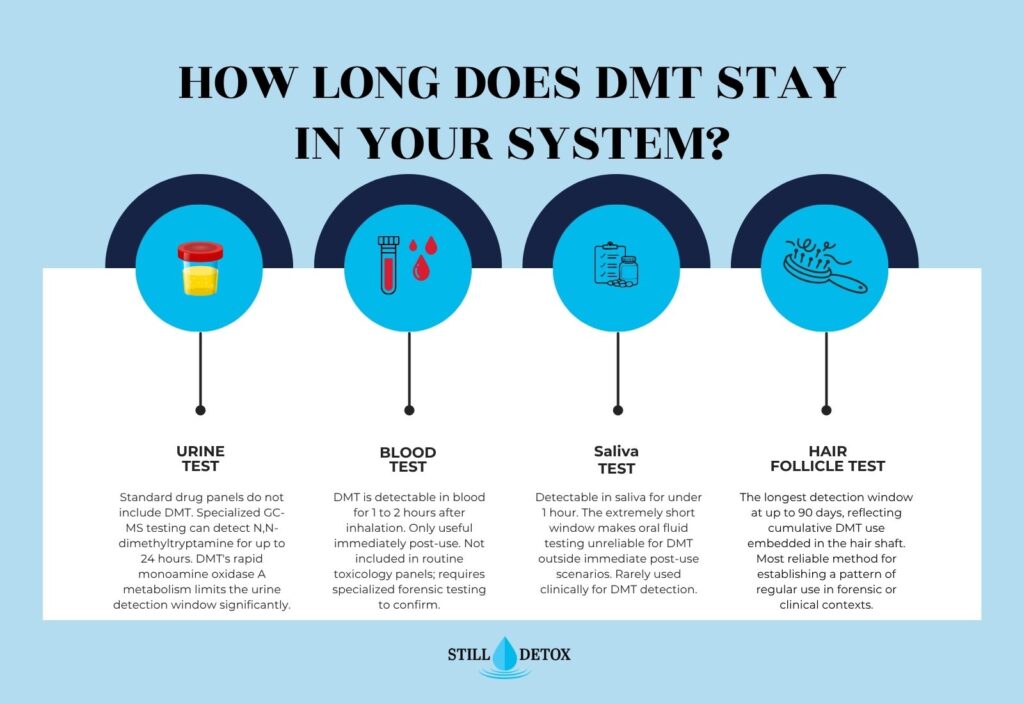
DMT is metabolized rapidly by monoamine oxidase A enzymes in the liver and lungs, giving it one of the shortest elimination half-lives of any psychedelic compound at approximately 15 to 20 minutes. Standard drug screening panels do not include DMT; only specialized toxicology testing can detect it within the windows below.
Detection Windows by Test Type
The detection window for N,N-dimethyltryptamine varies by test type and frequency of use:
| Test Type | Detection Window | Notes |
|---|---|---|
| Urine | Up to 24 hours | Standard panels do not include DMT; specialized GC-MS required |
| Blood | Up to 1 to 2 hours | Short half-life limits window; useful only immediately after use |
| Saliva | Up to 1 hour | Extremely short window; rarely used clinically for DMT |
| Hair follicle | Up to 90 days | Most reliable for regular DMT users; reflects cumulative use |
Detection windows extend with regular use, higher per-session doses, and slower individual metabolic clearance. 5-MeO-DMT follows a comparable detection profile due to similar monoamine oxidase A metabolism.
Risks and Dangers of DMT Vape Pens
DMT vape pens concentrate the risks of N,N-dimethyltryptamine use by removing the preparation barriers that historically limited both frequency and volume of DMT consumption, increasing psychological vulnerability and exposure intensity with each session.
Common Side Effects
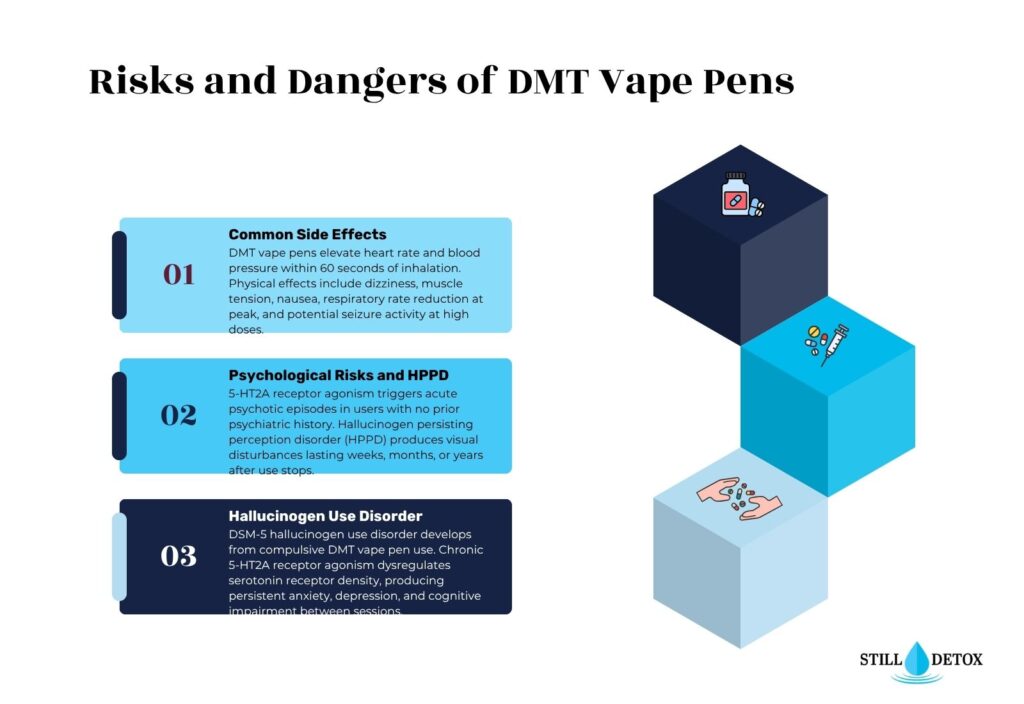
Inhaled DMT produces immediate physiological responses in virtually all users regardless of dose or prior experience:
Common DMT vape pen side effects include:
- Cardiovascular: Rapid heart rate elevation, increased blood pressure, flushing, and chest tightness occurring within the first 60 seconds of inhalation
- Sensory: Intense auditory and visual hallucinations, time distortion, and tactile alterations that prevent voluntary motor control throughout the peak phase
- Gastrointestinal: Nausea, vomiting, and abdominal discomfort, particularly with large doses or re-dosing within a single session
Psychological Risks and Hallucinogen Persisting Perception Disorder (HPPD)
DMT vaporization triggers 5-HT2A serotonin receptor agonism of sufficient intensity to precipitate acute psychological crisis in individuals without any prior psychiatric history. Users with no pre-existing mental illness report onset of acute psychotic episodes, severe dissociation, and prolonged panic disorders following single DMT pen sessions.
Hallucinogen persisting perception disorder (HPPD) is a documented clinical consequence of hallucinogen use in which visual disturbances including trails, halos, and geometric patterns persist for weeks, months, or years after the drug has cleared the body. Seek emergency care immediately if DMT use produces seizures, chest pain, prolonged disorientation exceeding 12 hours, or signs of psychotic break including paranoid delusions or command hallucinations.
Long-Term Risks and Hallucinogen Use Disorder
DSM-5 defines hallucinogen use disorder as compulsive patterns of hallucinogen use that cause clinically significant impairment despite awareness of psychological and legal consequences. While N,N-DMT does not produce the physical dependence characteristic of opioids or benzodiazepines, repeated DMT vape pen use produces psychological dependence through behavioral reinforcement of the drug-induced escape or altered state experience.
Chronic 5-HT2A receptor agonist exposure dysregulates serotonin receptor density and sensitivity, contributing to persistent anxiety, depression, and impaired cognition between use episodes. Individuals using serotonergic medications including SSRIs or monoamine oxidase inhibitors face additional risk of serotonin syndrome, a potentially fatal interaction, when combining those medications with DMT vaporization.
Treatment at Still Detox
Still Detox in Boca Raton, Florida provides medically supervised treatment for individuals managing hallucinogen use disorder, co-occurring mental health conditions triggered by psychedelic use, and polysubstance use patterns that include DMT vaping. Same-day assessments are available.
1- Dual Diagnosis Treatment
DMT and hallucinogen use frequently co-occur with anxiety disorders, depressive disorders, and trauma-related conditions. The dual diagnosis treatment program at Still Detox delivers integrated psychiatric and addiction care, addressing both the substance use disorder and any mental health conditions that emerged or worsened during hallucinogen use.
2- Medical Detox
Individuals with polysubstance use patterns that include sedatives, opioids, or alcohol alongside DMT require medically supervised withdrawal management before beginning behavioral treatment. Still Detox’s inpatient medical detoxification program provides 24-hour clinical monitoring and physician oversight throughout withdrawal.
3- Residential Treatment
The long-term residential treatment program at Still Detox provides structured inpatient care for individuals requiring intensive intervention beyond outpatient services. Evidence-based modalities including cognitive behavioral therapy (CBT), dialectical behavior therapy (DBT), and trauma-focused care are integrated within a supervised residential environment.
Frequently Asked Questions
What Is a DMT Pen?
A DMT pen is a portable vaporizer device loaded with N,N-dimethyltryptamine, a DEA Schedule I hallucinogen. It heats a liquid DMT solution to approximately 400°F to produce vapor for inhalation. Effects begin within 10 to 15 seconds. The device is physically identical in appearance to commercial nicotine vape pens but contains a federally controlled psychedelic compound.
What Is a DMT Cart?
A DMT cart (cartridge) is the removable component of a DMT vape pen that holds the DMT-solvent solution. Carts contain DMT extracted from plant sources and dissolved in propylene glycol or vegetable glycerin. All DMT carts are sold through illegal unregulated channels. No FDA-approved DMT cart exists, and buyers cannot verify purity, dosage accuracy, or the absence of contaminants in any cart purchased.
Are DMT Pens Legal?
No. DMT is a DEA Schedule I controlled substance under the Controlled Substances Act of 1970. Possessing a DMT pen is a federal criminal offense in all 50 states. State decriminalization measures reduce local prosecution priority but do not eliminate federal criminal liability. There is no legal way to purchase or possess a DMT vape pen in the United States outside an approved clinical research setting.
How Long Does a DMT Vape Pen Last?
DMT vape pen effects onset within 10 to 15 seconds of inhalation and last approximately 5 to 30 minutes, with the peak experience at 2 to 5 minutes. The drug clears the bloodstream within 1 to 2 hours, but psychological after-effects including emotional intensity and perceptual alterations can persist for several hours. A single cartridge contains enough solution for multiple sessions depending on dose per inhalation.
How Much Is a DMT Pen?
Black market DMT vape cartridges are priced between $100 and $400 per cartridge depending on source, claimed purity, and location. These prices reflect the illegal unregulated black market. No legitimate pricing benchmark exists because no legal commercial DMT vape product is sold anywhere in the United States. Buyers have no ability to verify the content, purity, or safety of any purchased cartridge.
What Is a 5-MeO-DMT Vape Pen?
A 5-MeO-DMT vape pen contains 5-methoxy-N,N-dimethyltryptamine, a tryptamine compound producing effects described as significantly more intense than N,N-DMT, characterized by complete ego dissolution rather than visual hallucinations. 5-MeO-DMT is also a Schedule I controlled substance. Possession carries identical federal penalties to N,N-DMT possession. It occurs naturally in the Bufo alvarius toad and several plant species and is also produced synthetically.
Can You Vape DMT?
Yes, DMT can be vaporized using a DMT pen or specialized device operating below combustion temperature, which preserves more active compound than smoking. Vaping delivers DMT to the brain rapidly through the lungs. However, vaporizing DMT is a federal criminal offense in the United States. Unregulated cartridges also carry unknown contamination risks that no visual inspection can identify.
References
- Drug Enforcement Administration. (2020). Drug scheduling. U.S. Department of Justice. https://www.dea.gov/drug-information/drug-scheduling
- National Institute on Drug Abuse. (2023). What is the scope of hallucinogen use in the United States? National Institutes of Health. https://nida.nih.gov/publications/research-reports/hallucinogens-dissociative-drugs/what-scope-hallucinogen-use-in-united-states
- Barker, S. A. (2018). N,N-Dimethyltryptamine (DMT), an endogenous hallucinogen: Past, present, and future research to determine its role and function. Frontiers in Neuroscience, 12, 536.