
Triple C is the street name for Coricidin HBP Cough and Cold (CCC), an over-the-counter cold medication that contains dextromethorphan (DXM) as its primary active ingredient. When taken at the recommended dose, triple c pills safely relieve cough and congestion, particularly in people with high blood pressure.
However, at doses far above the label, DXM produces dissociative and hallucinogenic effects that have made triple c drug misuse a growing public health concern. The medication is widely available, inexpensive, and requires no prescription, making it especially prevalent among adolescents and young adults.
Understanding what triple c is, how it affects the brain and body, and what warning signs of misuse look like is critical for anyone concerned about themselves or someone they love.
Key Takeaways
- Triple C refers to Coricidin HBP Cough and Cold, an OTC medication misused for the dissociative and hallucinogenic effects of its active ingredient, dextromethorphan (DXM).
- According to the DEA, people who abuse DXM consume between 250 mg and 1,500 mg per dose, compared to the recommended maximum of 120 mg in 24 hours.
- Approximately 5 to 10% of individuals are poor DXM metabolizers, meaning they process the drug far more slowly and face significantly elevated overdose and death risk.
- Triple c drug misuse is most prevalent among teenagers and young adults because the medication costs just a few dollars and is available at any pharmacy without a prescription.
- DXM toxicity escalates sharply when combined with alcohol, acetaminophen, or other substances, and a secondary substance is involved in most fatal triple c overdose cases.
What Does Triple C Stand For?
Triple C gets its name from the letters “CCC” stamped on Coricidin HBP Cough and Cold tablets by the original manufacturer. Those three initials became the foundation for the street slang that has been in use across the United States for decades.
Today, “triple c” is used loosely to describe any DXM-containing cold product misused for its psychoactive properties. Common street names include robotripping, robo, skittles, dexing, red devil, and poor man’s PCP, each referring to the same pattern of DXM abuse.
What Are Triple C Pills? Ingredients and Intended Use
Triple c pills contain two active ingredients: dextromethorphan hydrobromide (DXM), a cough suppressant, and chlorpheniramine maleate, an antihistamine that relieves a runny nose and sneezing. The Coricidin HBP formulation was designed specifically for people with high blood pressure.
Unlike standard cold medicines, Coricidin HBP omits pseudoephedrine and other vasoconstrictive decongestants that raise blood pressure. This makes it a safer therapeutic choice for hypertensive patients when taken exactly as directed on the label.
How Triple C Differs from Other DXM Products
Most DXM-containing products, such as Robitussin and NyQuil, combine it with multiple active ingredients, including guaifenesin, pseudoephedrine, or acetaminophen. Coricidin is notable for using chlorpheniramine instead, but some Coricidin formulations also include acetaminophen, which substantially increases overdose risk during misuse.
Why Is Triple C Misused?
When DXM is consumed at doses well above the therapeutic range, it blocks NMDA receptors in the brain and produces dissociative effects similar to ketamine, including hallucinations, detachment from reality, and a floating or out-of-body sensation. These effects can begin at doses as low as 200 mg.
Triple c pills are among the most widely misused over-the-counter drugs sought for psychoactive effects precisely because they are legal, cheap, and found in any medicine cabinet. Adolescents and young adults are disproportionately affected because the perceived legitimacy of a cold medicine leads people to underestimate its danger.
Triple C Street Names and Slang
- Robotripping / robo-tripping
- Robo
- Skittles
- Red devil
- Dexing
- Poor man’s PCP
- CCC / triple cs / triple c’s
The Triple C High: Dosing Plateaus and Effects
DXM abusers commonly describe four progressive “plateaus” of intoxication, each associated with a higher dose and increasingly severe neurological disruption. The recommended therapeutic maximum is 120 mg per 24 hours; misuse typically starts at more than twice that amount.
- Plateau 1 (100 to 200 mg): Mild euphoria, increased energy, slight perceptual distortions, and restlessness.
- Plateau 2 (200 to 400 mg): Hallucinations begin, motor coordination deteriorates significantly, and dissociation from the environment starts.
- Plateau 3 (300 to 600 mg): Intense dissociation, severely distorted perception of time and space, and near-complete loss of situational awareness.
- Plateau 4 (500 to 1,500 mg): Near-total dissociation, profound sedation, risk of respiratory failure, coma, and death.
At plateau 4, the neurological effects are comparable to a full dissociative episode induced by ketamine or PCP. The margin between a so-called recreational dose and a fatal dose is dangerously and unpredictably narrow.
Triple C Side Effects and Health Risks
Short-term side effects of triple c misuse include confusion, blurred vision, nausea, elevated heart rate, sweating, impaired coordination, severe anxiety, and paranoia. At higher doses, DXM toxicity can cause seizures and toxic psychosis requiring emergency medical care.
Chlorpheniramine, the antihistamine in Coricidin, compounds these risks at misuse doses by causing extreme sedation, dry mouth, urinary retention, and cardiac arrhythmia. The combination of two misused pharmacological agents significantly amplifies both the neurological and cardiovascular danger.
The Acetaminophen Risk in Some Triple C Formulations
Certain Coricidin products include acetaminophen alongside DXM and chlorpheniramine. Misusing these formulations can produce acetaminophen toxicity, which leads to progressive and often irreversible liver failure that may not produce noticeable symptoms until damage is severe.
Mixing Triple C with Alcohol and Other Substances
Using DXM with alcohol intensifies the central nervous system depression caused by both substances and substantially increases the risk of respiratory failure and death. According to published case data, a secondary substance is present in most fatal DXM overdose cases, making polydrug use the single highest-risk factor in triple c deaths.
Signs of Triple C Abuse and Addiction
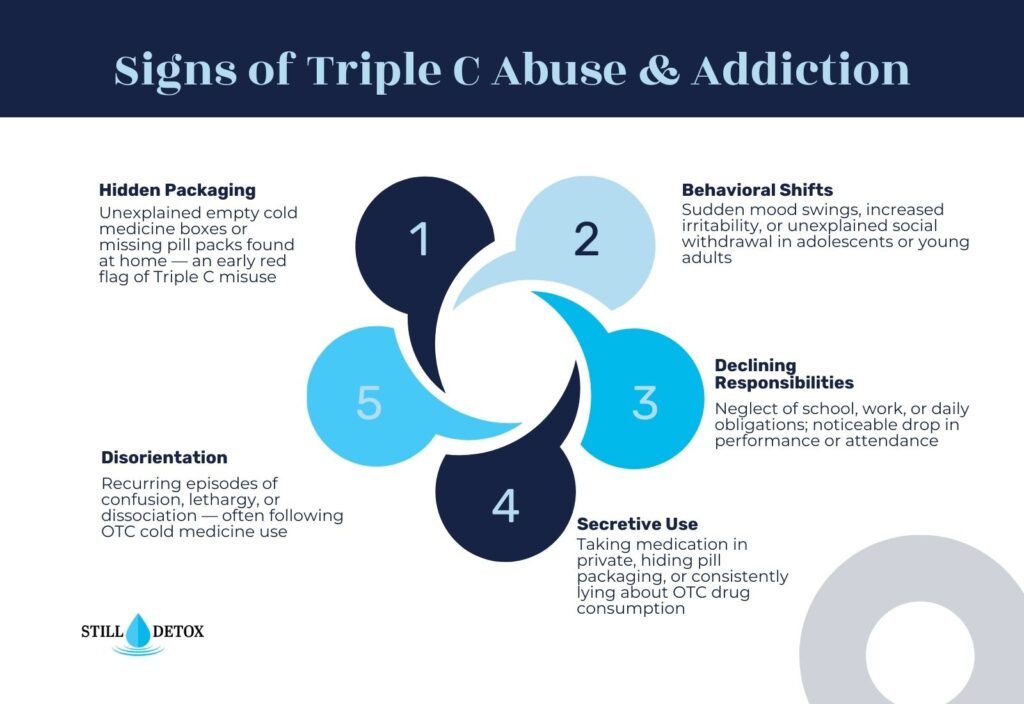
Recognizing early signs of triple c misuse allows for faster intervention before dependence develops. Physical and behavioral warning signs include:
- Empty or missing cold medicine packages at home, particularly multiple packages
- Slurred speech, glassy or red eyes, or apparent intoxication without alcohol
- Sudden mood swings, shifting rapidly between agitation and deep sedation
- Withdrawal from school, work, or social relationships combined with secretive behavior
- Persistent purchasing of cold medicine products when no illness is present
Triple c addiction can develop faster than people expect because the drug is inexpensive, legal, and widely rationalized as harmless. The social stigma associated with harder drugs is absent, which allows misuse to continue undetected for longer periods.
Triple C Overdose: Warning Signs and What to Do
Triple c overdose is a medical emergency that requires immediate professional intervention. Approximately 5 to 10% of individuals are poor DXM metabolizers, meaning they break down the drug far more slowly than average, placing them at dramatically elevated risk of overdose even at doses others might survive.
Warning signs of a DXM overdose include severe confusion or complete unresponsiveness, visible tremors or seizures, vomiting, rapid or irregular heartbeat, cyanosis (blue-tinged lips or fingernails), and loss of consciousness. If any of these signs are present, call 911 immediately and do not leave the person unattended while waiting for emergency services.
How Long Does Coricidin Stay in Your System?
DXM has a half-life of approximately 3 to 6 hours under normal metabolic conditions, though active effects can persist and the drug can remain detectable for 24 to 48 hours, depending on dose, liver function, and individual metabolism. Poor metabolizers may retain DXM in their system for significantly longer.
Standard urine drug panels do not typically screen for DXM, which can create a false sense of safety for those who misuse it. However, repeated heavy use produces lasting cognitive effects, including memory impairment, disorganized thinking, and persistent mood disruption that extend well beyond the detection window.
Treatment for Triple C Misuse and Addiction
Getting help for triple c misuse begins with entering a medically supervised detox program where DXM and chlorpheniramine withdrawal symptoms can be safely monitored and managed. Attempting to stop without clinical support significantly increases the risk of relapse and complications.
Because DXM misuse frequently co-occurs with underlying anxiety, depression, or trauma, a dual diagnosis treatment approach that addresses both the substance use and any co-occurring mental health conditions is essential for durable recovery. Treating only the addiction without addressing the root cause leaves a critical gap.
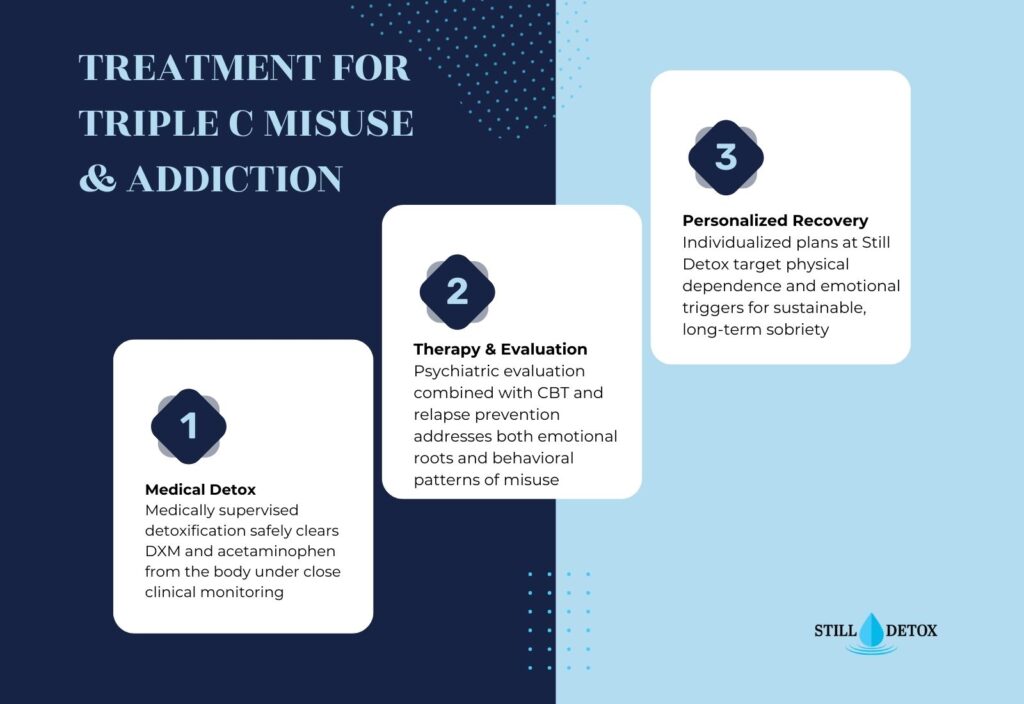
Still Detox provides comprehensive OTC and prescription drug addiction treatment that includes inpatient medical detoxification, psychiatric evaluation, cognitive behavioral therapy, and individualized relapse prevention planning. Our clinical team is experienced in managing the specific risks and needs of patients recovering from DXM and Coricidin dependence.
Frequently Asked Questions
What is Coricidin HBP used for?
Coricidin HBP Cough and Cold is an over-the-counter medication formulated to relieve cough and allergy symptoms in people with high blood pressure. It combines DXM as a cough suppressant with chlorpheniramine as an antihistamine, while deliberately excluding vasoconstrictive decongestants that can elevate blood pressure in hypertensive patients.
How often can you take Coricidin HBP cough and cold?
Per the product label, adults should take 2 tablets every 6 hours and not exceed 8 tablets in any 24-hour period. This equals a maximum therapeutic DXM dose of 60 mg per day, a fraction of the 250 to 1,500 mg dose range associated with recreational misuse and overdose.
Is Coricidin HBP safe for people with high blood pressure?
When taken exactly as directed, Coricidin HBP is considered safer than standard cold medicines for hypertensive patients because it contains no pseudoephedrine or phenylephrine. Misuse at high doses, however, poses serious cardiovascular and neurological risks for all users regardless of blood pressure history.
How do you take Coricidin HBP for a cough and cold?
The correct method is to take two tablets every 6 hours with a full glass of water, never in combination with other DXM-containing cold products, monoamine oxidase inhibitors (MAOIs), or alcohol. Any use that exceeds the stated dose or takes place outside of a genuine illness represents misuse that carries documented risks of overdose and addiction.
References
- U.S. Drug Enforcement Administration. (2010). DXM, CCC, Triple C, Skittles, Robo, Poor Man’s PCP. https://www.deadiversion.usdoj.gov/drug_chem_info/dextro_m.pdf
- National Institute on Drug Abuse. (2023). Over-the-counter medicines DrugFacts. https://nida.nih.gov/publications/drugfacts/cough-cold-medicine-abuse
- U.S. Food and Drug Administration. (2023). Acetaminophen information. https://www.fda.gov/drugs/information-drug-class/acetaminophen-information
- National Institutes of Health, National Library of Medicine. (2023). Dextromethorphan. https://www.ncbi.nlm.nih.gov/books/NBK554501/
- Dextromethorphan Misuse: A Review. (2022). Substance Abuse: Research and Treatment, 16, 1-9.