


Brain Mapping · Boca Raton, FL & Mays Landing, NJ
Brain Mapping (qEEG) for Addiction Treatment
Still Detox offers quantitative electroencephalogram (qEEG) brain mapping at both its Boca Raton, Florida, and Mays Landing, New Jersey facilities, as a diagnostic tool that guides psychiatric medication selection and TMS targeting during addiction and dual diagnosis treatment.
 Joint Commission
 Florida DCF
- LegitScript
 Psychology Today
What does a qEEG brain map actually show?
A qEEG brain map shows patterns of electrical activity across 19 or more scalp sites, identifying regions of over-activity and under-activity that research has associated with conditions such as anxiety, depression and substance use disorder. A qEEG is read alongside a full clinical assessment, not used as a standalone diagnosis.
Quantitative electroencephalography records raw brainwave data and compares it against a normative database. The resulting map highlights deviations in alpha, beta, theta and delta frequency bands. At Still Detox, the on-site psychiatrist reads every brain map and uses the findings to guide two clinical decisions: which psychiatric medication to prescribe for a co-occurring condition, and where to target transcranial magnetic stimulation (TMS) when TMS is part of the treatment plan.
The procedure is non-invasive and takes approximately 30 to 45 minutes. A technician places a cap with sensors on the client's scalp, records the data and sends it for analysis. There is no radiation, no injection and no sedation. Clients complete the brain map during the first days of treatment so the psychiatrist has the data before finalizing the medication plan.
How does brain mapping guide medication decisions?
The qEEG identifies brainwave patterns associated with specific psychiatric conditions, and the psychiatrist matches those patterns to medications with a known mechanism in that frequency band.
A client whose brain map shows excess beta activity in the frontal lobe, a pattern associated with anxiety, responds differently to medication than a client whose map shows deficient alpha activity, a pattern associated with depression. Without a brain map, the psychiatrist selects medication based on symptoms alone and adjusts over weeks. With a brain map, the starting medication is informed by objective neurophysiological data.
At Still Detox, the psychiatrist works full time on site at both the Boca Raton and Mays Landing facilities. The brain map is one input into the medication decision, alongside Columbia Protocol risk screening, the PTSD assessment and the biopsychosocial assessment that every client completes within 24 hours of admission.
How does brain mapping support TMS therapy?
The qEEG identifies the specific cortical region and frequency band to target with transcranial magnetic stimulation, so the TMS protocol is individualized rather than standardized.
TMS delivers magnetic pulses to a targeted region of the brain. The brain map tells the clinician which region to target and at what frequency. A client with trauma-related under-activity in the left dorsolateral prefrontal cortex receives a different TMS protocol than a client with stimulant-related dysregulation in the anterior cingulate.
TMS is available on site at Still Detox New Jersey in Mays Landing. The combination of brain mapping and TMS within a residential treatment setting is uncommon among residential facilities in the region. At the Boca Raton facility, brain mapping guides medication decisions and is part of the wellness modalities offered alongside acupuncture, chiropractic care, yoga and massage.
Where does Still Detox offer qEEG brain mapping?
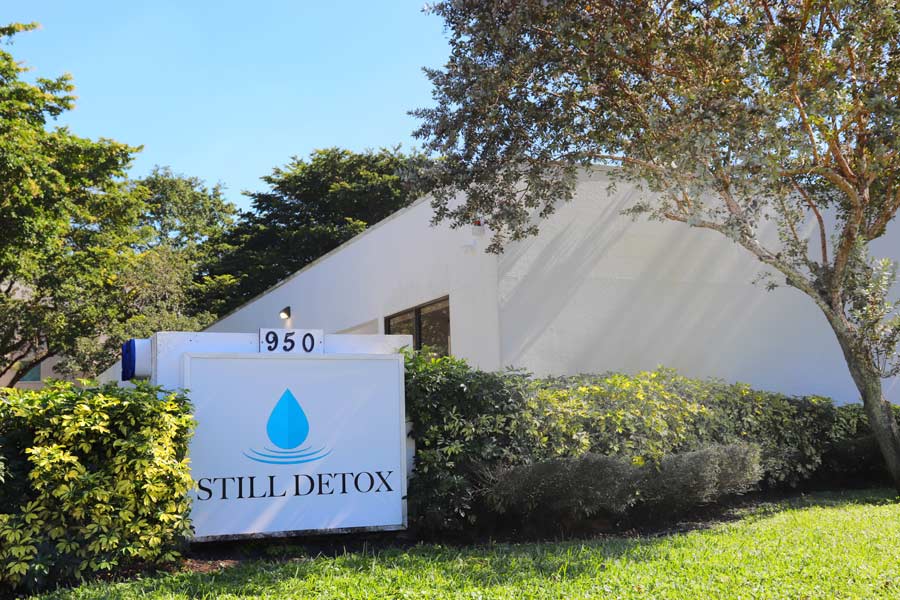
Still Detox offers qEEG brain mapping at both locations: 950 NW 9th Court, Boca Raton, FL 33486, and 170 Route 50, Mays Landing, NJ 08330.
The Boca Raton facility is a 14-bed medical detox and residential treatment center on the University Hospital campus beside Boca Regional Hospital, about 30 minutes from Fort Lauderdale-Hollywood International Airport (FLL) and Palm Beach International Airport (PBI).
The Mays Landing facility is a 44-bed new build on 33 acres in Atlantic County, New Jersey, about 26 minutes from Atlantic City. The New Jersey facility also offers TMS on site, which pairs directly with the brain map.
The following are the 4 levels of care available at both facilities where brain mapping supports treatment:
- Medical detox — 7 to 10 days on average, up to 14 for complex cases
- Residential treatment — up to 30 days of structured clinical programming
- Dual diagnosis treatment — integrated care for co-occurring mental health conditions
- Medication-assisted treatment (MAT) — medication paired with therapy
What is the evidence for qEEG in addiction treatment?
qEEG is an established diagnostic tool in psychiatry and neurology, and its application to addiction treatment is an area of active clinical research with promising but not yet conclusive findings.
Peer-reviewed research, including studies published in the Journal of Neurotherapy and Clinical EEG and Neuroscience, has found associations between specific brainwave patterns and substance use disorders. A 2019 study by Herrera-Morales and colleagues in Revista de Neurología found qEEG differences between people with hazardous drinking or a risk of alcohol dependence and people without.
Still Detox positions brain mapping as a clinical tool that provides objective data for the treating psychiatrist, not as a standalone treatment or a guaranteed predictor of outcomes. The psychiatrist integrates the brain map with the full clinical picture — medical history, substance use history, psychiatric assessment and observed response to treatment — to make medication and TMS decisions.
Questions
Frequently Asked Questions
What is qEEG brain mapping?
qEEG (quantitative electroencephalography) records electrical activity across the scalp and compares it to a normative database, producing a map of brain function that guides medication and TMS decisions.
Is brain mapping painful?
No. A technician places a sensor cap on the scalp and records data for 30 to 45 minutes. There is no radiation, no injection and no sedation.
Which Still Detox location offers brain mapping?
Both. Still Detox offers qEEG brain mapping at the Boca Raton, Florida, facility and the Mays Landing, New Jersey, facility.
Does brain mapping replace a psychiatric evaluation?
No. The brain map is one input alongside the psychiatric evaluation, Columbia Protocol risk screening, PTSD assessment and biopsychosocial assessment.
Is TMS available at both locations?
TMS is available on site at Still Detox New Jersey in Mays Landing. The Boca Raton facility offers brain mapping as part of its wellness modalities.
Does insurance cover brain mapping?
Coverage depends on your plan. Still Detox verifies benefits confidentially before admission. TRICARE is in-network at the New Jersey facility.
How do I schedule a brain map?
Brain mapping is part of the treatment program, not a standalone service. Call admissions at (561) 556-2677 to start the process.
Sources: Herrera-Morales et al. (2019), qEEG and alcohol use, Revista de Neurología
Brain mapping is part of the treatment plan at Still Detox
Call admissions to discuss how qEEG brain mapping fits into detox and residential treatment at either the Boca Raton or Mays Landing facility.

Medically reviewed by
Dr. Gladys Martinez
Medical Director, Still Detox
Dr. Gladys Martinez is the Medical Director at Still Detox and oversees all medical care. Dr. Martinez evaluates every client in person within 24 hours of admission and oversees detox medication tapers. Read Dr. Gladys Martinez’s full bio.