



Dilaudid is the brand name for hydromorphone, a Schedule II prescription opioid painkiller used to treat moderate to severe pain. It is two to eight times more potent than morphine and carries a significant risk of addiction, dependence, and fatal overdose.
Hydromorphone works by binding to opioid receptors in the brain and spinal cord, blocking pain signals and triggering an intense release of dopamine. That combination produces powerful pain relief alongside euphoria, making it one of the most addictive prescription drugs available.
Key Takeaways
- Dilaudid (hydromorphone) is a Schedule II opioid that is two to eight times more potent than morphine, making it one of the highest-risk prescription painkillers currently in use.
- According to the CDC, approximately 79,358 people died from opioid-involved overdoses in the United States in 2023, accounting for 76% of all drug overdose deaths.
- Physical dependence on Dilaudid can develop within two to three weeks of regular use, even when taken exactly as prescribed by a physician.
- Dilaudid withdrawal can begin as soon as six to twelve hours after the last dose, making unsupervised cessation both uncomfortable and dangerous.
- Only one in five people with opioid use disorder receives medication-based treatment, according to a 2023 NIDA report. Effective help is available and recovery is achievable.
What Is Dilaudid Used For?
Physicians prescribe Dilaudid for moderate to severe pain that has not responded adequately to less potent analgesics. Common clinical uses include post-surgical pain, cancer-related pain, severe traumatic injury, and pain management in palliative or end-of-life care settings. It is frequently administered in hospitals where close monitoring is available.
How Hydromorphone Works in the Body
Hydromorphone binds primarily to mu-opioid receptors in the brain, brainstem, and spinal cord. This binding blocks ascending pain signals and simultaneously triggers a flood of dopamine in the brain’s reward pathway. The result is both significant pain relief and an intense sense of euphoria.
Oral Dilaudid begins working within 15 to 30 minutes of ingestion. Intravenous administration produces effects almost immediately. The rapid onset and high intensity of the drug’s effect are two primary reasons Dilaudid carries a substantially greater addiction risk compared to slower-acting opioids like extended-release morphine.
Dilaudid Forms, Doses, and Brand Names
Dilaudid is available in five formulations. Each serves a different clinical purpose, and each carries the same risk of dependence and misuse.
- Immediate-release tablets (2 mg, 4 mg, 8 mg): onset within 15 to 30 minutes, the most commonly prescribed form for acute pain management
- Extended-release tablets, brand name Exalgo (8 mg, 12 mg, 16 mg, 32 mg): onset around 6 hours, reserved for opioid-tolerant patients requiring continuous around-the-clock pain control
- Oral liquid (1 mg/mL): onset within 15 to 30 minutes, used when swallowing tablets is not feasible
- Injectable solution (1, 2, 4, 10 mg/mL): onset under 5 minutes, administered in hospital settings under close clinical monitoring
- Rectal suppository (3 mg): onset 30 to 60 minutes, used when oral administration is not an option
Dilaudid Side Effects
Dilaudid produces a broad range of side effects even at prescribed therapeutic doses. The severity and frequency of these effects increase with higher doses, prolonged use, and concurrent use of other substances. Some side effects are predictable and manageable, while others represent life-threatening emergencies.
Common Side Effects
Most people taking Dilaudid experience at least several of the following effects, particularly during the initial days of treatment:
- Dizziness and lightheadedness
- Drowsiness and sedation
- Nausea and vomiting
- Constipation
- Itching (pruritus)
- Dry mouth
- Sweating
These effects are typically most pronounced during the first days of use and often diminish as the body adjusts to the medication. Persistent or worsening side effects should be reported to a prescribing physician without delay.
Serious Side Effects and Dangerous Interactions
Respiratory depression is the most dangerous side effect of Dilaudid. It occurs when the drug slows breathing to a life-threatening degree. Other serious adverse effects include severe drops in blood pressure, seizures, adrenal insufficiency with prolonged use, and neonatal opioid withdrawal syndrome in newborns exposed in utero.
The FDA has issued a black box warning specifically against combining Dilaudid with benzodiazepines, alcohol, or other central nervous system depressants. The risk of fatal respiratory depression increases dramatically with these combinations.
| Substance | Risk Level | Possible Outcome |
|---|---|---|
| Alcohol | Severe | Respiratory arrest, coma, death |
| Benzodiazepines (Xanax, Valium) | Severe | Profound CNS depression, fatal overdose |
| Muscle relaxants | High | Excessive sedation, respiratory failure |
| Antidepressants (SSRIs, SNRIs, MAOIs) | High | Serotonin syndrome |
| Antihistamines | Moderate | Increased sedation |
| Other opioids | Severe | Additive respiratory depression, overdose |
Is Dilaudid Addictive?
Yes. Dilaudid is highly addictive. Its Schedule II classification reflects both its accepted medical utility and its high potential for physical and psychological dependence. The drug’s rapid onset and intense euphoric effect create powerful cravings that can develop quickly, even in patients who follow their prescribed dosing guidelines precisely.
How Dilaudid Addiction Develops
Addiction to Dilaudid typically follows a predictable pattern. Tolerance develops first, meaning the same dose produces a weaker effect over time. The person then needs higher or more frequent doses to achieve equivalent pain relief or the same high. Physical dependence follows, at which point the brain and body require Dilaudid to function normally.
Prescription opioid misuse is a primary driver of the broader U.S. opioid crisis. According to SAMHSA’s 2024 National Survey on Drug Use and Health, 8.9 million people aged 12 or older misused opioids in 2023 alone.
Signs and Symptoms of Dilaudid Addiction
The DSM-5 identifies 11 diagnostic criteria for opioid use disorder. Recognizing signs early improves treatment outcomes significantly. Common indicators of Dilaudid addiction include the following:
Physical signs:
- Taking larger amounts of Dilaudid than prescribed, or using it for longer than prescribed
- Developing tolerance and needing dose increases to achieve the same effect
- Experiencing withdrawal symptoms between scheduled doses
- Constricted (pinpoint) pupils even when not in pain
- Unexplained weight loss or declining physical health
Behavioral signs:
- Spending excessive time obtaining, using, or recovering from Dilaudid
- Continuing to use despite negative consequences at work, home, or in relationships
- Giving up activities or interests that were previously important
- Visiting multiple doctors to obtain additional prescriptions (doctor shopping)
- Unexplained financial strain, secrecy, or social withdrawal
Opioid addiction follows the same neurological pathway regardless of which opioid initiated dependence. The brain’s reward system becomes restructured around the drug, making the compulsion to use feel involuntary rather than chosen.
Dilaudid Street Names and Misuse Methods
Dilaudid is sold illegally under several street names. Common slang terms include D’s, dillies, big D, M-80s, peaches, juice, and smack. These names vary by region. The drug’s high potency and euphoric effect make it particularly sought after on the illicit market.
People who misuse Dilaudid often crush and snort tablets, dissolve and inject the drug, or combine it with alcohol or benzodiazepines to intensify effects. Each of these methods significantly increases the risk of overdose. Injection use introduces additional risks including collapsed veins, abscesses, and transmission of HIV or hepatitis C. Misuse of Dilaudid frequently escalates to heroin addiction, as both drugs act on the same receptors and heroin is often cheaper and more accessible.
How Dilaudid Compares to Other Opioids
Dilaudid is among the most potent prescription opioids available in clinical practice. Understanding its relative potency clarifies why its overdose and addiction risks are so pronounced.
| Opioid | Potency vs. Morphine | Onset (oral) | Duration | Schedule | Addiction Risk |
|---|---|---|---|---|---|
| Morphine | 1x (baseline) | 30-60 min | 4-6 hrs | II | High |
| Dilaudid (Hydromorphone) | 2-8x | 15-30 min | 3-5 hrs | II | Very High |
| Oxycodone (OxyContin) | 1.5x | 15-30 min | 4-6 hrs | II | Very High |
| Hydrocodone (Vicodin) | 1x | 30-60 min | 4-6 hrs | II | High |
| Fentanyl | 50-100x | Hours (patch) | 1-2 hrs (IV) | II | Extreme |
| Heroin | 2x | Minutes (IV) | 3-5 hrs | I | Extreme |
The potency gap between Dilaudid and standard morphine is clinically important. A detailed pharmacological comparison of the two, including equianalgesic dosing information, is available in our Dilaudid vs. morphine resource.
Dilaudid Overdose: Signs and Emergency Response
A Dilaudid overdose is a medical emergency. Because hydromorphone is so potent, the gap between a therapeutic dose and a fatal dose is dangerously narrow. Risk is highest in opioid-naive individuals, people who have recently completed detox and lost their tolerance, and those who combine Dilaudid with alcohol, benzodiazepines, or other central nervous system depressants.
The CDC reported approximately 79,358 opioid-involved overdose deaths in the United States in 2023. The majority of these deaths were preventable with timely naloxone administration and emergency response. Knowing the signs and what to do saves lives.
Signs of Dilaudid overdose include:
- Slowed, shallow, or stopped breathing
- Pinpoint pupils (very small, even in dim light)
- Blue or purple lips or fingertips (cyanosis)
- Cold, clammy, or pale skin
- Limp body or loss of muscle control
- Gurgling or choking sounds (sometimes called the death rattle)
- Unconsciousness or unresponsiveness to stimulation
If you witness a suspected Dilaudid overdose, take these steps immediately:
- Call 911. Do not wait to see if the person improves on their own. Opioid overdoses are time-critical.
- Administer naloxone (Narcan) if available. Repeat every two to three minutes if the person does not respond or resume breathing.
- Perform rescue breathing if the person is not breathing and you are trained to do so.
- Place the person in the recovery position on their side if breathing returns, to prevent choking.
- Stay with the person until emergency services arrive. Do not leave them alone under any circumstances.
Dilaudid Withdrawal Symptoms and Timeline
Withdrawal from Dilaudid begins when a physically dependent person significantly reduces or stops their dose. Withdrawal is not typically life-threatening on its own, but it is intensely uncomfortable and carries an extremely high relapse risk without proper medical supervision and support.
Withdrawal Symptoms
Dilaudid withdrawal produces a predictable cluster of symptoms that resemble a severe flu combined with significant psychological distress. Symptoms progress in recognizable phases:
Early-onset symptoms (6 to 12 hours after last dose):
- Anxiety and agitation
- Muscle aches and joint pain
- Sweating and chills
- Yawning and watery eyes
- Insomnia and restlessness
- Runny nose
Peak symptoms (24 to 72 hours):
- Severe nausea and vomiting
- Diarrhea and abdominal cramping
- Intense drug cravings
- Elevated heart rate and blood pressure
- Goosebumps and tremors
Late symptoms (days 4 to 10):
- Gradual improvement of physical symptoms
- Persistent fatigue and low energy
- Depressed mood and emotional instability
- Disrupted sleep patterns
Dilaudid Withdrawal Timeline
Dilaudid withdrawal follows a predictable four-phase pattern. The timeline below outlines when each phase typically begins and what to expect at each stage.
- Early phase (6 to 12 hours after last dose): anxiety, sweating, muscle aches, yawning, runny nose, insomnia, and general restlessness
- Peak phase (24 to 72 hours): severe nausea and vomiting, diarrhea, abdominal cramping, intense drug cravings, elevated heart rate, chills, and tremors
- Resolution phase (days 4 to 10): gradual improvement of physical symptoms alongside persistent fatigue, depressed mood, and disrupted sleep patterns
- Post-acute phase (weeks to months): psychological cravings, low mood, and sleep disturbances that can linger long after physical symptoms resolve
Attempting to stop Dilaudid cold turkey outside of a clinical setting is dangerous. The severity of withdrawal symptoms drives most people back to use, often at doses their lowered tolerance can no longer safely process. This cycle is a primary cause of opioid overdose death following a period of abstinence.
Dilaudid Detox and Addiction Treatment
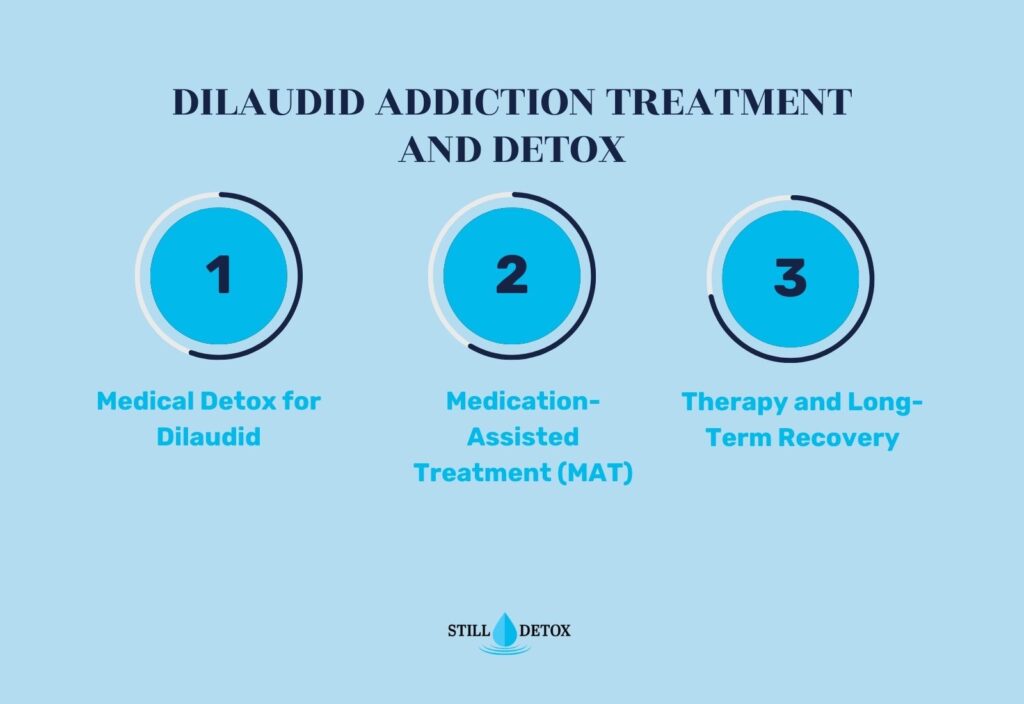
Recovery from Dilaudid addiction is achievable with the appropriate level of professional care. Effective treatment addresses both the physical dependence and the underlying psychological factors that drive addiction. A full continuum of care, beginning with medical detox and extending through long-term aftercare, consistently produces the best outcomes.
The following are the treatment options:
Medical Detox for Dilaudid Dependence
A supervised medical detox program is the safest and most clinically appropriate first step for anyone physically dependent on Dilaudid. Medical detox provides 24-hour monitoring, withdrawal symptom management, and pharmaceutical support to stabilize the body safely through acute withdrawal.
Physicians may use clonidine to manage cardiovascular withdrawal symptoms, anti-nausea medications for comfort, and in some cases buprenorphine or methadone to ease the physiological transition off hydromorphone. Medically supervised detox dramatically reduces both the discomfort of withdrawal and the risk of dangerous relapse during the first critical days of abstinence.
Medication-Assisted Treatment (MAT)
Medication-assisted treatment combines FDA-approved medications with counseling and behavioral therapy to treat opioid use disorder. MAT is the evidence-based standard of care for Dilaudid addiction. The three FDA-approved medications used in MAT for opioid use disorder are:
- Buprenorphine (Suboxone): a partial opioid agonist that reduces cravings and withdrawal symptoms without producing a significant high at therapeutic doses
- Methadone: a full opioid agonist dispensed through licensed outpatient clinics that stabilizes brain chemistry and substantially reduces illicit opioid use
- Naltrexone (Vivitrol): an opioid antagonist that blocks all opioid effects entirely, used after detox is complete and the individual is fully opioid-free
According to NIDA, only one in five people with opioid use disorder received medication-based treatment in 2021. MAT has been shown to reduce the risk of overdose death by up to three times compared to no treatment.
Therapy and Long-Term Recovery Support
Medication alone is rarely sufficient for sustained, long-term recovery. Effective opioid addiction treatment integrates evidence-based behavioral therapies. Cognitive behavioral therapy helps individuals identify the thought patterns and environmental triggers that drive addictive behavior. It builds practical coping strategies and relapse prevention skills that patients carry beyond formal treatment.
Many people with Dilaudid addiction also live with co-occurring mental health conditions such as depression, anxiety, PTSD, or complex trauma. Dual diagnosis treatment addresses addiction and underlying psychiatric disorders simultaneously. Treating both conditions together significantly improves long-term recovery rates compared to addressing either in isolation.
A comprehensive recovery plan is offered by Still Detox that typically includes group therapy, family therapy, structured aftercare planning, and connection to peer support resources. Recovery is a sustained process. Ongoing support after formal treatment is essential for maintaining long-term sobriety.
How Long Does Dilaudid Stay in Your System?
The duration for which Dilaudid remains detectable depends on the testing method, dose taken, duration of use, and individual factors including metabolism, age, liver function, and kidney health. Dilaudid has an oral half-life of approximately 2.5 hours and an intravenous half-life of roughly one hour.
Despite a short half-life, drug metabolites remain detectable in body fluids and tissues considerably longer than the drug itself remains active.
| Test Type | Detection Window | Notes |
|---|---|---|
| Urine | 2-4 days | Most common method; detects recent and moderate use |
| Blood | 12-24 hours | Confirms very recent use only |
| Saliva | 1-4 days | Less common in standard clinical testing |
| Hair follicle | Up to 90 days | Reveals patterns of long-term use |
Frequently Asked Questions About Dilaudid
Is Dilaudid a high-risk medication?
Yes. Dilaudid is classified as a high-risk medication. The DEA designates it as Schedule II due to its high potential for abuse, dependence, and severe medical complications. It carries an FDA black box warning for life-threatening respiratory depression, addiction, and overdose death. Risk is greatest when combined with other central nervous system depressants or when used outside prescribed guidelines. Even medically supervised use requires close clinical monitoring throughout treatment.
What are the risks of taking hydromorphone?
Hydromorphone carries serious risks even at prescribed doses. The most life-threatening is respiratory depression, which can be fatal. Additional risks include physical dependence, addiction, hormonal disruption, immune suppression with chronic use, and dangerous interactions with alcohol, benzodiazepines, and sedatives. People with respiratory conditions, liver disease, or a prior history of substance use disorder face elevated risk and require extra caution and closer clinical monitoring throughout the course of treatment.
What is Dilaudid (hydromorphone) used for?
Dilaudid is prescribed to manage moderate to severe pain that does not respond adequately to non-opioid medications. Common indications include post-surgical pain, cancer-related pain, severe traumatic injury, and end-of-life pain management. The extended-release formulation (Exalgo) is reserved for opioid-tolerant patients requiring continuous around-the-clock pain control. Dilaudid is not appropriate for occasional, mild, or short-term pain management scenarios.
What are the side effects of hydromorphone withdrawal?
Hydromorphone withdrawal produces both physical and psychological symptoms. Physical symptoms include muscle aches, sweating, chills, nausea, vomiting, diarrhea, and abdominal cramping. Psychological symptoms include intense drug cravings, anxiety, irritability, and depression. Symptoms typically begin six to twelve hours after the last dose, peak between 24 and 72 hours, and gradually resolve over 7 to 10 days. Post-acute withdrawal symptoms, including sleep disturbances and low mood, can persist for several weeks.
References
- Substance Abuse and Mental Health Services Administration. (2024). Key substance use and mental health indicators in the United States: Results from the 2023 National Survey on Drug Use and Health (HHS Publication No. PEP24-07-021). Center for Behavioral Health Statistics and Quality. https://www.samhsa.gov/data/report/2023-nsduh-annual-national-report
- Centers for Disease Control and Prevention. (2025). Understanding the opioid overdose epidemic. U.S. Department of Health and Human Services. https://www.cdc.gov/overdose-prevention/about/understanding-the-opioid-overdose-epidemic.html
- Drug Enforcement Administration. (2020). Hydromorphone: Drug fact sheet. U.S. Department of Justice. https://www.dea.gov/factsheets/hydromorphone
- National Institute on Drug Abuse. (2023, August 7). Only 1 in 5 U.S. adults with opioid use disorder received medications to treat it in 2021 [Press release]. National Institutes of Health. https://nida.nih.gov/news-events/news-releases/2023/08/
- Anand, S., & Singh, H. (2023). Hydromorphone. In StatPearls. National Library of Medicine, National Institutes of Health. https://www.ncbi.nlm.nih.gov/books/NBK470393/


