

Cannabinoid hyperemesis syndrome (CHS) recovery begins within days of stopping cannabis use, but complete resolution of symptoms takes most people one to three months.
For heavy, long-term users, full recovery can extend up to six months. The only proven path to recovery is total abstinence from cannabis.
Understanding the CHS recovery timeline helps set realistic expectations. Many people expect symptoms to vanish within days, only to feel discouraged when nausea and fatigue linger. Recovery from CHS follows a predictable pattern once cannabis use stops.
Key Takeaways
- CHS recovery begins within 24 to 72 hours of cannabis cessation, with most people achieving full symptom resolution within one to three months of complete abstinence.
- According to the National Institutes of Health, CHS affects a significant subset of chronic cannabis users, with symptoms typically emerging after years of daily or near-daily use.
- THC is stored in adipose tissue, meaning individuals with longer use histories or higher body fat percentages may experience prolonged recovery timelines exceeding three months.
- The three phases of CHS are the prodromal phase, the hyperemetic phase, and the recovery phase. Full recovery requires sustained abstinence through all three.
- Resuming cannabis use at any point during recovery restarts the hyperemetic cycle, making complete cessation the only curative intervention.
What Is Cannabinoid Hyperemesis Syndrome?
Cannabinoid hyperemesis syndrome is a clinical condition characterized by recurrent, severe episodes of nausea, vomiting, and cramping abdominal pain directly caused by chronic cannabis use. CHS develops in individuals who use cannabis frequently, typically daily or near-daily, over a period of months to years.
The term “hyperemesis” denotes severe, uncontrollable vomiting. “Cannabinoid” identifies the class of compounds in the Cannabis sativa plant, primarily delta-9-tetrahydrocannabinol (THC) and cannabidiol (CBD), that bind to CB1 and CB2 receptors throughout the brain and gastrointestinal tract. CHS is not a side effect of occasional use; it is a condition that emerges only after sustained, high-frequency cannabis exposure.
How Common Is CHS?
CHS is more prevalent than clinical literature historically reflected, largely because patients and clinicians alike underestimated cannabis as a cause of severe vomiting. Emergency department presentations for cyclic vomiting have risen significantly alongside increasing cannabis potency and frequency of use. CHS remains underdiagnosed because many people with the condition do not disclose cannabis use to treating physicians.
Who Develops CHS?
CHS develops in individuals who use cannabis at least weekly, and more commonly in those who use it daily, for a period of several months to several years. Earlier onset of use correlates with higher CHS risk. Individuals who began using cannabis during adolescence and continued into adulthood represent the demographic most commonly diagnosed.
Why Does Cannabis Cause Hyperemesis?
THC and related cannabinoids produce opposing effects in the brain versus the gastrointestinal tract. In the brain, CB1 receptor activation initially suppresses nausea and vomiting. In the gut, prolonged CB1 and CB2 receptor stimulation disrupts gastrointestinal motility, delays gastric emptying, and dysregulates the enteric nervous system.
With chronic, high-frequency exposure, the brain’s CB1 receptors downregulate, reducing their sensitivity to THC. Once receptor downregulation occurs, the peripheral pro-emetic effects of cannabinoids in the gut predominate over the central antiemetic effects in the brain. The hypothalamus, which regulates both thermoregulation and emesis, is implicated in the characteristic compulsive bathing behavior seen in CHS: hot water stimulates transient receptor potential vanilloid 1 (TRPV1) receptors in the skin, temporarily overriding the nausea signal.
THC also accumulates in adipose tissue due to its lipophilicity. This fat-storage mechanism extends the duration of cannabinoid receptor exposure even after active cannabis use stops, directly prolonging the CHS recovery timeline.
The Three Phases of CHS Recovery: A Stage-by-Stage Timeline
CHS progresses through three distinct clinical phases. Recovery occurs within the third phase but is shaped by how long the first two phases persisted.
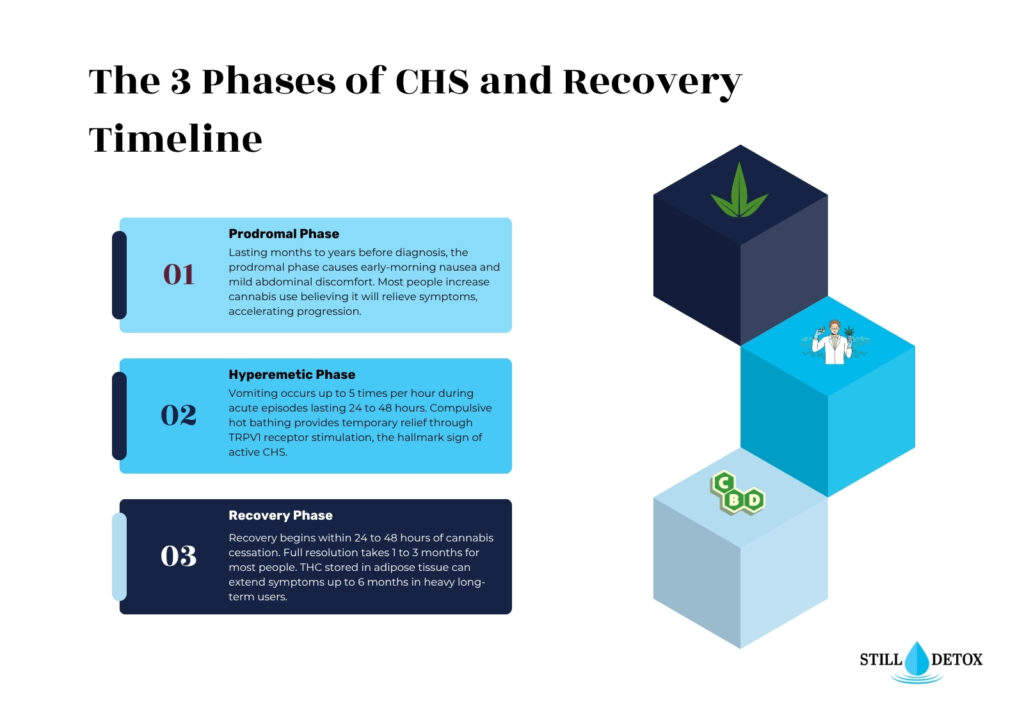
1- Prodromal Phase (Months to Years Before Diagnosis)
The prodromal phase begins months to years before a formal CHS diagnosis. During this phase, individuals experience early-morning nausea, mild abdominal discomfort, and occasional vomiting. These symptoms are typically intermittent and manageable.
A defining paradox of the prodromal phase is that many individuals increase cannabis use during it, believing cannabis will relieve nausea. This behavior accelerates progression to the hyperemetic phase while deepening cannabinoid receptor dysfunction.
2- Hyperemetic Phase (Days to Weeks of Active Episodes)
The hyperemetic phase is the acute crisis stage of CHS. During active episodes, vomiting can occur up to five times per hour. Episodes typically last 24 to 48 hours and are accompanied by severe abdominal cramping, dehydration, and weight loss.
During this phase, compulsive hot showering or bathing becomes a primary coping mechanism. Individuals may spend several hours per day in hot water, which provides temporary symptomatic relief through TRPV1 receptor stimulation. Medical treatment during hospitalization typically includes IV fluid replacement for dehydration, antiemetic agents, proton-pump inhibitors, benzodiazepines for agitation, and topical capsaicin cream applied to the abdomen.
3- Recovery Phase Timeline: How Long Does It Actually Take?
The recovery phase begins within 24 to 48 hours of complete cannabis cessation. Recovery progresses in stages:
- Days 1 to 3: Vomiting frequency decreases significantly. IV hydration and rehydration support electrolyte stabilization. Nausea remains present but begins to diminish. Most individuals can tolerate oral fluids by day 3.
- Days 4 to 10: Active nausea subsides for most people with shorter use histories. Normal eating patterns begin to return. Compulsive bathing behavior decreases in frequency as the neurological drive for hot water drops. Alberta Health data indicates most people begin feeling meaningfully better within 10 days of cessation.
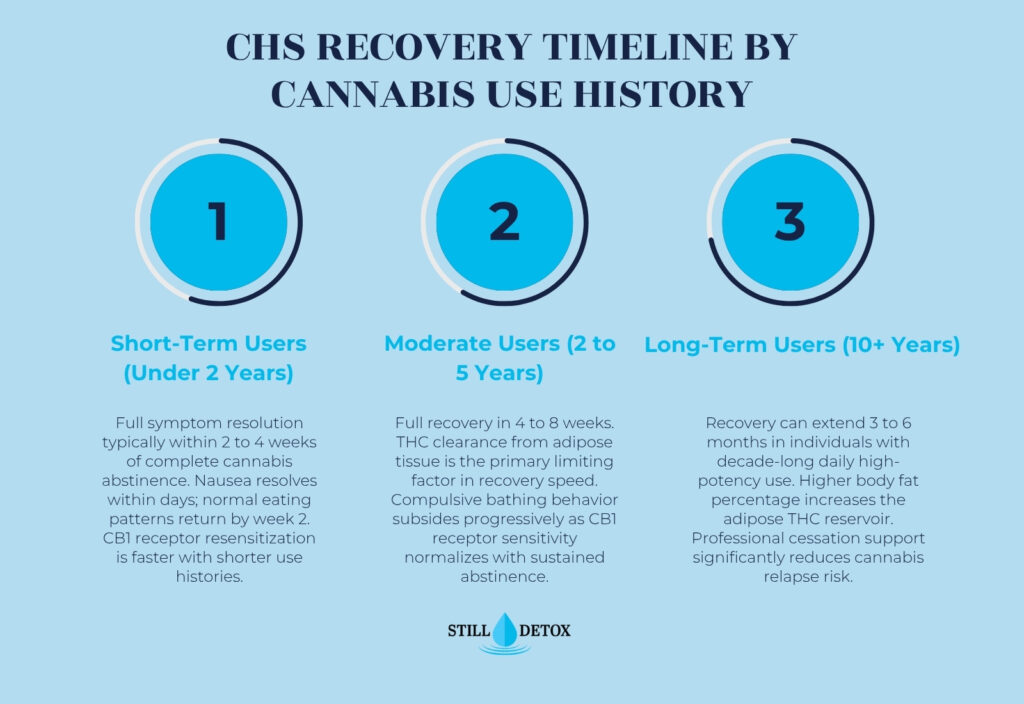
- Weeks 2 to 4: Full symptom resolution occurs in individuals with shorter duration or lower frequency of prior cannabis use. Appetite normalizes, abdominal pain resolves, and weight recovery begins with adequate caloric intake.
- Weeks 4 to 12: Resolution of lingering symptoms in moderate to heavy long-term users. Mild nausea, fatigue, and appetite fluctuation can persist. THC metabolism from adipose tissue continues to affect gastrointestinal receptor signaling during this window.
- Months 3 to 6: Extended recovery applies to individuals with decade-long daily use histories or high body fat percentages where THC has accumulated significantly. Functional gastrointestinal symptoms, including mild nausea and irregular appetite, can persist up to six months after cessation.
When Is CHS Recovery Considered Complete?
CHS recovery is considered complete when three conditions are met. First, the individual has been fully abstinent from all cannabis products, including CBD-dominant formulations with trace THC, for a sustained period. Second, all three primary symptoms, nausea, vomiting, and abdominal pain, have fully resolved. Third, a return to normal eating patterns and body weight has occurred.
Factors That Extend CHS Recovery Time
Several clinical variables directly extend CHS recovery duration:
- Duration of cannabis use: Individuals with 10-plus years of daily use require longer recovery than those with 2 to 3 year histories.
- THC potency of products used: Modern cannabis products contain significantly higher THC concentrations than formulations available a decade ago. Higher potency accelerates CB1 receptor downregulation and deepens dysfunction.
- Frequency of use: Daily use causes more extensive receptor changes than weekly use.
- Body composition: THC accumulates in adipose tissue. Individuals with higher body fat percentages carry larger THC reservoirs, prolonging the clearance timeline.
Red Flags That Require Immediate Medical Evaluation
Not all symptoms during CHS recovery are expected. Seek emergency evaluation immediately if the following occur:
- Vomiting blood or material that resembles coffee grounds
- Signs of severe dehydration: extreme dizziness, confusion, rapid heart rate, or absence of urination for 12-plus hours
- Seizures or loss of consciousness
- Chest pain accompanying vomiting
- Inability to retain any oral fluids for more than 24 hours after cessation
How to Speed Up CHS Recovery
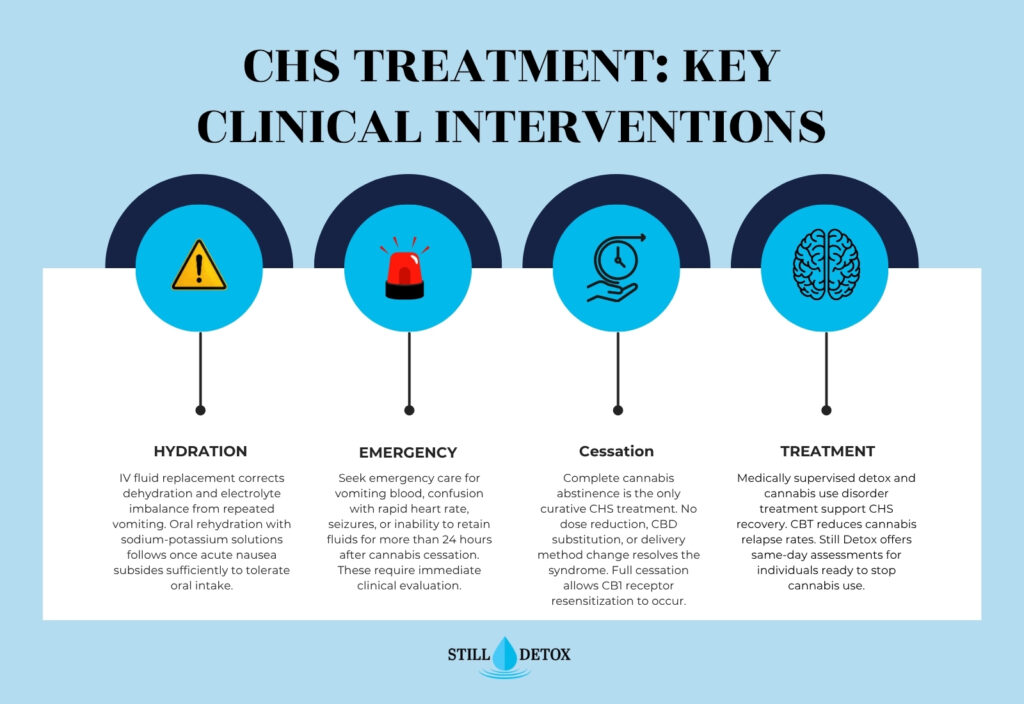
Complete abstinence from all cannabis products is the single most effective intervention for accelerating CHS recovery. No amount of dose reduction, switching to CBD-only products, or changing delivery methods eliminates CHS symptoms. Only total cessation clears cannabinoids from receptor sites and allows CB1 receptor resensitization to occur.
Supportive Interventions During Recovery
Several strategies reduce symptom severity and support recovery without replacing the need for abstinence:
- Hydration: Replacing fluids lost through vomiting prevents electrolyte imbalance and supports gastrointestinal recovery. Oral rehydration solutions containing sodium, potassium, and glucose are preferable to plain water during acute phases.
- Hot showers: Hot water bathing continues to provide temporary nausea relief during the early recovery phase. As CB1 receptor function normalizes, the compulsive drive to bathe decreases organically.
- Dietary progression: Beginning with clear liquids, progressing to bland solid foods, and gradually reintroducing regular meals reduces gastrointestinal stress during recovery.
- Topical capsaicin: Applied to the abdomen, capsaicin cream activates TRPV1 receptors locally and has demonstrated antiemetic effects in small clinical samples.
- Professional cannabis cessation support: Cognitive behavioral therapy (CBT) targeting cannabis use disorder reduces relapse rates and addresses the psychological dependence that sustains use despite CHS symptoms.
Why Relapse Resets Recovery
Resuming cannabis use at any point during the recovery phase restarts the hyperemetic cycle. Because CB1 receptors are still in the process of resensitization, even a single episode of use can trigger a return to the hyperemetic phase within hours to days. According to Wikipedia’s clinical literature synthesis, relapses are common due to resuming consumption, developing tolerance, and using higher-potency formulations to achieve prior effects.
Treatment for Cannabis Use Disorder at Still Detox
CHS is both a medical and addiction condition. Achieving lasting recovery requires addressing the cannabis use disorder that sustained the chronic use pattern. Professional treatment significantly reduces relapse rates compared to self-guided cessation alone.
Medical Detox
Still Detox’s medical detox program provides physician-supervised support during the acute recovery phase. Medical staff monitor hydration status, electrolyte balance, and symptom severity during detox from weed, administering IV fluids and antiemetic protocols as clinically indicated. Same-day assessments are available for individuals in the hyperemetic phase requiring immediate medical intervention.
Residential Treatment
Still Detox’s residential program provides a structured, cannabis-free environment that eliminates triggers and access to substances during the critical early weeks of cannabis cessation. Individual and group therapy address the psychological dimensions of cannabis dependence during residential treatment.
Outpatient Programs
For individuals who have stabilized medically and are transitioning to sustained recovery, Still Detox’s outpatient programming provides ongoing therapeutic support without requiring residential placement. Relapse prevention therapy specifically addresses the cyclical nature of CHS and the behavioral drivers of cannabis use resumption.
Frequently Asked Questions
How to speed up recovery from CHS?
Complete abstinence from all cannabis products is the only mechanism that accelerates CHS recovery. Supportive measures including oral rehydration, bland dietary progression, hot showers for symptom relief, and topical capsaicin cream on the abdomen can reduce symptom severity during recovery. Professional treatment for cannabis use disorder lowers relapse rates and supports sustained abstinence.
How to know if you have CHS?
CHS is diagnosed based on a pattern of cyclical nausea, vomiting, and abdominal pain in the context of chronic cannabis use, combined with temporary relief from hot bathing and full symptom resolution after cessation. No single test confirms CHS; diagnosis requires ruling out other causes of cyclic vomiting through blood tests, urinalysis, imaging, and clinical history, including honest disclosure of cannabis use frequency.
What is the longest CHS can last?
CHS symptoms can persist for up to six months in individuals with decade-long daily cannabis use histories and high body fat percentages where THC has substantially accumulated in adipose tissue. Most people achieve complete resolution within one to three months of full cannabis abstinence. Symptoms that persist beyond six months should be evaluated by a gastroenterologist to rule out co-occurring gastrointestinal conditions.
What does a CHS episode feel like?
A CHS hyperemetic episode produces severe, uncontrollable vomiting that can occur up to five times per hour, accompanied by intense cramping abdominal pain, persistent nausea, and an overwhelming compulsion to take hot showers or baths. Episodes typically last 24 to 48 hours. The severity is often described as debilitating, with some individuals vomiting more than 20 times per day during peak episodes.
References
- National Institutes of Health, National Library of Medicine. (2023). Cannabinoid Hyperemesis Syndrome. StatPearls. https://www.ncbi.nlm.nih.gov/books/NBK549915/
- Wikipedia contributors. (2024). Cannabinoid hyperemesis syndrome. Wikipedia, The Free Encyclopedia.
- Cleveland Clinic. (2024). Cannabinoid Hyperemesis Syndrome (CHS): Causes, Symptoms and Treatment.
- WebMD. (2024). Cannabinoid Hyperemesis Syndrome (CHS): Causes, Symptoms, Treatment.
- Alberta Health Services. (2024). Cannabinoid hyperemesis syndrome: Care instructions.
- Cedars-Sinai. (2024). Cannabis Hyperemesis Syndrome.