

Dexedrine and Adderall are both Schedule II CNS stimulants prescribed for ADHD and narcolepsy, but they are not the same drug. The core difference between Dexedrine vs Adderall comes down to their active ingredients. Dexedrine contains only pure dextroamphetamine, while Adderall blends dextroamphetamine and levoamphetamine in a 3:1 ratio. These distinct formulations affect how each drug works in the brain, how long it lasts, and who it is prescribed to.
For people managing ADHD or evaluating their treatment options, understanding this comparison matters beyond pharmacology. Both medications carry a significant risk of abuse, physical dependence, and addiction that patients and caregivers must take seriously.
Key Takeaways
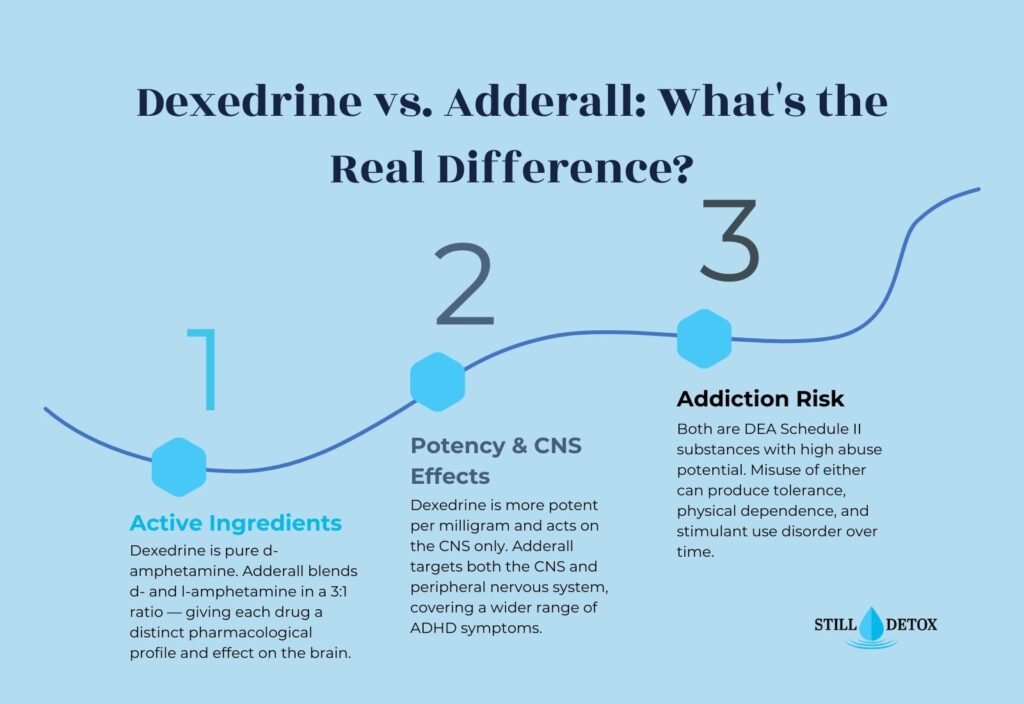
- Dexedrine contains only d-amphetamine; Adderall combines d-amphetamine and l-amphetamine in a 3:1 ratio, giving each medication a distinct pharmacological profile.
- Roughly 8.7 million U.S. adults had a current ADHD diagnosis as of 2020, according to the Centers for Disease Control and Prevention (CDC), reflecting how widely stimulant medications are prescribed.
- Both Dexedrine and Adderall are classified as Schedule II controlled substances by the DEA, meaning they carry a high recognized potential for abuse and dependence.
- Adderall targets both the central nervous system (CNS) and peripheral nervous system, while Dexedrine acts primarily on the CNS, which influences their side effect profiles.
- Long-term or high-dose use of either medication can produce tolerance, withdrawal symptoms, and full stimulant use disorder in vulnerable individuals.
What Are Dexedrine and Adderall?
Dexedrine is the brand name for dextroamphetamine sulfate, a single-ingredient amphetamine approved by the FDA in 1976. In the United States, the generic is called dextroamphetamine. Outside the U.S., particularly in Australia, the United Kingdom, and Canada, the same active compound is referred to as dexamphetamine, and it is prescribed and dispensed under that name. Colloquially, the drug is sometimes called dexies, a street slang term used to describe dextroamphetamine pills. Dexedrine comes in immediate-release tablets and extended-release capsules marketed as Dexedrine Spansules.
Adderall is the brand name for a combination of four amphetamine salts: dextroamphetamine saccharate, amphetamine aspartate, dextroamphetamine sulfate, and amphetamine sulfate. The FDA approved Adderall for ADHD treatment in 1996. It is available in both immediate-release tablets and an extended-release capsule formulation known as Adderall XR. Adderall is currently the more widely prescribed of the two medications.
Dexedrine vs Adderall: Side-by-Side Comparison
| Feature | Dexedrine | Adderall |
|---|---|---|
| Generic name | Dextroamphetamine sulfate | Mixed amphetamine salts |
| International name | Dexamphetamine (AU, UK, CA) | Amphetamine / mixed salts |
| Active ingredient | D-amphetamine only | D-amphetamine + L-amphetamine (3:1 ratio) |
| Drug class | Schedule II CNS stimulant | Schedule II CNS stimulant |
| FDA-approved uses | ADHD, narcolepsy | ADHD, narcolepsy |
| Off-label uses | Short-term obesity, depression | Weight management (off-label) |
| Available forms | IR tablets, ER Spansule capsules, liquid | IR tablets, XR capsules |
| Onset of action | 30 to 60 minutes | 30 to 60 minutes |
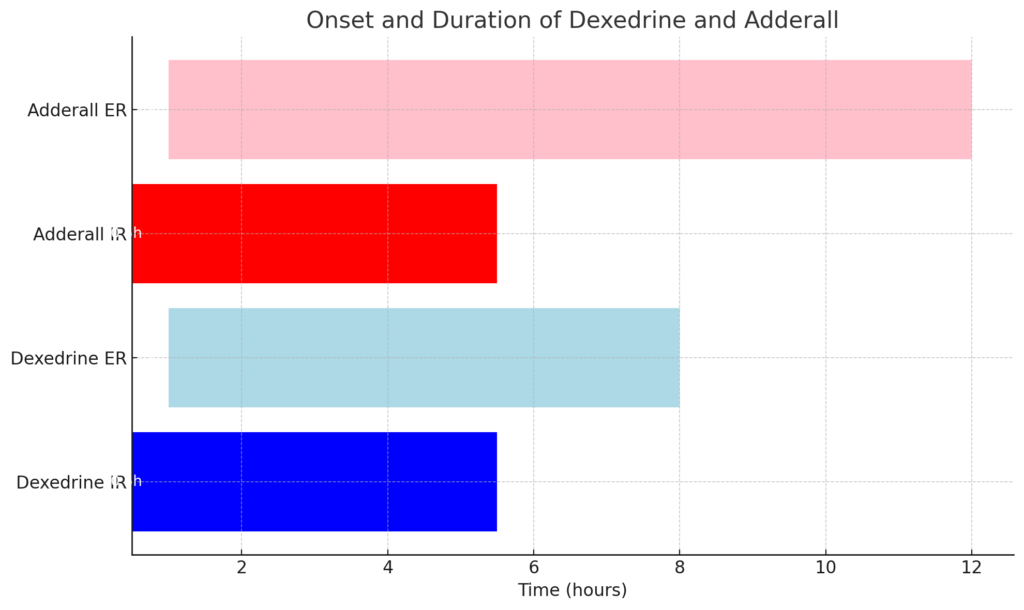
| Duration (IR) | 4 to 6 hours | 4 to 6 hours |
| Duration (ER) | 8 to 12 hours | 8 to 12 hours |
| Approved age (IR) | 3 years and older | 3 years and older |
| Approved age (ER) | 6 years and older | 6 years and older |
| DEA Schedule | II (high abuse potential) | II (high abuse potential) |
How Dexedrine and Adderall Work in the Brain
Both medications belong to the amphetamine class of drugs and increase activity of dopamine and norepinephrine, two neurotransmitters critical to attention, motivation, and impulse control. People with ADHD have disrupted signaling in these pathways, and stimulant medications help normalize that activity.
Dexedrine works exclusively on the central nervous system. It primarily stimulates the release of norepinephrine in the cerebral cortex, which produces increased alertness, reduced fatigue, improved mood, and greater motor activity. Because it only contains d-amphetamine, its action is more targeted and, for some users, described as smoother or more focused.
Adderall affects both the central nervous system and the peripheral nervous system. The addition of l-amphetamine enables Adderall to inhibit dopamine reuptake, making dopamine more available in the synaptic gap. This broader mechanism is why Adderall tends to feel more physically stimulating for some patients and may be more effective across a wider range of ADHD symptom profiles. If you have ever wondered why stimulants calm people with ADHD down, this dopamine-norepinephrine mechanism is central to the explanation.
Approved Uses and Off-Label Applications
Both Dexedrine and Adderall are FDA-approved to treat ADHD and narcolepsy in adults and children as young as three years old for immediate-release formulations. Extended-release versions of both medications are approved for children six and older.
Dexedrine has an additional off-label history of use for short-term obesity management in patients who have not responded to other weight loss interventions. It has also been used off-label for treatment-resistant depression in rare clinical cases. Adderall does not carry the same off-label weight loss designation, though it is sometimes misused for that purpose, which increases its abuse risk.
Dosage Comparison
| Patient Group | Dexedrine Starting Dose | Adderall Starting Dose |
|---|---|---|
| Children 3 to 5 years (ADHD) | 2.5 mg/day | 2.5 mg/day |
| Children 6 and older (ADHD) | 5 mg once or twice daily | 5 mg once or twice daily |
| Adults (ADHD) | 5 mg one to three times daily | 5 mg once or twice daily |
| Max daily dose | 40 mg (children), 60 mg (adults) | 40 mg (XR); higher for IR with titration |
| Narcolepsy starting dose | 5 to 10 mg daily | 10 mg daily |
Dosage for both medications is titrated gradually by a prescriber based on therapeutic response and tolerability. Because Dexedrine is considered more potent per milligram than Adderall, clinicians typically prescribe lower doses when switching a patient from Adderall. A common clinical conversion guideline suggests that 10 mg of Adderall is roughly equivalent to 7.5 mg of dextroamphetamine (Dexedrine), though individual prescribers adjust based on response. Outside the U.S., patients prescribed dexamphetamine follow the same titration principles as those on dextroamphetamine, as the compounds are pharmacologically identical. Knowing how long Adderall stays in your system is also important for managing dosing intervals and avoiding buildup.
Side Effects: Shared and Distinct
Both medications produce a largely overlapping set of side effects due to their shared amphetamine chemistry. The risk and severity of side effects increase with dose, duration of use, and misuse.
| Side Effect | Dexedrine | Adderall |
|---|---|---|
| Decreased appetite | Yes | Yes |
| Insomnia | Yes | Yes |
| Elevated heart rate | Yes | Yes |
| Increased blood pressure | Yes | Yes |
| Weight loss | Yes | Yes |
| Dry mouth | Yes | Yes |
| Headache | Yes | Yes |
| Dizziness | Yes | Yes |
| Tremors | Yes | Less common |
| Stomach upset | Yes | Less common |
| Anxiety | Less common | Yes |
| Nausea or diarrhea | Less common | Yes |
| Agitation | Less common | Yes |
Serious psychiatric side effects are possible with both drugs, including new or worsening psychosis, mania, and tic disorders. Stimulants can trigger or worsen psychiatric symptoms in people with bipolar disorder, a family history of psychosis, or pre-existing tic conditions. Research shows that Adderall can cause psychosis in certain individuals, particularly at high doses or with prolonged misuse, and the same risk applies to Dexedrine.
Cardiovascular risks are also significant. Both medications carry an FDA boxed warning that misuse of amphetamines can cause sudden death and serious cardiovascular adverse events. Prescribers routinely screen for underlying heart conditions before starting either drug.
Which Is Stronger: Dexedrine or Adderall?
Dexedrine is generally considered more potent per milligram because it is 100 percent d-amphetamine, the isomer most responsible for CNS stimulation and cognitive focus. Adderall contains 75 percent d-amphetamine and 25 percent l-amphetamine, meaning its stimulant effects per milligram are partially diluted by the l-isomer, which is less CNS-active.
In clinical practice, this does not mean Dexedrine is a better medication overall. Adderall’s broader pharmacological profile often makes it more effective at targeting multiple ADHD symptom clusters, including hyperactivity and impulsivity, which are partly driven by peripheral nervous system activity. Studies suggest Adderall may reduce ADHD symptom severity more consistently across a larger population than Dexedrine, though individual responses vary widely.
Patients who find Adderall too physically stimulating, anxious-feeling, or harsh on the cardiovascular system are sometimes switched to Dexedrine, where the purer d-amphetamine profile feels smoother and produces fewer peripheral side effects.
Why Would a Doctor Prescribe Dexedrine Over Adderall?
Prescribers may choose Dexedrine over Adderall for several clinical reasons. A patient who has not responded well to Adderall, who experiences intolerable anxiety or cardiovascular side effects, or who needs a more targeted CNS-focused stimulant may be better suited to dextroamphetamine. Dexedrine is also occasionally used when Adderall is unavailable due to shortage, as the two share a substantial portion of their active ingredients.
Historically, Dexedrine fell out of favor compared to Adderall partly because of its immediate-release potency and the concern that it was more prone to misuse before extended-release amphetamine formulations became widely available. Today, Dexedrine Spansule provides an extended-release option, and some patients manage ADHD effectively with it. Prescribers who also treat patients for Vyvanse vs Adderall decisions often encounter similar discussions about stimulant formulation preferences.
Abuse Potential and Addiction Risk
Both Dexedrine and Adderall are federally classified as Schedule II controlled substances by the DEA. This is the highest classification assigned to drugs with accepted medical use, indicating that both medications carry a recognized high potential for abuse, physical dependence, and addiction.
People without ADHD who misuse these medications do not experience the calming, focusing effect that ADHD patients report. Instead, high-dose use in non-ADHD individuals can produce a cocaine-like euphoria, intense energy, and suppressed appetite. This reinforcing effect is what drives misuse, particularly on college campuses and among people using stimulants for weight loss or performance enhancement.
Repeated misuse of either medication can produce tolerance, requiring higher doses to achieve the same effect. Over time, this pattern can escalate into stimulant use disorder. Whether Adderall is addictive is a question many patients and families ask, and the honest answer is yes, particularly when used outside of a legitimate prescription and clinical supervision.
Signs of Stimulant Addiction
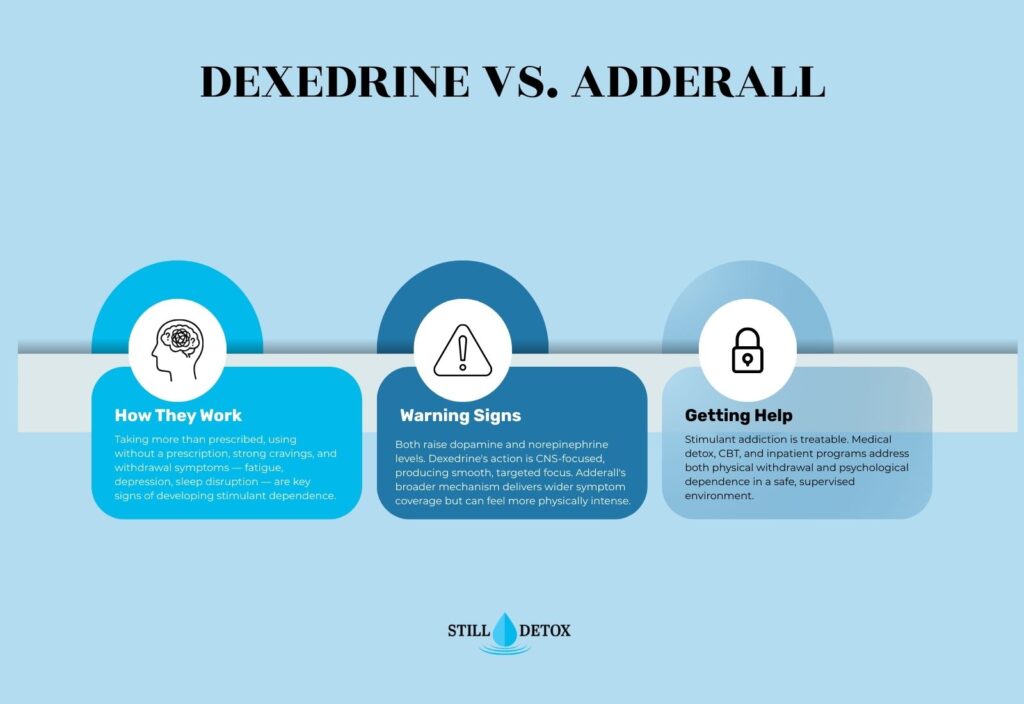
Recognizing the warning signs of Dexedrine or Adderall addiction is critical to catching the problem early. Physical and behavioral signs include taking doses larger than prescribed, using the medication without a prescription, crushing or snorting pills, strong cravings, and continuing use despite negative consequences at work, school, or in relationships.
Withdrawal symptoms that follow cessation of heavy use, including extreme fatigue, depression, increased appetite, and sleep disruption, are another indicator that physical dependence has developed. These withdrawal effects reflect the brain’s adjustment to functioning without the artificial dopamine and norepinephrine boost that the drug provided.
Learning about heavy amphetamine use and the physical and psychological toll it takes can help individuals and families understand what is happening and why professional support is necessary for safe discontinuation.
Treatment for Dexedrine or Adderall Addiction
Stimulant addiction is treatable. Medical detoxification under clinical supervision addresses withdrawal safely, and behavioral therapies such as cognitive behavioral therapy (CBT) help patients develop strategies to manage cravings and avoid relapse. Inpatient rehab programs provide a structured environment for people whose stimulant use has significantly impaired their daily functioning.
For those asking whether Dexedrine is still available or in short supply, the answer is yes; ongoing national stimulant shortages have intermittently affected Dexedrine and dextroamphetamine availability, which is why some patients have been switched between formulations. If you or someone you know is misusing stimulants during a prescription gap, professional support is essential to avoid escalating to unregulated sources.
Still Detox offers individualized treatment for prescription stimulant dependence, including medical supervision during withdrawal and evidence-based therapy programs. The amphetamine addiction treatment programs at Still Detox are designed to address both the physical and psychological dimensions of stimulant use disorder in a safe, medically supervised setting.
Frequently Asked Questions
Which is better, Adderall or dextroamphetamine?
Neither is universally better. Adderall is more widely prescribed and may be more effective across a broader range of ADHD symptoms due to its dual amphetamine formula. Dexedrine may suit patients who respond poorly to Adderall or need a more targeted CNS-only stimulant. The right medication depends on your specific symptom profile, tolerance, and medical history. Always make this decision with a licensed prescriber.
Why would a doctor prescribe Dexedrine over Adderall?
A doctor may prescribe Dexedrine when a patient has not tolerated Adderall well, particularly if they experience significant anxiety, cardiovascular strain, or peripheral stimulation. Dexedrine may also be preferred for patients who need a CNS-focused stimulant with a simpler active ingredient profile, or when Adderall is unavailable due to ongoing shortage.
Does Dexedrine feel the same as Adderall?
Not always. Many users report that Dexedrine feels smoother and less physically intense than Adderall because it lacks the l-amphetamine component that drives peripheral stimulation. Adderall is often described as more physically energizing, which some find useful but others find uncomfortable. Subjective experience varies considerably based on individual neurochemistry, dose, and ADHD severity.
Is Dexedrine a good ADHD medication?
Yes, Dexedrine is an FDA-approved and clinically validated ADHD medication with decades of evidence behind it. It may be less commonly prescribed than Adderall today, but it remains a legitimate first-line option for certain patients. Its narrower active ingredient profile can be an advantage for individuals who are sensitive to l-amphetamine. Like all stimulants, it carries a risk of misuse and must be monitored closely by a prescriber.
Can Dexedrine or Adderall cause withdrawal?
Yes. Both medications can produce withdrawal symptoms when stopped abruptly after extended use or misuse. Symptoms typically include fatigue, depression, irritability, increased appetite, and hypersomnia. These reflect the brain recalibrating after a period of elevated dopamine and norepinephrine stimulation. Withdrawal is generally not life-threatening, but it can be psychologically distressing. A medical provider should supervise any tapering process.
References
- Centers for Disease Control and Prevention. (2023). Data and statistics about ADHD. U.S. Department of Health and Human Services.
- U.S. Food and Drug Administration. (2013). Adderall (amphetamine) prescribing information. U.S. Department of Health and Human Services. https://www.accessdata.fda.gov/drugsatfda_docs/label/2013/040422Orig1s030lbl.pdf
- Drug Enforcement Administration. (2024). Drug scheduling. U.S. Department of Justice. https://www.dea.gov/drug-information/drug-scheduling
- National Institute on Drug Abuse. (2018). Prescription stimulants DrugFacts. National Institutes of Health. https://nida.nih.gov/publications/drugfacts/prescription-stimulants
- Castells, X., Ramos-Quiroga, J. A., Rigau, D., Bosch, R., Nogueira, M., Vidal, X., & Casas, M. (2011). Efficacy of methylphenidate for adults with attention-deficit hyperactivity disorder: A meta-regression analysis. CNS Drugs, 25(2), 157–169.
- Drugs.com. (2024). Dexedrine vs. Adderall comparison. Drugs.com.
- Medvidi. (2025, October). Dexedrine vs. Adderall: Key differences, strength, and side effects. Medvidi.
Are you prescribed Dexedrine or Adderall and wondering why your doctor chose one over the other? Perhaps you’ve come across the term “Dexies” as a party drug or heard Adderall referred to as a “study buddy.” This comparison of Dexedrine vs Adderall has left many individuals questioning which medication is stronger, which has fewer side effects, and how they differ in effectiveness.
Both medications are commonly used to treat ADHD, but their unique chemical compositions, dosing options, and reputations often make people wonder which is better suited for their needs. According to the Journal of Attention Disorders, Adderall remains one of the most widely prescribed medications for ADHD, while Dexedrine is a lesser-known yet highly effective alternative. If you’re asking, what is the difference between Dexedrine and Adderall, this article will provide the insights you need.
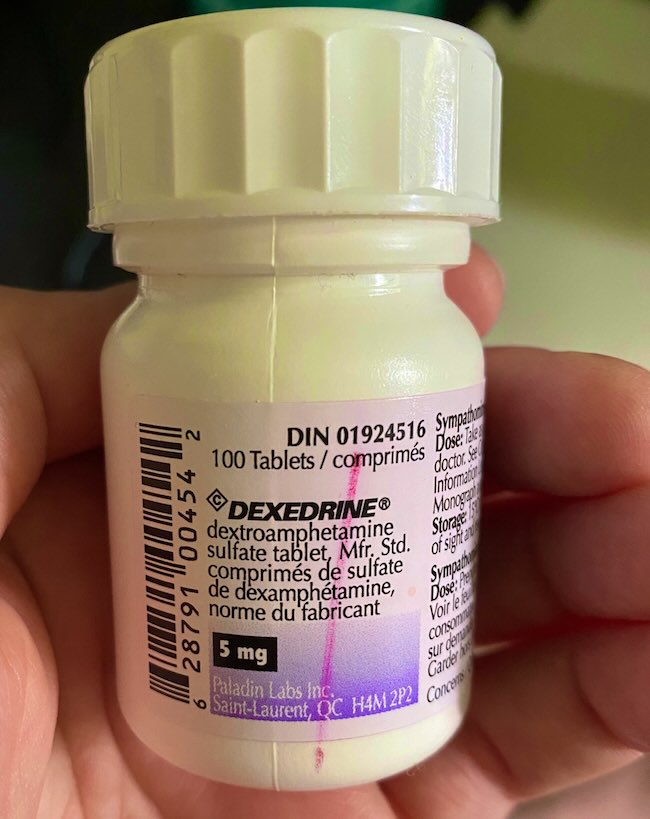
Dexedrine vs Adderall: A Comprehensive Comparison
Dexedrine and Adderall are two stimulant medications commonly prescribed for ADHD and narcolepsy. Both medications target similar neurological pathways to improve focus and alertness, yet they differ significantly in their formulation, dosage, potential for abuse, and side effects. Understanding these differences is crucial for informed treatment decisions.
Dexedrine: Focused Targeting
Dexedrine consists entirely of dextroamphetamine, the more potent isomer of amphetamine, which is responsible for heightened focus and alertness. This pure composition makes Dexedrine particularly effective for individuals who require a precise, targeted impact without the broader stimulation provided by Adderall’s mixed salts. Some patients report that Dexedrine’s effects feel “cleaner,” with fewer emotional or physical side effects, making it suitable for those sensitive to jitteriness or anxiety.
Adderall: Balanced Stimulation
Adderall, by contrast, combines dextroamphetamine and levoamphetamine. This blend creates a broader, more balanced stimulant effect that enhances focus while also providing physical energy. For some users, this combination is more beneficial in addressing both mental and physical symptoms of ADHD or narcolepsy. The dual-action nature of Adderall may also help individuals with comorbid conditions like depression or lethargy.
Dexedrine vs Adderall: Dosage Forms and Guidelines
Both Dexedrine and Adderall are available in various dosage forms and strengths to suit individual treatment needs. Dexedrine is offered as immediate-release (IR) tablets and extended-release spansules, with strengths typically starting at 5 mg and adjusted as needed. Adderall is available in immediate-release (IR) tablets and extended-release (XR) capsules, with a similar starting point of 5 mg for most patients.
Medication Formulations Starting Dose Maximum Dose
| Medication | Formulations | Starting Dose | Maximum Dose |
|---|---|---|---|
| Dexedrine | IR Tablets, Extended-Release Spansules | 5 mg once or twice daily | 40 mg/day |
| Adderall | IR Tablets, Extended-Release (XR) Capsules | 5 mg once or twice daily | 40 mg/day (IR), 30 mg/day (XR) |
Is Dexedrine Stronger Than Adderall?
In terms of potency, Dexedrine is considered stronger on a milligram-to-milligram basis due to its pure dextroamphetamine composition. However, Adderall’s dual formulation provides broader benefits, making it more effective for physical and emotional ADHD symptoms. The choice often depends on individual tolerance and specific therapeutic goals.
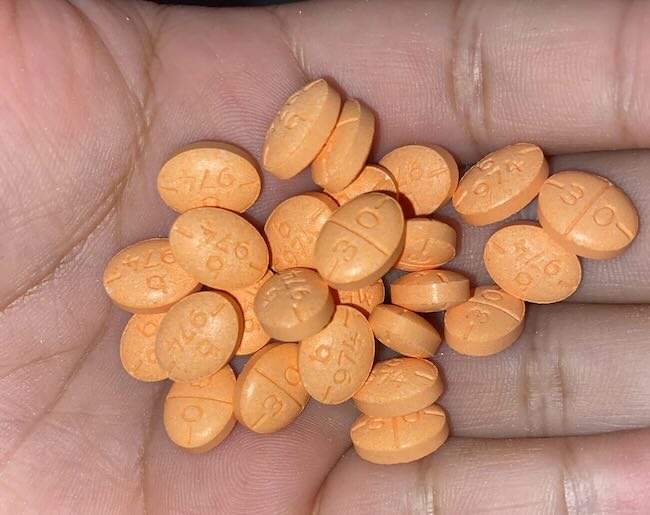
If you want to compare Dexedrine vs Adderall, both medications have overlapping side effects, but their differing formulations can produce unique outcomes:
Shared Side Effects
Both medications may cause:
- Insomnia
- Loss of appetite
- Increased heart rate
- Anxiety or jitteriness
Dexedrine-Specific Side Effects
- Tends to have a more focused impact on mental clarity, with reduced physical jitteriness for some.
- May result in higher incidences of headaches or dry mouth.
Adderall-Specific Side Effects
- Can cause more physical stimulation, including restlessness and sweating.
- Emotional side effects such as mood swings may be more pronounced due to levoamphetamine content.
Dexedrine vs Adderall: Metabolism and Duration
Dexedrine is available as immediate-release tablets and extended-release spansules, providing a duration of effect ranging from 4-6 hours (immediate-release) to up to 10 hours (extended-release). This precise timing makes it an effective option for individuals who require targeted periods of focus during the day.
Adderall, in contrast, comes in both immediate-release tablets and extended-release capsules (Adderall XR), which last up to 12 hours. The prolonged stimulation reduces the need for multiple doses throughout the day, making Adderall a popular choice for those with schedules requiring sustained attention.
Dexedrine vs Adderall: Which One is More Addictive?
Adderall is generally considered more addictive due to its broader effects and widespread misuse. According to the National Institute on Drug Abuse (NIDA), over 5 million Americans report non-medical use of Adderall annually, with students and professionals comprising a significant portion. In contrast, Dexedrine misuse accounts for less than 1 million cases, reflecting its narrower appeal and limited availability.
Dependency and Withdrawal
Dependency on Dexedrine vs Adderall often develops when the medications are used in higher doses or for extended periods. Dexedrine’s dependency risk is slightly elevated due to its pure amphetamine content, leading to withdrawal symptoms such as fatigue, depression, and cravings. Adderall, while similar, often triggers additional symptoms such as irritability and heightened anxiety during withdrawal.
Abuse Patterns
The abuse potential of Dexedrine vs Adderall is a significant concern. Dexedrine, often referred to as “Dexies,” is commonly misused as a party drug for its euphoric effects, making it popular in club settings. Adderall, in contrast, is frequently abused by students and professionals seeking enhanced focus and productivity during exams or tight work deadlines.
A 2022 report by the Substance Abuse and Mental Health Services Administration (SAMHSA) highlighted that over 2.5 million Americans misuse prescription stimulants annually. Adderall accounted for 60% of reported cases, while Dexedrine represented approximately 15%.
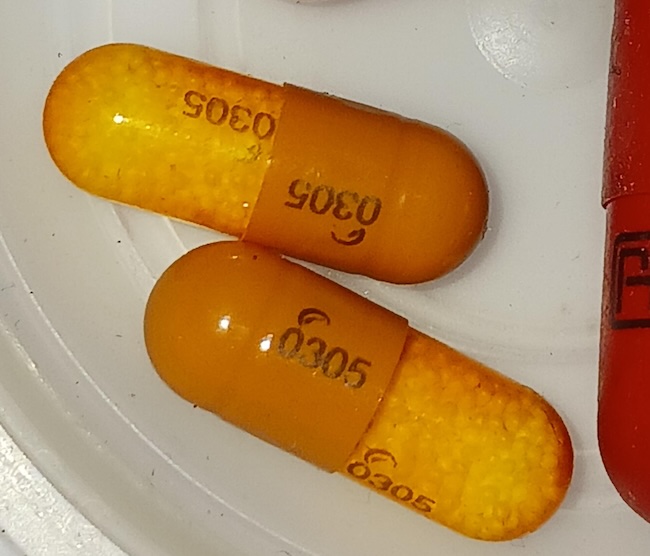
Key Differences Between Dexedrine and Adderall Comparison Table
| Aspect | Dexedrine | Adderall |
|---|---|---|
| Active Ingredient | Dextroamphetamine | Amphetamine and Dextroamphetamine |
| Formulations | Immediate-release (IR), Extended-release | Immediate-release (IR), Extended-release (XR) |
| Effectiveness | Targeted effects for mental clarity | Broader stimulant profile for physical and mental symptoms |
| Side Effects | May cause dry mouth or headaches | May cause mood swings and restlessness |
FAQ
Can You Switch Between Dexedrine and Adderall?
Switching is possible but requires guidance from a healthcare provider due to differences in formulations and effects. Physicians monitor side effects and therapeutic outcomes during the transition.
Are Dexedrine and Adderall Equivalent?
While both are amphetamines, Dexedrine’s pure dextroamphetamine composition makes it more targeted, whereas Adderall’s combination offers a broader spectrum of effects.
Is Dexedrine Stronger Than Adderall?
Dexedrine is often considered stronger for mental clarity, but Adderall’s dual composition provides balanced stimulation for diverse needs.