

Naltrexone blocks the mu-opioid receptors that alcohol activates to produce its pleasurable effects. It reduces both the reward of drinking alcohol and the craving to drink more. The FDA approved naltrexone for alcohol use disorder (AUD) in 1994, and it remains one of only three FDA-approved medications for AUD alongside acamprosate and disulfiram.
Unlike disulfiram (Antabuse), which makes you physically ill when you drink, naltrexone does not cause nausea or vomiting from alcohol. Whether you are asking because a prescriber recommended it or because you are weighing your options, this guide covers the mechanism, the Sinclair Method, what actually happens if you drink on it, and what to expect in treatment.
Key Takeaways
- According to SAMHSA’s 2023 National Survey on Drug Use and Health, 28.9 million Americans aged 12 and older met DSM-5 criteria for alcohol use disorder in the past year, but fewer than 10% received any treatment. Naltrexone is among the most underutilized evidence-based pharmacological options available.
- Naltrexone works by blocking mu-opioid receptors in the brain, preventing the endorphin release that makes alcohol feel rewarding. Without that reward signal, cravings diminish over repeated drinking episodes.
- Naltrexone does not cause nausea or physical illness when alcohol is consumed. Disulfiram (Antabuse) causes this reaction. Naltrexone does not. This is the most common misconception about AUD medication.
- A 2001 multi-site clinical trial published in Alcoholism: Clinical and Experimental Research found naltrexone reduced heavy drinking days by 25% compared to placebo in patients following the Sinclair Method protocol.
- Naltrexone is contraindicated in anyone currently using opioids. It precipitates acute opioid withdrawal within minutes of ingestion.
What Is Naltrexone?
Naltrexone is a pure opioid antagonist that binds to opioid receptors with high affinity but produces no activation of those receptors, blocking all opioid and endorphin activity at those sites. It was first FDA-approved for opioid use disorder in 1984 and later approved for alcohol use disorder in 1994 under the brand name ReVia. Its primary mechanism is competitive binding at the mu-opioid receptor, where it displaces both endogenous endorphins and pharmaceutical opioids without activating the receptor itself.
Naltrexone (ReVia) vs Vivitrol: Two Forms of the Same Drug
Naltrexone is available in two formulations with meaningfully different clinical profiles. The oral tablet (ReVia, generic naltrexone HCl 50mg) is taken once daily and requires consistent patient adherence. The extended-release injectable suspension (Vivitrol) is administered intramuscularly once monthly by a healthcare provider, eliminating the daily adherence requirement entirely.
Vivitrol was FDA-approved for AUD in 2006 and for opioid use disorder in 2010. The monthly injection maintains steady-state plasma concentrations for the full 30-day cycle, avoiding the peak-and-trough plasma variations of daily oral dosing. For patients with adherence challenges or those who have relapsed on oral naltrexone, Vivitrol represents a clinically meaningful escalation option.
Is Naltrexone FDA-Approved for Alcohol Use Disorder?
Yes. Both oral naltrexone (ReVia) and extended-release injectable naltrexone (Vivitrol) carry FDA approval for alcohol use disorder. Naltrexone is not a DEA-scheduled controlled substance, meaning any licensed physician, nurse practitioner, or physician assistant can prescribe it without special licensing. This makes it significantly more accessible than buprenorphine-containing medications, which require DEA Schedule III prescribing authority.
How Does Naltrexone Work With Alcohol?
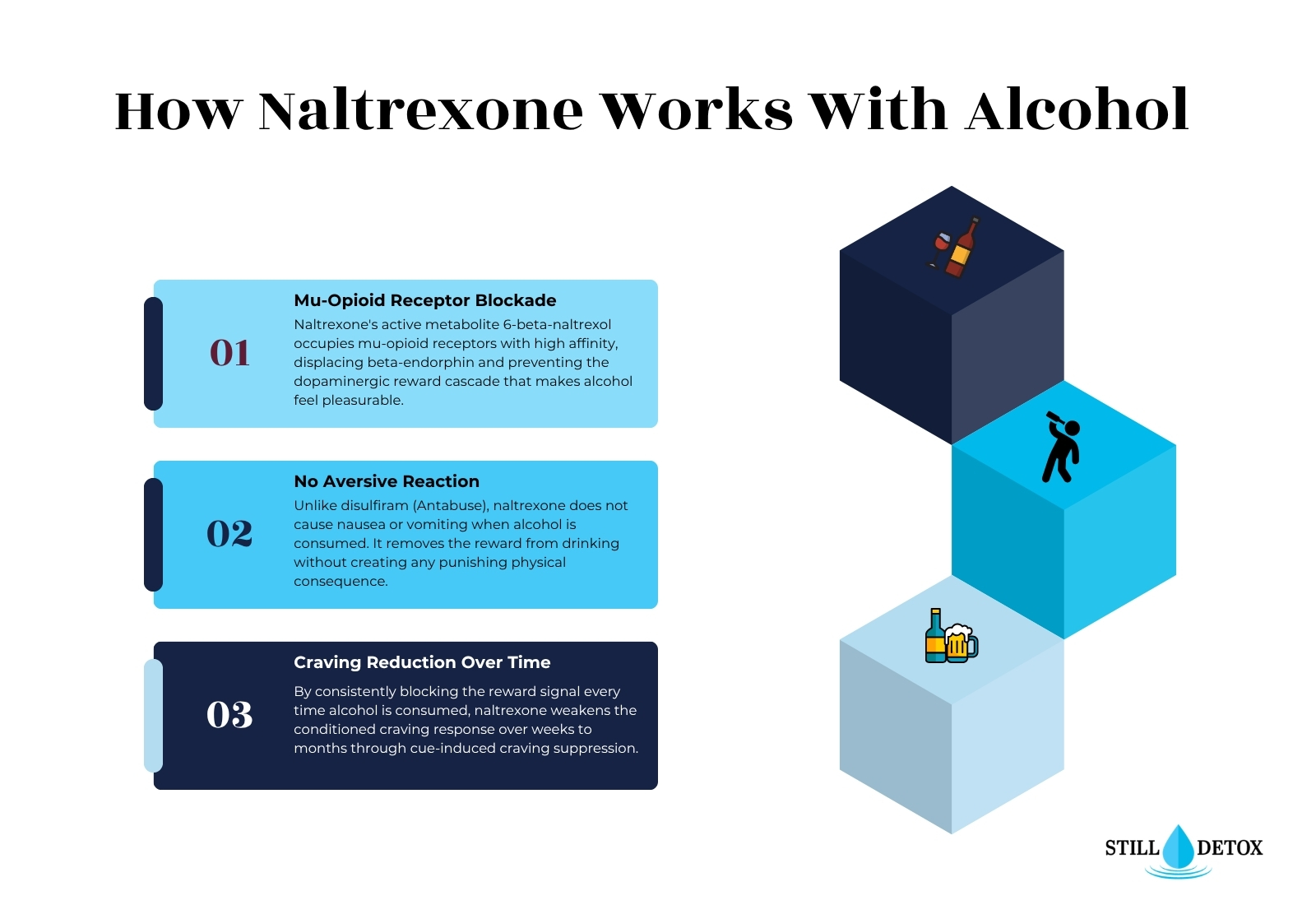
Naltrexone reduces the reward produced by alcohol by blocking the mu-opioid receptor pathway that connects alcohol consumption to dopamine release in the nucleus accumbens, the brain’s primary reward center. When alcohol is consumed without naltrexone, it triggers beta-endorphin release from the hypothalamus and brainstem, activating mu-opioid receptors throughout the mesolimbic dopamine circuit and producing the characteristic euphoria and desire for a second drink.
The Mu-Opioid Receptor and Alcohol’s Reward Pathway
Alcohol does not directly activate mu-opioid receptors the way opioid drugs do. Instead, it stimulates the release of endogenous opioid peptides, primarily beta-endorphin, that bind to mu-opioid receptors and trigger downstream dopamine release in the nucleus accumbens.
Naltrexone’s primary active metabolite, 6-beta-naltrexol, occupies the mu-opioid receptor with high affinity, displacing beta-endorphin and preventing the dopaminergic reward cascade from completing. The result is that alcohol produces intoxication without the reward reinforcement that drives continued drinking.
Volpicelli et al. published the landmark double-blind clinical trial in JAMA Archives of General Psychiatry in 1992, demonstrating that naltrexone-treated patients had significantly fewer drinking days and fewer relapse episodes than placebo-treated patients over 12 weeks. This trial provided the primary evidence base for the 1994 FDA approval and established naltrexone’s role in blunting alcohol’s opioid-mediated positive reinforcement.
How Naltrexone Reduces Alcohol Cravings Over Time
Naltrexone reduces cravings through cue-induced craving suppression. Alcohol cravings are largely conditioned responses to environmental stimuli, the sight of a drink, a social setting associated with drinking, or the smell of beer. These cues activate the opioid-mediated reward circuit in anticipation of reward.
Naltrexone gradually weakens the conditioned craving response over weeks to months by consistently blocking that reward signal every time alcohol is consumed. This mechanism differs from acamprosate, which reduces cravings through glutamate receptor modulation during abstinence rather than during active drinking.
Does Naltrexone Make You Sick If You Drink?
No. Naltrexone does not cause nausea, vomiting, or any aversive physical reaction when alcohol is consumed. This is the single most common misconception about naltrexone for AUD, arising from confusion with disulfiram (Antabuse), which causes a severe physical reaction when any alcohol is consumed. The clinical distinction between these two medications is fundamental and directly determines which patients are candidates for each.
Naltrexone vs Disulfiram vs Acamprosate: How They Compare
| Feature | Naltrexone (ReVia / Vivitrol) | Disulfiram (Antabuse) | Acamprosate (Campral) |
|---|---|---|---|
| Mechanism | Mu-opioid receptor antagonism; blocks alcohol reward | Aldehyde dehydrogenase inhibition; produces acetaldehyde toxicity | Glutamate/GABA modulation; reduces protracted withdrawal cravings |
| Reaction when drinking | No aversive reaction; reduced enjoyment only | Severe: flushing, nausea, vomiting, tachycardia, hypotension | No aversive reaction; no alcohol interaction |
| Requires abstinence | No, Sinclair Method requires active drinking | Yes, complete abstinence required throughout treatment | Yes, designed for use during abstinence to prevent relapse |
| FDA indication | AUD and opioid use disorder | AUD only | AUD only |
| Controlled substance | No | No | No |
| Addiction potential | None | None | None |
What Actually Happens If You Drink While on Naltrexone
When you drink alcohol while naltrexone is active, the alcohol still produces full intoxication. Impaired coordination, slowed reaction time, and cognitive impairment occur regardless of naltrexone. What naltrexone removes is the subjective pleasure, the euphoric buzz, and the reward-driven urge to have another drink.
Many patients on naltrexone describe alcohol as tasting flat, feeling unrewarding, or producing exhaustion rather than euphoria. Blood alcohol concentration rises normally, only the opioid-mediated reward signal is intercepted by receptor blockade.
Naltrexone itself can cause nausea as a direct medication side effect, occurring in 10 to 20% of patients during initial titration. This nausea is not triggered or worsened by alcohol consumption. It is a pharmacological side effect of opioid receptor blockade that typically resolves within two weeks and is managed by taking naltrexone with food or titrating from a lower starting dose.
The Sinclair Method: Drinking While on Naltrexone
The Sinclair Method (TSM) is a treatment protocol developed by Dr. John David Sinclair, a Finnish neuroscientist who demonstrated in controlled trials that naltrexone taken specifically before drinking, rather than during abstinence, produces gradual, durable reduction in alcohol cravings through pharmacological extinction.
How Pharmacological Extinction Works
Pharmacological extinction is the neurobiological mechanism Dr. Sinclair identified as the basis for TSM. In standard conditioning, the brain reinforces drinking behavior each time alcohol produces reward. Naltrexone, when present during alcohol consumption, prevents that reward from completing.
Over repeated exposures where drinking occurs while naltrexone blocks the reward, the conditioned association between alcohol and reward weakens through the same extinction mechanism governing other learned behaviors. The practical result is that cravings diminish progressively without requiring the patient to stop drinking at treatment initiation.
The TSM protocol requires taking naltrexone 50mg orally one hour before every drinking episode and continuing indefinitely. No reduction in drinking quantity is required at the outset. A 2001 multicenter Finnish study found that patients following this protocol reduced their alcohol consumption by an average of 90% over 12 months of consistent treatment.
Sinclair Method Timeline: What to Expect
TSM does not produce immediate abstinence and is not designed to. The following timeline reflects typical clinical experience, not guaranteed individual outcomes:
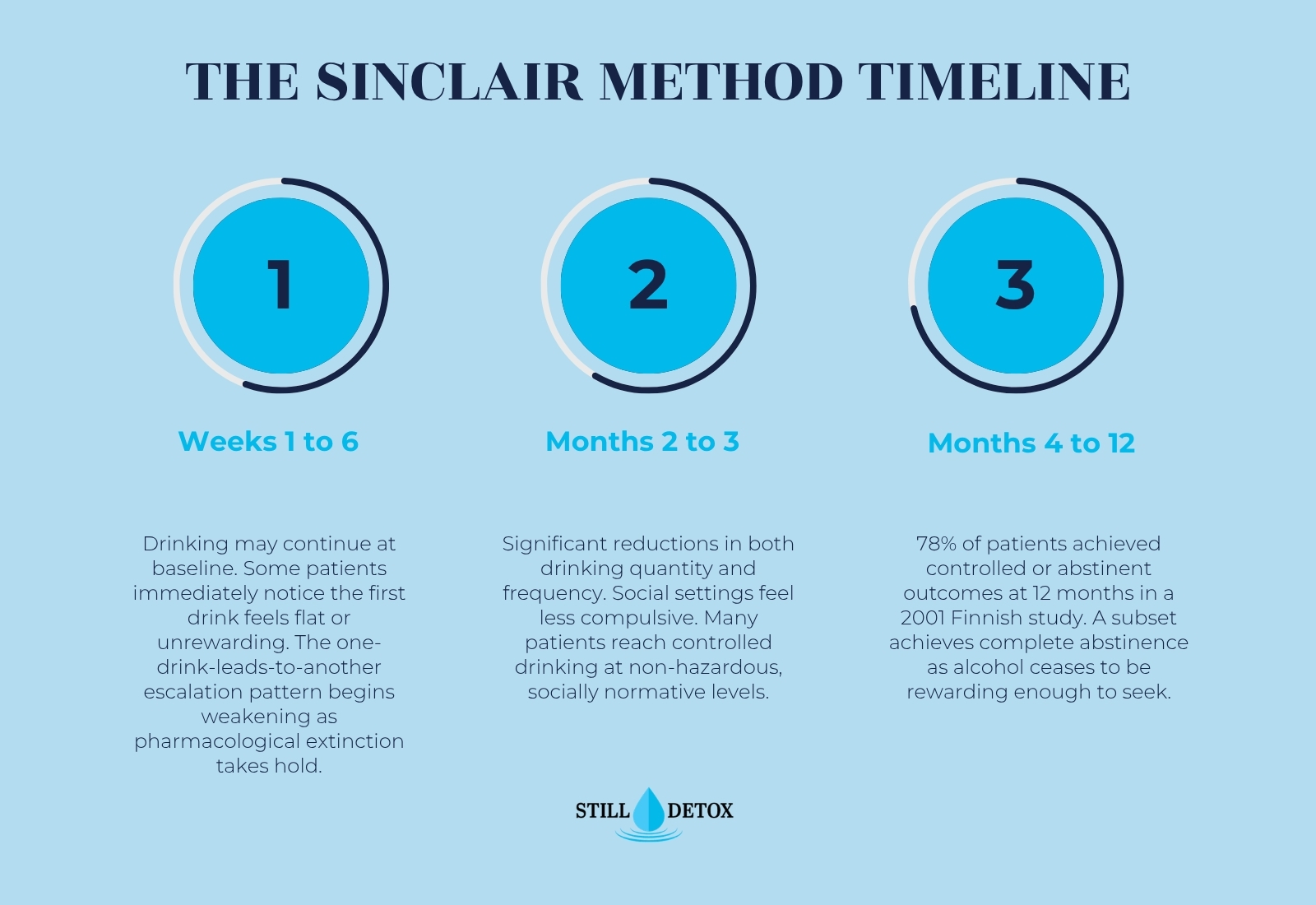
- Weeks 1 to 2: Drinking may continue at or near baseline levels. Naltrexone blocks the reward but conditioned habit structures and social cues remain intact. Some patients immediately notice the first drink feels flat or unrewarding. Nausea from naltrexone itself is most common during this phase and typically resolves with food or dose adjustment.
- Weeks 3 to 6: Most patients report a gradual reduction in the urge to continue drinking after one or two drinks. The conditioned escalation pattern, one drink automatically leading to another, begins weakening. Total weekly consumption typically starts declining during this window.
- Months 2 to 3: Significant reductions in both drinking quantity and frequency become apparent. Social settings feel less compulsive. Many patients reach controlled drinking, consumption at non-hazardous, socially normative levels.
- Months 4 to 12: Continued pharmacological extinction deepens the cue-reward uncoupling. A subset of patients achieves complete abstinence, not because they were forced to stop, but because alcohol ceased to be rewarding enough to seek. A 2001 landmark Finnish study found 78% of TSM patients achieved controlled or abstinent drinking outcomes at 12 months of consistent treatment.
Naltrexone Side Effects: Common, Severe, and Long-Term
Naltrexone produces side effects as a direct pharmacological result of opioid receptor blockade, independent of alcohol consumption. Understanding which effects are common, which require medical evaluation, and which persist long-term determines safe use in AUD treatment.
Common Side Effects
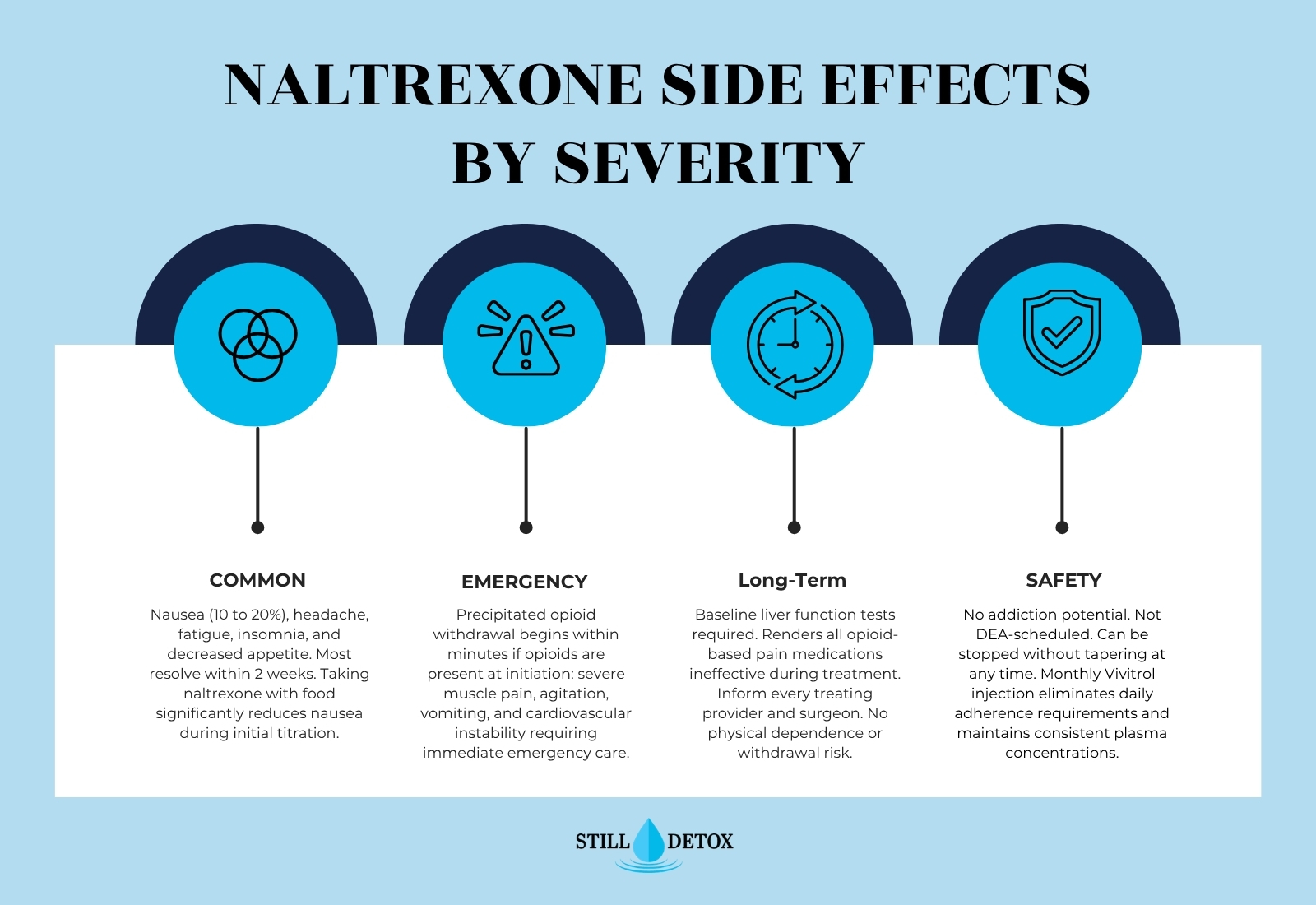
Common naltrexone side effects affecting 10 to 30% of patients during initial treatment include:
- Nausea: the most frequently reported side effect; typically resolves within 1 to 2 weeks; managed by taking with food or titrating from a lower starting dose
- Headache: reported in approximately 7 to 10% of patients across clinical trials
- Fatigue and reduced energy: relates to opioid receptor blockade reducing baseline endorphin tone throughout the day
- Insomnia or sleep disruption: most prominent during the first few weeks of treatment initiation
- Decreased appetite: is significant enough that naltrexone combined with bupropion (Contrave) is separately FDA-approved for weight management
- Abdominal discomfort or diarrhea: gastrointestinal effects are the primary reason for early naltrexone discontinuation in clinical practice
Severe Side Effects and When to Seek Emergency Care
The following severe side effects require immediate medical evaluation:
- Naltrexone-precipitated opioid withdrawal: if opioids are present in the system when naltrexone is taken, acute withdrawal begins within minutes: severe muscle pain, extreme agitation, vomiting, sweating, and cardiovascular instability; this is a medical emergency
- Hepatotoxicity at high doses: standard 50mg AUD dosing carries low hepatotoxic risk but requires baseline liver function tests before initiation; patients with active hepatitis or decompensated liver disease should not receive naltrexone
- Severe depression or suicidal ideation: reported as rare adverse events; patients with major depressive disorder require close clinical monitoring during the initiation period
- Allergic reaction: rash, difficulty breathing, or swelling requires emergency evaluation immediately
Long-Term Risks and Safety Considerations
Long-term naltrexone use in AUD treatment carries the following clinically significant considerations:
- Liver function monitoring: baseline liver function tests are required before initiating; patients with Child-Pugh Class C liver failure or active hepatitis should not receive naltrexone
- Opioid analgesic blockade: naltrexone renders all opioid-based pain medications ineffective; any treating provider or surgeon must be informed before procedures; emergency pain management must use non-opioid alternatives
- No physical dependence or withdrawal risk: naltrexone produces no euphoria, no physical dependence, and no withdrawal syndrome on discontinuation; it can be stopped without a taper at any time
Treatment for Alcohol Use Disorder at Still Detox
Alcohol use disorder treatment begins with the physiological reality that abrupt alcohol cessation in heavy drinkers can produce life-threatening withdrawal, including seizures, delirium tremens, and cardiovascular instability, requiring medical supervision before any long-term medication strategy like naltrexone can safely begin.
Medical Detox Before Naltrexone
Still Detox’s residential treatment program in the Boca Raton area begins with medically supervised detoxification for patients presenting with alcohol dependence. The CIWA-Ar (Clinical Institute Withdrawal Assessment for Alcohol, Revised) is administered on admission and at regular intervals to quantify withdrawal severity and guide pharmacological management. Naltrexone is initiated after the acute withdrawal phase is fully resolved.
Patients who have previously attempted quitting alcohol abruptly without medical support often benefit most from the structured inpatient environment, the clinical monitoring that home alcohol detox cannot safely provide for patients with physiological dependence.
Medication-Assisted Treatment Within a Full Program
Naltrexone for AUD produces its strongest outcomes when prescribed as part of a comprehensive treatment program that includes behavioral therapy and relapse prevention counseling. Managing alcohol cravings requires both the neurobiological intervention naltrexone provides and the cognitive and behavioral skills that structured counseling builds.
The PAWSS Score helps predict withdrawal severity and informs decisions about inpatient versus outpatient detox settings. Gabapentin is frequently used as an adjunct during the alcohol withdrawal transition period before naltrexone becomes the primary pharmacological agent for AUD maintenance.
How long naltrexone stays in your system determines dosing continuity. The oral tablet requires daily adherence, while the monthly Vivitrol injection maintains therapeutic concentrations automatically through the 30-day cycle.
Still Detox offers same-day clinical assessments for patients seeking alcohol use disorder treatment in Boca Raton and South Florida. Contact our admissions team to discuss whether naltrexone, Vivitrol, or an inpatient AUD treatment program is the right starting point.
Frequently Asked Questions
Does naltrexone make you sick if you drink?
No. Naltrexone does not cause nausea, vomiting, or any aversive physical reaction when alcohol is consumed. The drug that causes this reaction is disulfiram (Antabuse), which blocks alcohol metabolism and produces acetaldehyde toxicity. Naltrexone works by blocking the reward signal from alcohol rather than creating any punishing physical consequence of drinking. Naltrexone can cause nausea as a direct medication side effect independent of alcohol, but this typically resolves within two weeks.
What happens if you drink on naltrexone?
Alcohol still produces full intoxication when naltrexone is active. Blood alcohol concentration rises normally and all physical impairment effects remain present. What naltrexone blocks is the subjective euphoria and the opioid-mediated craving for more alcohol. Many patients describe alcohol as tasting flat or feeling unrewarding on naltrexone. The Sinclair Method uses this effect deliberately to extinguish conditioned alcohol cravings through consistent naltrexone-before-drinking use over months.
How long does naltrexone take to work for alcohol?
Naltrexone begins blocking opioid receptors within 1 to 2 hours of an oral dose. Reduction in drinking urges typically becomes noticeable within 2 to 4 weeks of consistent daily use. The full pharmacological extinction effect of the Sinclair Method takes 3 to 12 months of consistent naltrexone-before-drinking use to produce maximum reduction in cravings and consumption. Vivitrol reaches steady-state concentrations within the first week of the initial injection and maintains them for the full 30-day cycle.
Can you drink occasionally while taking naltrexone?
Yes. Standard naltrexone prescribing for AUD does not require alcohol abstinence, and the FDA label does not prohibit drinking during treatment. The Sinclair Method protocol specifically requires drinking while naltrexone is active in order to produce pharmacological extinction. However, naltrexone does not make it safe to drive, operate machinery, or combine alcohol with other CNS depressants. Alcohol still produces full intoxication and all of its physical impairment consequences regardless of naltrexone.
Is naltrexone the same as Antabuse (disulfiram)?
No. Naltrexone and disulfiram are entirely different medications with different mechanisms and different clinical applications. Naltrexone is a mu-opioid receptor antagonist that blocks alcohol’s reward signal without creating any physical reaction to drinking. Disulfiram is an aldehyde dehydrogenase inhibitor that produces severe flushing, nausea, vomiting, and cardiovascular instability when any alcohol is consumed. Patients must maintain complete alcohol abstinence while on disulfiram. Naltrexone has no such abstinence requirement.
Does naltrexone prevent you from getting drunk?
No. Naltrexone does not prevent intoxication. Blood alcohol concentration rises normally and all physical impairment effects of alcohol remain. What naltrexone eliminates is the subjective euphoria and the opioid-mediated craving for additional drinks. Patients on naltrexone can still become legally intoxicated and face all the cognitive and coordination consequences of alcohol. Driving and operating any machinery after drinking remains prohibited regardless of naltrexone use.
Can you take naltrexone if you also use opioids?
No. Naltrexone is absolutely contraindicated in anyone with opioids in their system. As a pure opioid antagonist, naltrexone immediately displaces opioids from their receptors and precipitates acute withdrawal: severe muscle cramps, vomiting, sweating, extreme agitation, and cardiovascular instability beginning within minutes. A minimum 7 to 10 opioid-free days is required before naltrexone initiation for short-acting opioid users. A 10 to 14 day clearance period is required for patients discontinuing buprenorphine.
References
- Substance Abuse and Mental Health Services Administration. (2024). Key substance use and mental health indicators in the United States: Results from the 2023 National Survey on Drug Use and Health. https://www.samhsa.gov/data/report/2023-nsduh-annual-national-report
- Volpicelli, J. R., Alterman, A. I., Hayashida, M., & O’Brien, C. P. (1992). Naltrexone in the treatment of alcohol dependence. Archives of General Psychiatry, 49(11), 876–880.
- Anton, R. F., O’Malley, S. S., Ciraulo, D. A., Cisler, R. A., Couper, D., Donovan, D. M., & Zweben, A. (2006). Combined pharmacotherapies and behavioral interventions for alcohol dependence: The COMBINE study. JAMA, 295(17), 2003–2017.
- Sinclair, J. D. (2001). Evidence about the use of naltrexone and for different ways of using it in the treatment of alcoholism. Alcohol and Alcoholism, 36(1), 2–10.
- National Institute on Alcohol Abuse and Alcoholism. (2023). Alcohol facts and statistics. https://www.niaaa.nih.gov/publications/brochures-and-fact-sheets/alcohol-facts-and-statistics
- U.S. Food and Drug Administration. (2006). Vivitrol (naltrexone for extended-release injectable suspension) prescribing information. https://www.fda.gov/drugs/information-drug-class/information-about-medications-opioid-use-disorder-moud
- American Psychiatric Association. (2022). Diagnostic and statistical manual of mental disorders (5th ed., text rev.). American Psychiatric Publishing.
- Garbutt, J. C., Kranzler, H. R., O’Malley, S. S., Gastfriend, D. R., Pettinati, H. M., Silverman, B. L., & Ehrich, E. W. (2005). Efficacy and tolerability of long-acting injectable naltrexone for alcohol dependence. JAMA, 293(13), 1617–1625.