

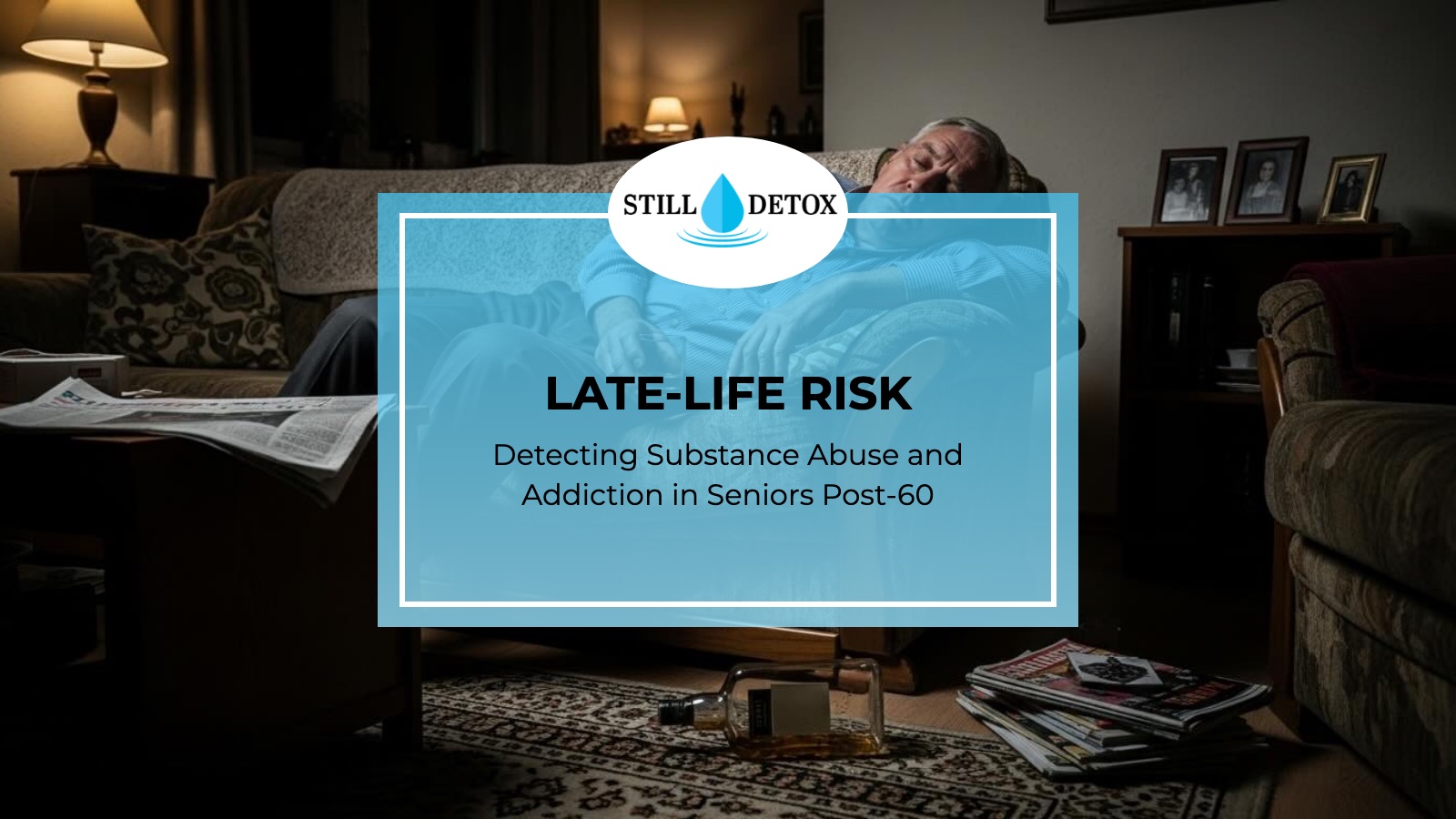
Addiction in seniors after age 60 is often hidden in plain sight. Symptoms can blend into other explanations normal aging, chronic pain, changing sleep, grief and the medications involved are frequently prescribed. Yet the data in 2024 – 2025 show a clear pattern: more older adults are affected, overdose profiles are shifting, and the signals that something is wrong are easy to miss unless we look for them on purpose. This guide brings the trends and the practical detection steps into one place so families, clinicians, and caregivers can respond earlier and more confidently.
What’s changed for seniors in 2025
Two stories are unfolding at once. First, overdose risk is rising in older adults, driven not only by opioids but by mixtures. A large analysis presented in October 2025 found a striking increase in deaths among people 65+ involving fentanyl combined with stimulants (cocaine or methamphetamine) across 2015–2023. The share of fentanyl-involved deaths that also included a stimulant roughly quintupled, and the absolute number of fentanyl deaths in seniors rose more than tenfold during that span. The study underscores how polysubstance patterns, rather than a single drug now shape late-life overdose.
Second, alcohol remains ubiquitous in later life. NIAAA’s summary of the 2024 National Survey on Drug Use and Health reports that about 57.5% of adults 65+ drank in the past year and 44.5% in the past month figures that matter because alcohol quietly amplifies fall risk, sleep disruption, and medication interactions.
Layered on top are disparities. Federal researchers have highlighted older Black men as experiencing disproportionate overdose mortality, a reminder that age, race, medical burden, and access intersect a point worth holding in mind when designing outreach and support.
Key Trends and Misused Substances Among Older Adults
While illicit drug use overall is higher among younger populations, the rates of substance misuse in seniors are rising, particularly for alcohol and prescription drugs.
1. Alcohol is the Most Common Threat
Alcohol is the most misused substance among older adults, with rates of high-risk drinking and binge drinking increasing substantially in recent years, especially among older women.
- Growing Prevalence: By 2022, approximately 1 in 11 adults over 60 had a Substance Use Disorder, with alcohol being the biggest factor.
- Physiological Risk: As the body ages, the percentage of lean muscle mass decreases, and the enzyme that breaks down alcohol (alcohol dehydrogenase) becomes less active. This results in higher blood alcohol concentrations and prolonged impairment from smaller amounts of alcohol compared to younger adults.
- Binge Drinking: Nearly 13% of older adults reported binge drinking in the past month. (Binge drinking is defined as 5 or more drinks for men, 4 or more for women, on one occasion).
2. Prescription and Over-the-Counter (OTC) Medications
Older adults consume more prescription and OTC medications than any other age group, increasing their risk of misuse, accidental overuse, and dangerous drug-drug interactions.
- High Misuse Rate: Approximately 18.2% of older adults (aged 60 and above) are estimated to misuse prescription drugs, including opioids, sedatives, and stimulants.
- Polysubstance Risk: Mixing alcohol with common medications (like pain relievers, sleeping pills, or anti-anxiety meds) can be dangerous or even fatal. At least 1 in 5 older drinkers take medications that could negatively interact with alcohol.
- Commonly Misused Prescriptions:
- Opioid pain medications (due to chronic pain).
- Benzodiazepines and other anti-anxiety/sedative medications (often prescribed for insomnia or anxiety, despite contraindications for long-term use in this population).
3. Cannabis and Illicit Drugs
Use of cannabis and other illicit substances has also seen a significant rise in the older adult demographic.
- Cannabis Increase: The prevalence of cannabis use in adults 65 and older rose 75% between 2015 and 2018, often used to self-medicate for chronic pain, sleep disturbances, anxiety, and depression.
- Illicit Drug Use: Misuse of illicit drugs (cocaine, heroin, etc.) is generally lower but is still rising, driven largely by the aging of the Baby Boomer generation.
Why detection is tricky after 60
Later life often brings polypharmacy, slower metabolism, and more medical comorbidity. Medications that are relatively well-tolerated at 40 can trigger confusion, falls, or paradoxical agitation at 70. The American Geriatrics Society’s 2023 Beers Criteria specifically caution that all benzodiazepines increase the risk of cognitive impairment, delirium, falls, and fractures in older adults; similar caution applies to “Z-drugs” for sleep. When alcohol or opioids are present even at “modest” levels the combined effect can be larger than anyone expects.
Social context complicates the picture. Grief, retirement transitions, caregiving stress, and isolation can all make sedatives or evening drinks feel helpful in the short run. Meanwhile, family and clinicians may attribute new fatigue, memory slips, or unsteady gait to aging alone. That’s how misuse stays invisible: every sign has a plausible alternative explanation.
Signals worth noticing (and how they differ from “just aging”)
- Medication drift. Refills arrive sooner than expected, doses creep up, or “as-needed” medicines (benzodiazepines, sleep aids, opioid analgesics) become daily fixtures. In chart reviews, this pattern often precedes falls or ED visits.
- Falls, near-falls, or “mystery” bruises. These can accompany benzodiazepines, opioids, sedative-hypnotics, or alcohol even when blood levels are modest. Recurrent falls merit a medication/supplement review, not just balance training.
- Sleep and mood changes that follow the prescription cycle. Better sleep or calmer afternoons right after refills, then lighter sleep and irritability as the month goes on.
- New confusion or daytime somnolence after a med change. Many seniors metabolize drugs more slowly; the same dose can act longer and stronger than it once did.
- Financial or online ordering shifts. New recurring charges from online “pharmacies,” supplement vendors, or delivery services may indicate off-label sourcing. Regulators have warned that many online sellers are unlicensed and a source of counterfeits, which is particularly hazardous in this age group.
Screening that respects dignity and gets to the point
No single question will fit every situation, but brief, validated tools work well with older adults when introduced matter-of-factly and without stigma:
- AUDIT-C (3 items) for alcohol quantity/frequency; a full AUDIT if scores are elevated.
- SMAST-G (Short Michigan Alcoholism Screening Test Geriatric) when alcohol risk is suspected in clinical or community settings.
- ASSIST (WHO) when multiple substances might be in play, including nonmedical sedatives or opioids.
Pair screening with a medication reconciliation that includes OTC products (antihistamines, sleep blends), supplements, and leftover prescriptions. Then review against the Beers Criteria for high-risk agents in older adults.
When opioids are part of the picture
Chronic pain is common in later life, so opioid exposure is not unusual. The clinical challenge is separating benefit with guardrails from a pattern that is undermining function. Red flags include escalating dose without functional gains, using opioids for sleep or anxiety, and combining with benzodiazepines or alcohol. Remember that today’s overdose landscape for seniors often involves fentanyl contamination or stimulant co-involvement; overdose can occur even when a person believes they are taking a familiar pill. Equipping households with naloxone has become simpler retail dispensing doubled between 2019 and 2023 to more than 2.1 million prescriptions, and OTC availability has expanded same-day access though stocking remains uneven by state and chain.
Practical detection steps for families and caregivers
Start with curiosity, not confrontation. Ask about sleep, pain, and energy before asking about substances. Offer to organize medicines together a weekly pillbox can surface duplications or outdated scripts. If the home has had recent falls or “almost falls,” suggest a medication review visit with the clinician specifically focused on fall risk. Bring every bottle, blister pack, and supplement to the appointment. If alcohol is part of evening routines, consider replacing large, opaque glasses with measured pours and alternating with a nonalcoholic beverage small design changes often reveal the real pattern without a fight. If new online orders are showing up, ask for help verifying the seller through a licensed pharmacy directory.
FAQ
Isn’t a nightcap or a prescribed sleep aid normal at this age?
“Normal” and “safe” are not the same. In older adults, alcohol and sedatives interact with common conditions (hypertension, diabetes, cognitive impairment) and with fall risk. If sleep is the goal, a medication review and non-drug sleep strategies often restore rest with fewer downstream problems.
How can we tell the difference between early dementia and medication/sedative effects?
Time course and context help. New confusion that follows a dose increase, a refill, or a new medication is a clue. So are morning grogginess, near-falls, and waxing-waning alertness. A focused review against the Beers Criteria is a practical first step before labeling symptoms as dementia.
What’s one small step that makes a big difference at home?
Gather every medication and supplement in one place and set a routine for taking them. This simple act reveals duplications, outdated scripts, and “as-needed” meds that have become daily without anyone noticing.
Should every senior household have naloxone?
Any home with prescribed or nonmedical opioids or where pills are acquired outside licensed pharmacies should consider keeping naloxone. Pharmacies increasingly stock it without a prescription, and OTC options have improved same-day availability. Talk with the pharmacist about how to use it and when to call emergency services.
References
- American Society of Anesthesiologists (Oct 2025): Seniors and polysubstance overdose (fentanyl + stimulants).
- Coverage of 2015–2023 trend: stimulant co-involvement in fentanyl deaths among older adults.
- NIAAA (Aug 2025): Alcohol and older adults – NSDUH 2024 highlights.
- NIDA Director’s Blog (Aug 2024): Disparities – older Black men and overdose.
- American Geriatrics Society 2023 Beers Criteria – benzodiazepines and fall/cognitive risk.
- Beers Criteria (PDF handout): potentially inappropriate medications in older adults.
- SAMHSA TIP 26: Treating Substance Use Disorder in Older Adults (screening & care).
- Han & Moore (2017): AUDIT and brief screening in older adults.
- SMAST-G overview (geriatric alcohol screening).
- CDC: Naloxone retail dispensing (2019–2023).
- JAMA Network (2024): Pharmacy availability after OTC naloxone transition.
- Medicare.gov: Mental health & substance use disorder coverage.
- CMS: Opioid Treatment Programs under Medicare Part B.