



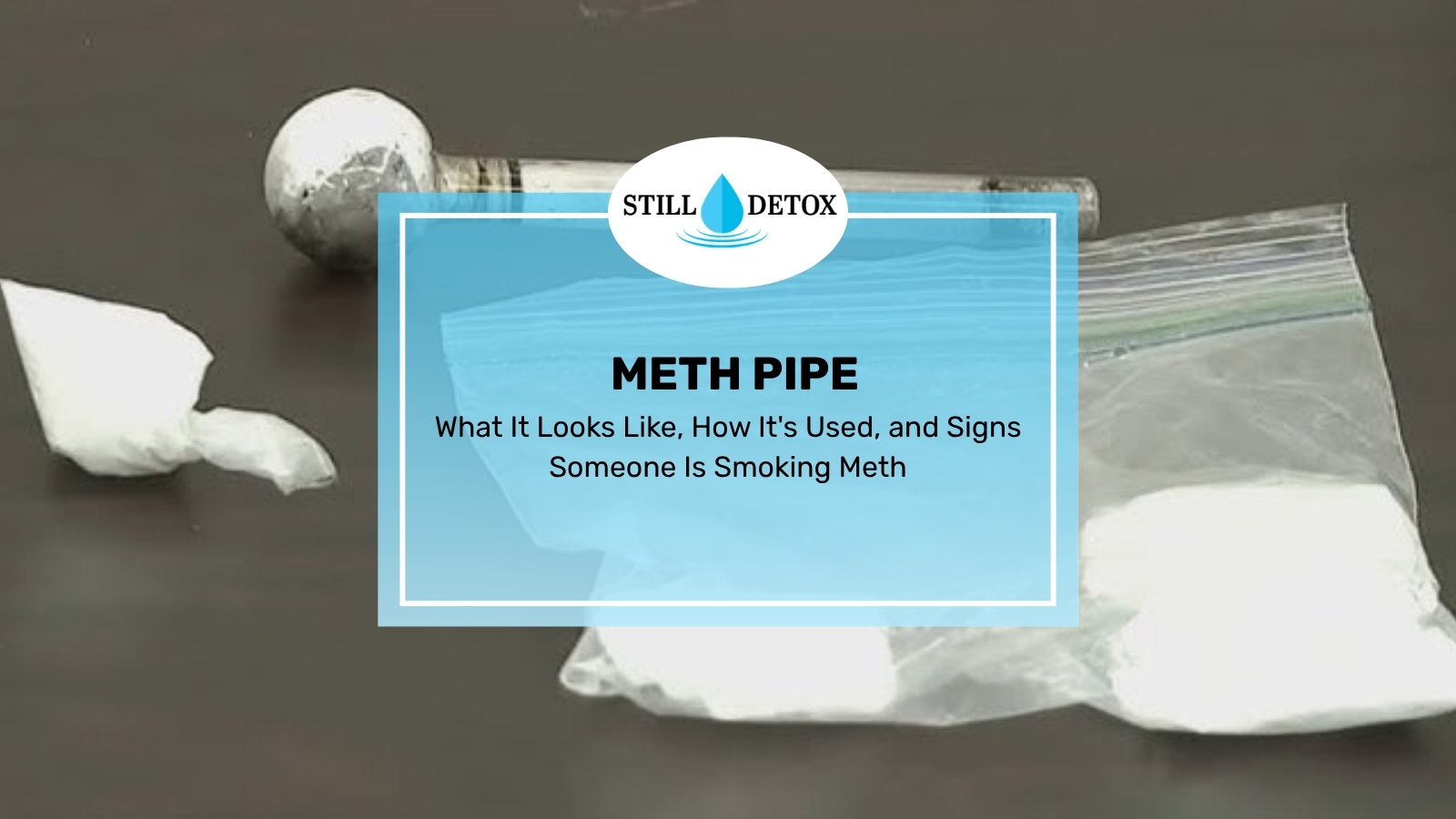
A meth pipe is a small borosilicate glass device with a sealed spherical bulb and hollow stem, designed to vaporize methamphetamine for inhalation.
These devices measure two to six inches long, leave white crystalline residue inside the bulb after use, and are classified as drug paraphernalia under Florida Statute 893.147. Understanding what a meth pipe looks like and what neurological damage it produces helps families and clinicians identify methamphetamine use disorder before irreversible dopaminergic damage occurs.
Key Takeaways
- A meth pipe consists of a hollow borosilicate glass stem and sealed spherical bulb, designed to vaporize methamphetamine through indirect heating rather than combustion.
- According to SAMHSA’s 2021 National Survey on Drug Use and Health, approximately 2.5 million people aged 12 and older reported past-year methamphetamine use in the United States.
- Smoking methamphetamine via glass pipe delivers the drug to the brain within 3 to 5 seconds, triggering nucleus accumbens dopamine surges 3 to 5 times above baseline levels.
- A used meth pipe shows white interior cloudiness from condensed vapor, brown or amber scorch marks on the bulb exterior, and a persistent burnt-plastic odor absent from new pipes.
- Methamphetamine use disorder (MUD) is a DSM-5 stimulant use disorder with no FDA-approved pharmacotherapy; medically supervised detoxification and structured residential treatment are the evidence-based clinical standard.
What Is a Meth Pipe?
A meth pipe is a borosilicate glass vaporization device engineered specifically for methamphetamine inhalation. Street names include glass rose, oil burner, pookie, bubble, and flute. The device heats methamphetamine to its sublimation point without igniting it, preserving a higher proportion of active methamphetamine molecules than combustion methods allow.
Methamphetamine hydrochloride sublimates at approximately 170°C (338°F), converting from crystalline solid to vapor under controlled indirect heat. Standard cannabis or tobacco pipes cannot replicate this sublimation process because they lack the sealed bulb required to contain the drug during heating. This structural difference makes meth pipes uniquely suited to stimulant vaporization.
Methamphetamine belongs to the phenethylamine stimulant family alongside benzedrine, the amphetamine compound introduced medically in the 1930s that established the neurochemical template for modern methamphetamine misuse.
The Standard Glass Bulb Pipe
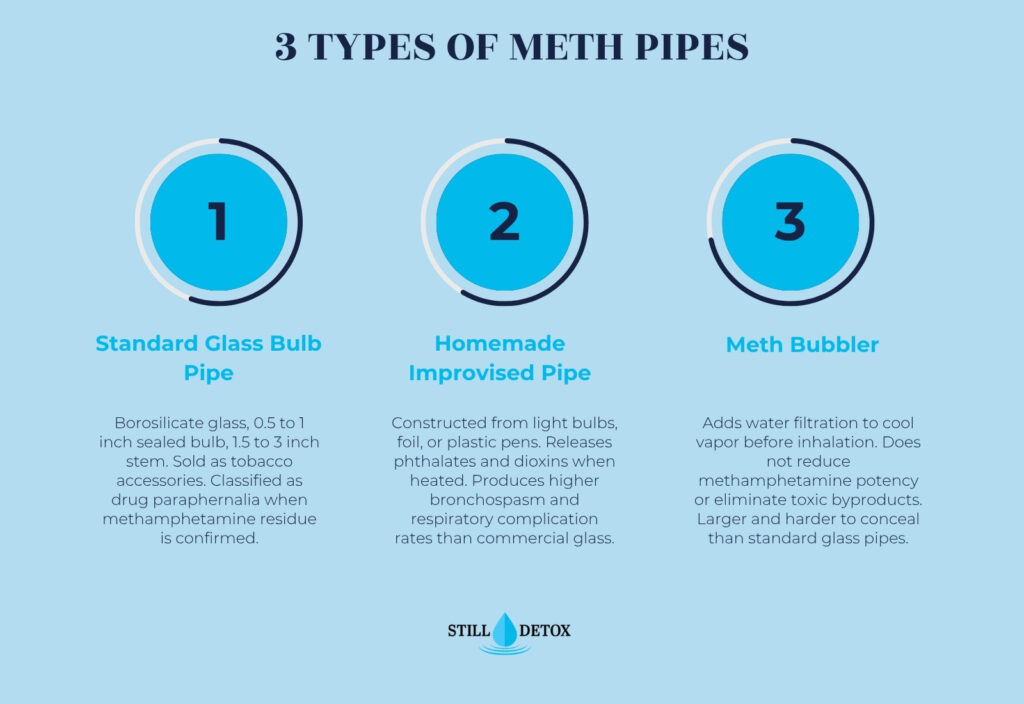
The standard meth pipe features a cylindrical borosilicate glass stem and a sealed spherical bulb manufactured for thermal resistance. The bulb measures 0.5 to 1 inch in diameter and the stem measures 1.5 to 3 inches. These devices are commercially sold in smoke shops labeled as tobacco accessories or glass rose pipes.
Despite retail labeling, the Drug Enforcement Administration classifies these items as drug paraphernalia when physical evidence or contextual use establishes methamphetamine administration. Residue analysis combined with possession of methamphetamine or related materials converts a labeled tobacco accessory into prosecutable paraphernalia under Florida and federal law.
Homemade and Improvised Pipes
Homemade meth pipes are constructed from emptied incandescent light bulbs, rolled aluminum foil, modified plastic pens, and small glass vials. Light bulb pipes require filament removal and metal base extraction to create a functional glass chamber. These devices present significantly greater inhalation toxicity risk than commercial borosilicate glass versions.
Plastic components in improvised pipes release phthalates, dioxins, and volatile organic compounds when heated to methamphetamine vaporization temperatures. These chemical byproducts enter the pulmonary alveoli alongside methamphetamine vapor, compounding respiratory and systemic toxicity. Improvised pipe users report higher rates of bronchospasm and acute respiratory complications than commercial glass pipe users.
The Meth Bubbler
A meth bubbler adds a water filtration chamber between the glass stem and the mouthpiece to cool methamphetamine vapor before inhalation. The water reduces vapor temperature but does not eliminate toxic byproducts or reduce methamphetamine potency. Bubblers are larger than standard pipes and significantly harder to conceal.
How a Meth Pipe Works
When methamphetamine hydrochloride crystals are placed inside the sealed glass bulb and indirect flame is applied externally, the drug sublimates from solid to vapor without combustion. This sublimation preserves the intact methamphetamine molecule, delivering a concentrated dose to the pulmonary vasculature within 3 to 5 seconds. No ash, tar, or charred residue results from proper vaporization technique.
The Vaporization and Inhalation Process
The user rotates the glass bulb while applying a lighter flame below, distributing heat evenly to prevent localized overheating. Uneven heat produces methamphetamine oil, a brown-amber combustion byproduct that coats the glass and reduces vapor purity. Experienced users recognize amber discoloration inside the bulb as evidence of product degradation from excessive temperature.
Methamphetamine vapor exits the bulb, travels down the glass stem, and passes through a small lateral carburetor hole. Releasing finger pressure from this opening dilutes the concentrated vapor stream with ambient air, modulating dose per inhalation breath. The carburetor hole is one of the most structurally reliable features distinguishing a meth pipe from all other glass smoking devices.
Residue Buildup as an Identification Marker
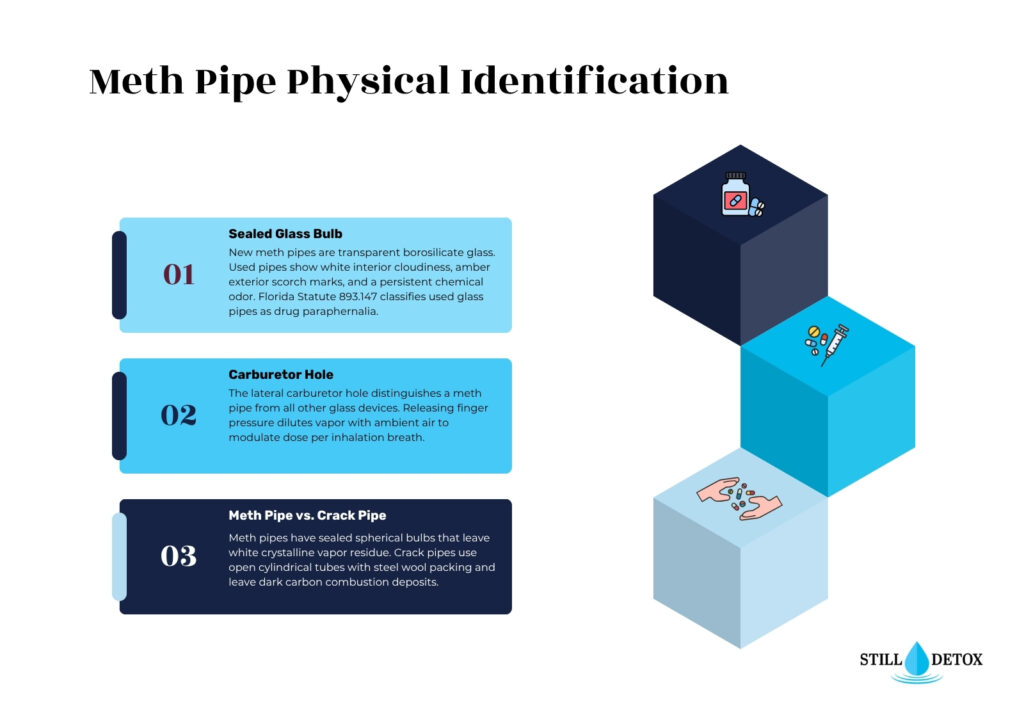
A used meth pipe develops white interior cloudiness as condensed methamphetamine vapor deposits accumulate on the glass walls. Users sometimes re-vaporize this condensed residue, called “reclaim,” when fresh methamphetamine is unavailable. Interior cloudiness is the single most reliable visual indicator that a transparent glass pipe has been used for methamphetamine.
Brown or black scorch marks appear on the bulb exterior when excessive heat was applied during use. A sharp chemical odor inside the glass, described as burnt plastic or industrial solvent, remains detectable for days after last use. These combined visual and olfactory indicators reliably distinguish a used meth pipe from clean glass tobacco or cannabis devices.
What Does a Meth Pipe Look Like? Physical Identification
Identifying a meth pipe requires recognizing four features: a sealed spherical glass bulb, a hollow cylindrical stem with no filter or screen, a lateral carburetor hole, and either complete transparency or white interior residue. New pipes are entirely transparent. Used pipes develop interior cloudiness, exterior discoloration, and a persistent chemical odor not present in unused glass.
Physical Characteristics of New and Used Meth Pipes
Physical identifiers of a glass meth pipe include:
- Sealed spherical borosilicate glass bulb measuring 0.5 to 1.5 inches in diameter
- Hollow cylindrical stem measuring 1.5 to 3 inches with no screen, bowl, or filter
- Small lateral carburetor hole on the stem or at the bulb-stem junction
- Complete transparency with no interior markings on a new, unused pipe
- Weight of 0.5 to 1.5 ounces depending on glass thickness and bulb size
Evidence that a glass pipe has been used for methamphetamine includes:
- White or pale-yellow interior cloudiness from condensed methamphetamine vapor deposits
- Brown or amber scorch marks on the exterior surface of the glass bulb
- Persistent chemical or burnt-plastic odor detectable even after rinsing
- Crystalline methamphetamine deposits concentrated at the bulb-stem junction
Meth Pipe vs. Crack Pipe: Key Differences
A meth pipe and a crack pipe are both glass smoking devices, but their heating chambers and residue profiles differ substantially. A meth pipe uses a sealed spherical bulb where methamphetamine rests on the glass surface during vaporization. A crack pipe uses an open cylindrical glass tube where crack cocaine sits on steel wool or mesh packing material.
Meth pipe use produces thin, nearly invisible vapor with white interior cloudiness as residue. Crack cocaine combustion produces dense, visible white smoke and leaves dark carbon deposits rather than the pale crystalline film associated with methamphetamine vaporization. Clinicians assessing drug paraphernalia can use crack pipe physical characteristics to confirm which stimulant substance a recovered device was used for.
Florida Statute 893.147 classifies both devices as drug paraphernalia when residue evidence or proven use intent is established. Possession carries first-degree misdemeanor status and sale elevates the charge to a third-degree felony.
Meth Pipe vs. Cannabis Pipe: Key Differences
A cannabis pipe has an open bowl chamber packed with plant material, a flat screen or filter inside the stem, and shows black charred combustion residue from burning organic matter. A meth pipe has no bowl, no filter, no plant material, and shows white vaporization residue inside the glass bulb. The presence or absence of combustion byproducts immediately differentiates the two devices.
Health Risks of Smoking Methamphetamine
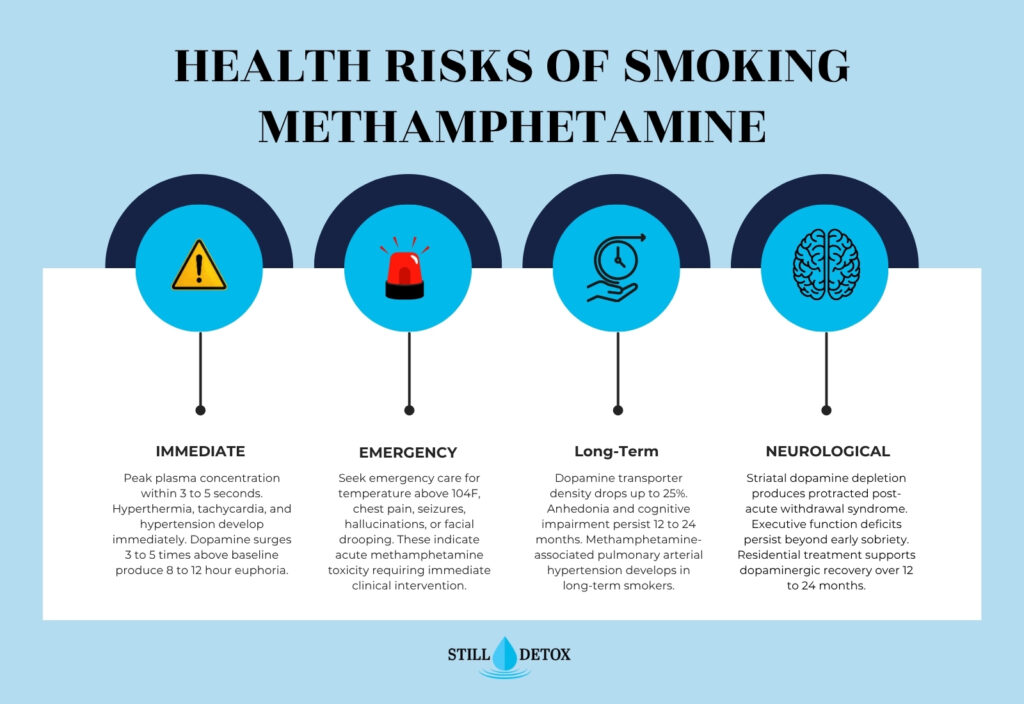
Inhalation via glass pipe delivers methamphetamine to peak plasma concentration within 3 to 5 seconds, faster than any route except intravenous injection. This rapid delivery produces the highest reinforcement schedule of any common methamphetamine administration method, accelerating the development of stimulant use disorder. Dopaminergic damage accumulates across multiple neural circuits with every inhalation episode.
Immediate Physiological Effects of Meth Pipe Use
Smoking methamphetamine through a glass pipe triggers immediate hyperthermia, tachycardia exceeding 100 beats per minute, hypertension, bronchospasm, and mydriasis (pupil dilation). The dopaminergic flooding of the nucleus accumbens produces intense euphoria lasting 8 to 12 hours before depletion-driven dysphoria and compulsive re-dosing behavior develop. This binge-dysphoria cycle drives rapid methamphetamine use disorder progression.
Methamphetamine-induced hyperthermia can elevate core body temperature above 104°F (40°C) in severe intoxication episodes. This temperature elevation triggers rhabdomyolysis, releasing myoglobin from damaged skeletal muscle into systemic circulation. Myoglobin deposition in renal tubules produces acute kidney injury requiring emergency medical intervention.
Long-Term Neurological and Physical Damage
Chronic methamphetamine inhalation reduces striatal dopamine transporter density by up to 25%, according to NIDA neuroimaging data. This dopaminergic depletion causes protracted anhedonia, executive function deficits, and cognitive impairment persisting 12 to 24 months after cessation. Recovery of dopamine transporter function requires sustained abstinence in a structured residential treatment environment.
Pulmonary complications include methamphetamine-associated pulmonary arterial hypertension (METH-PAH), a progressive vascular condition that reduces cardiac output over time. Dental destruction from xerostomia, bruxism, and acidic vapor exposure produces severe irreversible oral tissue loss. Individuals who combine methamphetamine inhalation with cocaine use face compounded cardiovascular risk from dual sympathomimetic adrenergic receptor activation.
Periorbital tissue changes including dark circles under the eyes from chronic sleep deprivation, malnutrition, and vascular compromise are among the most externally visible signs of sustained methamphetamine pipe use.
Emergency Signs Requiring Immediate Medical Intervention
Seek emergency care immediately if any of the following develop following methamphetamine use:
- Chest pain, palpitations, or irregular heartbeat
- Core temperature above 104°F (40°C) with confusion or altered mental status
- Seizure activity or sudden loss of consciousness
- Auditory or visual hallucinations with acute paranoid ideation
- Sudden facial drooping, arm weakness, or slurred speech indicates a cerebrovascular event
Signs Someone Is Smoking Meth
Methamphetamine inhalation via glass pipe produces a recognizable behavioral and physiological signature distinct from other substance use patterns. The characteristic cycle includes 8 to 12 hours of stimulant-dominant hyperarousal followed by a pronounced crash of hypersomnia, dysphoria, and intense craving. This binge-crash cycle drives the compulsive re-dosing patterns that define methamphetamine use disorder.
Behavioral Warning Signs
Observable behavioral indicators of methamphetamine use disorder include:
- Extended wakefulness of 3 to 7 consecutive days (the “tweaking” state) followed by prolonged hypersomnia of 24 hours or longer
- Repetitive purposeless behaviors including compulsive cleaning, electronic disassembly, or chronic excoriation from methamphetamine-induced formication
- Rapid unexplained financial decline combined with social withdrawal and escalating secretive behavior patterns
- Paranoid ideation, unprovoked aggression, or persecutory delusions emerging without prior psychiatric history
- Discovery of small glass bulb pipes, glass rose devices, or improvised light bulb pipes with white or cloudy interior residue
Individuals who escalate to illicit methamphetamine sometimes begin stimulant misuse with prescription compounds such as blue Adderall tablets before developing tolerance to amphetamine-type stimulants. Some individuals using methamphetamine also experiment with rectal drug administration, which carries distinct mucosal and systemic toxicity risks separate from inhalation.
Physical Warning Signs of Methamphetamine Use
Physical signs of methamphetamine use disorder include:
- Severe dental decay, gum recession, and accelerated tooth loss from xerostomia, bruxism, and acidic vapor exposure to enamel
- Facial excoriations and open sores from chronic skin picking driven by methamphetamine-induced formication
- Rapid unexplained weight loss from methamphetamine’s direct suppression of hypothalamic appetite signaling
- Sunken orbital tissue and pronounced periorbital darkening from cumulative sleep deprivation and systemic malnutrition
- Persistent mydriasis in well-lit environments lasting hours following methamphetamine inhalation episodes
Methamphetamine Use Disorder Treatment at Still Detox
Methamphetamine use disorder (MUD) is a chronic DSM-5 stimulant use disorder requiring structured clinical intervention addressing both acute withdrawal and the protracted dopaminergic recovery phase. No FDA-approved pharmacotherapy currently exists for methamphetamine dependence, making behavioral treatment delivered within a medically supervised residential setting the established clinical standard. Early treatment access limits cumulative neurological damage.
Adults seeking medically supervised stimulant use disorder treatment in South Florida can access comprehensive dual-diagnosis assessment and evidence-based methamphetamine detox programs at Still Detox’s residential treatment facility in Boca Raton. Medical staff conducts same-day assessments for individuals ready to begin treatment.
Frequently Asked Questions
What are meth pipes called on the street?
Meth pipes are called glass rose, oil burner, pookie, bubble, and flute across different regions. Some areas use the term “bowl,” though this overlaps with cannabis pipe terminology. All refer to the same borosilicate glass vaporization device used for methamphetamine inhalation. Law enforcement and addiction clinicians recognize all of these terms as drug paraphernalia identifiers.
Is a meth pipe the same as a crack pipe?
No. A meth pipe uses a sealed spherical glass bulb where methamphetamine vaporizes on the glass surface. A crack pipe uses an open cylindrical tube packed with steel wool. The two devices differ in chamber structure, residue color, and vapor visibility. Both are classified as drug paraphernalia under Florida Statute 893.147 when evidence of drug use is present.
How do you identify a glass pipe that was used for meth?
A used meth pipe shows white or pale-yellow interior cloudiness from condensed vapor deposits, brown or amber exterior scorch marks on the bulb, and a persistent chemical or burnt-plastic odor. Crystalline methamphetamine deposits inside the bulb junction confirm prior use. An unused pipe is entirely clear with no discoloration or chemical odor present.
Is possessing a meth pipe illegal in Florida?
Yes. Under Florida Statute 893.147, possessing drug paraphernalia including a glass pipe with methamphetamine residue is a first-degree misdemeanor, punishable by up to one year in jail and a $1,000 fine. Sale or delivery elevates the charge to a third-degree felony. Physical residue evidence or established intent to use is sufficient for a paraphernalia conviction.
What is “tweaking” in methamphetamine use?
Tweaking refers to a state of hyperactive paranoia and severe sleep deprivation following a prolonged methamphetamine binge lasting 3 to 7 days. Dopamine depletion and glutamatergic dysregulation during tweaking produce hallucinations, extreme agitation, and unpredictable behavior. Tweaking represents one of the most clinically dangerous phases of methamphetamine use disorder and requires immediate safety intervention.
References
- Substance Abuse and Mental Health Services Administration. (2022). Key substance use and mental health indicators in the United States: Results from the 2021 National Survey on Drug Use and Health. https://www.samhsa.gov/data/sites/default/files/reports/rpt39443/2021NSDUHFFRRev010323.pdf
- National Institute on Drug Abuse. (2021). Methamphetamine DrugFacts. https://nida.nih.gov/publications/drugfacts/methamphetamine
- Drug Enforcement Administration. (2020). Methamphetamine drug fact sheet. https://www.dea.gov/sites/default/files/2020-06/Methamphetamine-2020.pdf
- Volkow, N. D., Chang, L., Wang, G. J., Fowler, J. S., Leonido-Yee, M., Franceschi, D., Sedler, M. J., Gatley, S. J., Hitzemann, R., Ding, Y. S., Logan, J., Wong, C., & Miller, E. N. (2001). Association of dopamine transporter reduction with psychomotor impairment in methamphetamine abusers. American Journal of Psychiatry, 158(3), 377–382.
- American Psychiatric Association. (2022). Diagnostic and statistical manual of mental disorders (5th ed., text rev.). American Psychiatric Publishing.
- Florida Legislature. (2023). Florida Statute 893.147: Use, possession, manufacture, delivery, transportation, advertisement, or retail sale of drug paraphernalia. The Florida Senate.
- National Institute on Drug Abuse. (2022). Methamphetamine research report. https://nida.nih.gov/publications/research-reports/methamphetamine/overview


