




Percocet withdrawal produces flu-like symptoms, muscle aches, and anxiety that begin within hours of the last dose and typically resolve within one to two weeks. The oxycodone in Percocet is a Schedule II opioid, and stopping it abruptly triggers a predictable withdrawal process that is physically uncomfortable but rarely dangerous on its own. Symptoms peak between 48 and 72 hours after the last dose and gradually decline over the following week.
Some psychological symptoms, including cravings and mood changes, can linger for weeks or months after the physical symptoms fade. Understanding what to expect makes the process less frightening and safer to manage. So what does that timeline actually look like, day by day?
Key Takeaways
- Percocet withdrawal begins 5 to 8 hours after the last dose and peaks between 48 and 72 hours, driven by rebound activity in the brain’s locus coeruleus.
- An estimated 8.6 million Americans misused prescription pain relievers in the past year, according to the 2023 National Survey on Drug Use and Health from SAMHSA.
- Clinicians measure withdrawal severity using the Clinical Opiate Withdrawal Scale (COWS), an 11-item tool scored from 0 to 48 that guides when to start medication.
- Opioid withdrawal rarely causes seizures, but alcohol and benzodiazepine withdrawal can trigger delirium tremens, a medical emergency with a mortality rate as high as 37% when untreated.
- Medications including buprenorphine, methadone, and the non-opioid drug lofexidine ease withdrawal severity and reduce the risk of relapse.
What Is Percocet?
Percocet is a prescription painkiller that combines oxycodone, a Schedule II opioid, with acetaminophen, a non-opioid pain reliever, and only the oxycodone component drives physical withdrawal.
Percocet’s Two Active Ingredients
- Oxycodone binds directly to mu-opioid receptors in the brain and central nervous system, producing the pain relief, euphoria, and physical dependence associated with Percocet use.
- Acetaminophen adds analgesic effect without binding opioid receptors, meaning it contributes no withdrawal symptoms of its own but raises the risk of liver damage when Percocet is taken in excessive doses.
- Immediate-release oxycodone has a half-life of roughly 3.2 to 3.5 hours, so most of the drug clears the bloodstream within about 19 hours even though withdrawal symptoms persist far longer.
How Percocet Differs From Oxycodone Alone
- Plain oxycodone (Roxicodone, OxyContin) produces a nearly identical withdrawal syndrome to Percocet because oxycodone, not acetaminophen, drives the physical dependence in both drugs.
- Extended-release oxycodone (OxyContin) can produce a slower-onset, longer withdrawal course than the immediate-release oxycodone found in Percocet, since the medication releases into the body more gradually.
- Readers weighing the difference between the two drugs can review the full oxycodone versus Percocet comparison for dosing and formulation details.
Why Percocet Causes Withdrawal
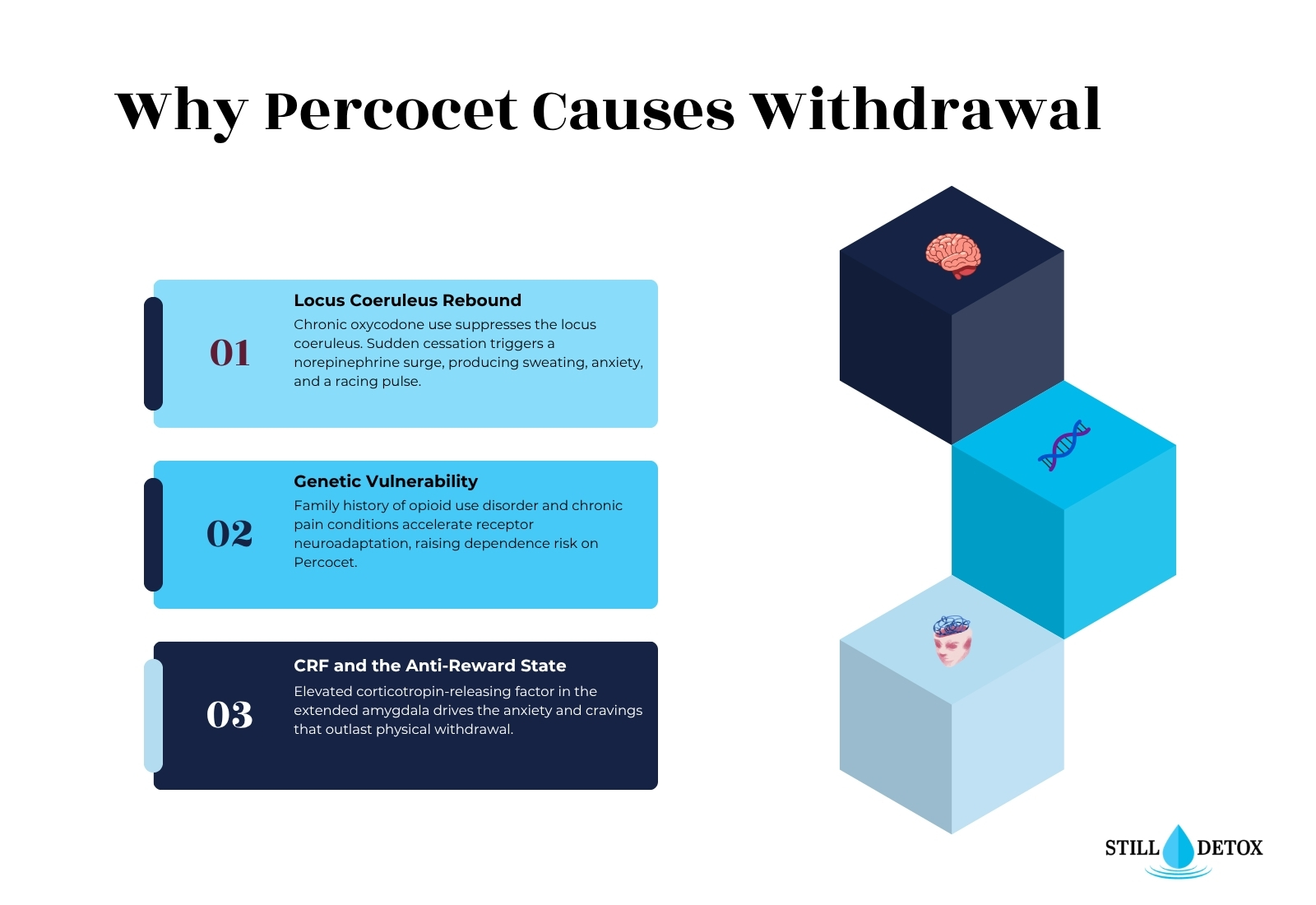
Percocet withdrawal happens because chronic oxycodone use forces the brain’s stress-response and pain-processing systems to adapt, and removing the drug leaves those systems in rebound overdrive.
Neurobiological Mechanism: The Locus Coeruleus
- Chronic oxycodone use suppresses firing in the locus coeruleus, a small brainstem structure that normally regulates alertness, blood pressure, and the body’s stress response through norepinephrine release.
- Abrupt oxycodone cessation triggers a rebound surge of norepinephrine from the locus coeruleus, producing the sweating, racing pulse, goosebumps, and anxiety characteristic of early withdrawal. Researcher Gary Aston-Jones documented this noradrenergic hyperactivity as a central driver of opioid withdrawal, providing the scientific basis for treating early withdrawal with alpha-2 agonist medications.
- Alpha-2 agonist medications such as clonidine directly suppress this norepinephrine surge, which is why they reduce the sweating, agitation, and elevated blood pressure of opioid withdrawal.
Genetic and Individual Vulnerability Factors
- Family history of opioid use disorder increases an individual’s risk of developing physical dependence more quickly on Percocet, reflecting inherited differences in opioid receptor sensitivity.
- Chronic pain conditions requiring long-term Percocet prescriptions elevate dependence risk, since sustained receptor exposure accelerates the neuroadaptation that produces withdrawal on cessation.
Psychological and Environmental Contributors
- Chronic opioid use recruits the extended amygdala and elevates corticotropin-releasing factor (CRF), producing the anxiety, low mood, and heightened stress sensitivity that extend into the weeks after acute withdrawal ends. Addiction researcher George Koob’s allostasis, or “dark side,” model describes this shift toward a persistent anti-reward state that drives cravings long after physical symptoms fade.
- High-stress environments and unresolved trauma amplify the CRF-driven anxiety of withdrawal, which is why trauma-informed counseling is a standard part of opioid withdrawal treatment.
Comorbid and Secondary Causes
- Co-occurring anxiety disorders intensify Percocet withdrawal symptoms because both conditions independently elevate norepinephrine activity, compounding the physical symptoms of withdrawal.
- Untreated opioid use disorder (OUD), as defined in the DSM-5-TR, frequently co-occurs with major depressive disorder, since chronic opioid use disrupts the same dopamine reward circuitry implicated in depression.
Percocet Withdrawal Timeline
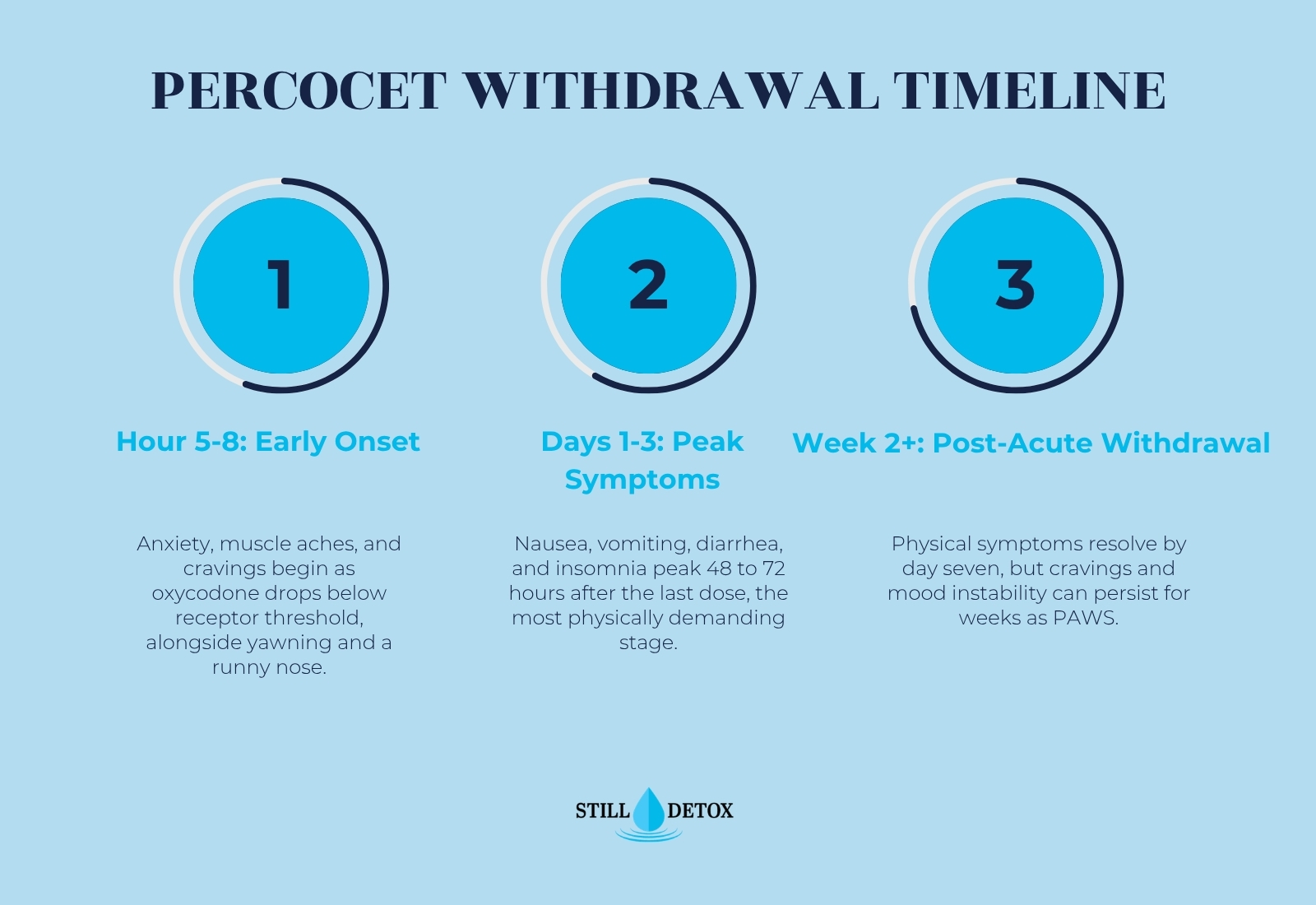
Percocet withdrawal follows a predictable four-stage timeline that begins within hours of the last dose and resolves in most people within one to two weeks.
1. Hour 5 to 8: Early Onset
- Early withdrawal begins as oxycodone blood levels drop below the threshold needed to occupy mu-opioid receptors, typically 5 to 8 hours after the last dose of immediate-release Percocet.
- Initial symptoms include anxiety, muscle aches, and drug cravings, along with yawning, watery eyes, and a runny nose as the earliest signs of norepinephrine rebound.
2. Days 1 to 3: Peak Symptoms
- Withdrawal symptoms peak between 48 and 72 hours after the last dose, coinciding with maximum locus coeruleus rebound activity.
- Peak symptoms include nausea, vomiting, diarrhea, abdominal cramping, dilated pupils, and goosebumps, alongside insomnia and restless leg movements that make this the most physically demanding stage.
3. Days 4 to 7: Symptom Decline
- Physical symptoms decline steadily as norepinephrine activity gradually normalizes in the locus coeruleus over this window.
- Residual fatigue, low mood, and disrupted sleep commonly persist even as nausea, cramping, and sweating resolve.
4. Week 2 and Beyond: Post-Acute Withdrawal
- Acute physical symptoms typically resolve by the end of week one, but post-acute withdrawal syndrome (PAWS) can extend the psychological symptoms for weeks or months.
- PAWS symptoms include persistent cravings, anhedonia, and mood instability, reflecting the lingering CRF-driven anti-reward state described in Koob’s allostasis model.
How Severe Is Percocet Withdrawal?
Clinicians grade Percocet withdrawal severity using the Clinical Opiate Withdrawal Scale (COWS), an 11-item tool that scores symptoms from 0 to 48 and directly guides treatment decisions.
Common Percocet Withdrawal Symptoms
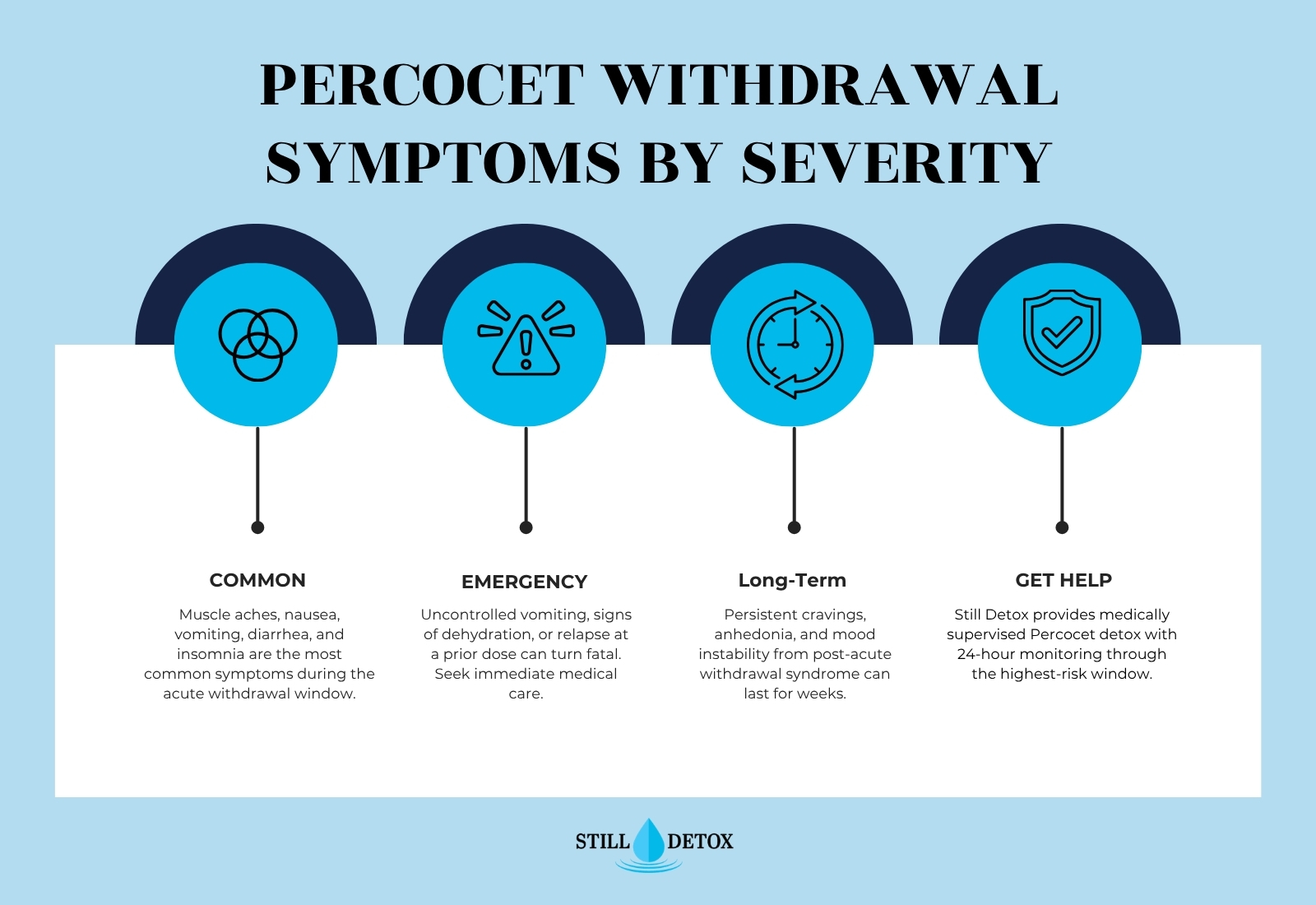
- Muscle and joint aches: Widespread body pain develops as the pain-suppressing effect of oxycodone wears off and normal pain signaling resumes.
- Gastrointestinal distress: Nausea, vomiting, diarrhea, and abdominal cramping result from norepinephrine-driven overactivity in the gut’s nervous system.
- Sleep disruption: Insomnia and restless legs commonly interfere with sleep throughout the acute withdrawal window.
Severe Percocet Withdrawal Symptoms
- Severe dehydration: Persistent vomiting and diarrhea can deplete fluids and electrolytes quickly enough to require intravenous fluid replacement.
- Uncontrolled vomiting with signs of dehydration such as dizziness, dark urine, or a rapid heart rate signals a need for immediate medical evaluation.
- High relapse-related overdose risk: Tolerance drops sharply within days of stopping Percocet, so returning to a previous dose after withdrawal can cause a fatal overdose.
Long-Term Effects: Post-Acute Withdrawal Syndrome (PAWS)
- Persistent cravings and anhedonia: A reduced capacity to feel pleasure from ordinary activities can last for weeks after acute symptoms resolve.
- Mood instability and anxiety: Fluctuating mood and heightened stress reactivity reflect the extended amygdala changes that outlast the physical withdrawal period.
Measuring Severity: The COWS Scale
- The Clinical Opiate Withdrawal Scale (COWS) scores 11 signs, including pulse rate, sweating, restlessness, pupil size, and gastrointestinal upset, on a scale from 0 to 48.
- A COWS score above 12 typically confirms readiness for buprenorphine induction, since starting the medication too early can precipitate a more intense withdrawal reaction.
- Facilities that use the Clinical Opiate Withdrawal Scale can time medication decisions more precisely than symptom checklists alone.
Percocet Withdrawal vs. Alcohol and Benzodiazepine Withdrawal: How to Tell the Difference
Percocet withdrawal is physically miserable but rarely life-threatening, while alcohol and benzodiazepine withdrawal can become medical emergencies.
Why Opioid Withdrawal Is Rarely Fatal
- Oxycodone acts on opioid receptors rather than GABA receptors, so Percocet withdrawal rarely produces the seizures associated with sedative withdrawal.
- The primary danger from Percocet withdrawal is dehydration and relapse-related overdose, not a direct neurological emergency.
Why Alcohol and Benzodiazepine Withdrawal Carry Seizure Risk
- Alcohol and benzodiazepines act on GABA receptors, and abrupt cessation after heavy use can trigger seizures and delirium tremens (DTs), a condition with a mortality rate of up to 37% when left untreated.
- Individuals detoxing from co-occurring alcohol or sedative use should review alcohol withdrawal timeline and benzodiazepine addiction treatment resources, since combined dependence changes the medical detox plan significantly.
Treatment for Percocet Withdrawal
Effective Percocet withdrawal treatment combines behavioral therapy, medication, and monitoring across four coordinated tiers of care.
First-Line Behavioral Therapies
- Cognitive behavioral therapy (CBT) targets the thought patterns that drive cravings and relapse risk during and after acute withdrawal.
- Contingency management reinforces abstinence with tangible incentives, a behavioral approach with strong evidence for opioid use disorder specifically.
First-Line Medications for Opioid Withdrawal
- Buprenorphine-naloxone (Suboxone) partially activates opioid receptors, easing withdrawal severity without producing the full euphoric effect of oxycodone.
- Methadone fully activates opioid receptors under strict clinical supervision, providing a longer-acting alternative for individuals with more severe dependence.
- Naltrexone (Vivitrol) blocks opioid receptors entirely and supports relapse prevention once the acute withdrawal period has fully cleared.
- Facilities offering these options typically detail eligibility on a medication-assisted treatment FAQ page before admission.
Second-Line and Adjunct Treatments
- Clonidine suppresses the norepinephrine surge from the locus coeruleus, reducing sweating, agitation, and elevated blood pressure during withdrawal.
- Lofexidine (Lucemyra) received FDA approval in 2018 as the first non-opioid medication specifically indicated for opioid withdrawal, offering symptom relief without any opioid activity.
Emerging and Investigational Treatments
- The NSS-2 Bridge device delivers percutaneous auricular neurostimulation and received FDA clearance in 2017; a small clinical study found it reduced COWS scores by more than 31% within 30 minutes of use.
- Sublingual dexmedetomidine is currently under clinical trial investigation as an alternative alpha-2 agonist for managing opioid withdrawal symptoms.
Percocet Withdrawal Treatment at Still Detox
Still Detox provides medically supervised Percocet withdrawal management in Boca Raton, Florida, with 24-hour clinical monitoring throughout the acute withdrawal window.
Medically Supervised Percocet Detox
- Clients receive continuous monitoring during the highest-risk 48 to 72 hour peak window, allowing the clinical team to intervene quickly if dehydration or severe symptoms develop.
- Individualized medication protocols are adjusted using COWS scoring rather than a fixed schedule, so treatment responds to each client’s actual symptom severity.
- Clients can review the full detoxification program and inpatient rehab treatment options available after the acute withdrawal period ends
Addiction specialist Shelly Thompson, who holds a Master’s in Clinical Mental Health Counseling and has worked in the field since 2020, notes: “Clients are often surprised that the psychological symptoms outlast the physical ones. We build the plan around that, not just the first week. Most clients expect withdrawal to end when the physical symptoms do, but thats not the case.”
Frequently Asked Questions
What does Percocet withdrawal feel like?
Percocet withdrawal feels like a severe flu, with muscle aches, chills, nausea, and anxiety. Most people describe the peak days as the most physically demanding part of the process.
How long does Percocet withdrawal last?
Acute physical symptoms typically last 5 to 10 days, peaking between 48 and 72 hours. Psychological symptoms tied to post-acute withdrawal syndrome can persist for several weeks.
Can Percocet withdrawal go away on its own?
Acute symptoms resolve without treatment in most healthy adults, but unmanaged withdrawal carries a high relapse risk. Medically supervised detox reduces both discomfort and relapse-related overdose risk.
Is Percocet withdrawal the same as oxycodone withdrawal?
Yes, largely. Oxycodone drives withdrawal in both Percocet and plain oxycodone products. The acetaminophen in Percocet adds liver-toxicity risk but does not change the withdrawal symptoms themselves.
Can Percocet withdrawal be dangerous?
Percocet withdrawal itself rarely causes seizures or death. The main dangers are severe dehydration from vomiting and diarrhea, and a high risk of fatal overdose if someone relapses at their previous dose.
When should someone seek medical help for Percocet withdrawal?
Seek immediate medical care for uncontrolled vomiting, signs of dehydration, or any suicidal thoughts. Medically supervised detox is recommended for anyone with a history of heavy or long-term use.
Is Percocet withdrawal different for older adults?
Older adults often experience more pronounced dehydration risk and slower symptom recovery due to reduced kidney function and higher rates of coexisting health conditions.
What medications help with Percocet withdrawal?
Buprenorphine, methadone, clonidine, and lofexidine (Lucemyra) are the primary medications used to ease Percocet withdrawal severity under medical supervision.
References
- American Psychiatric Association. (2022). Diagnostic and Statistical Manual of Mental Disorders (5th ed., text rev.). APA Publishing.
- Aston-Jones, G., Hirata, H., & Akaoka, H. (1997). Local opiate withdrawal in locus coeruleus in vivo. Brain Research, 765(2), 331-336.
- Koob, G. F. (2009). Neurobiological substrates for the dark side of compulsivity in addiction. Neuropharmacology, 56(Suppl 1), 18-31.
- Substance Abuse and Mental Health Services Administration. (2024). Key substance use and mental health indicators in the United States: Results from the 2023 National Survey on Drug Use and Health. SAMHSA.
- Centers for Disease Control and Prevention, National Center for Health Statistics. (2025). U.S. overdose deaths decrease almost 27% in 2024. CDC.
- Centers for Disease Control and Prevention. (2024). Treatment for opioid use disorder: Population estimates, United States, 2022. MMWR, 73(25).
- Wesson, D. R., & Ling, W. (2003). The Clinical Opiate Withdrawal Scale (COWS). Journal of Psychoactive Drugs, 35(2), 253-259.
- Substance Abuse and Mental Health Services Administration. (2023). Treatment Episode Data Set (TEDS) 2022: Admissions to and discharges from publicly funded substance use treatment. SAMHSA.


