

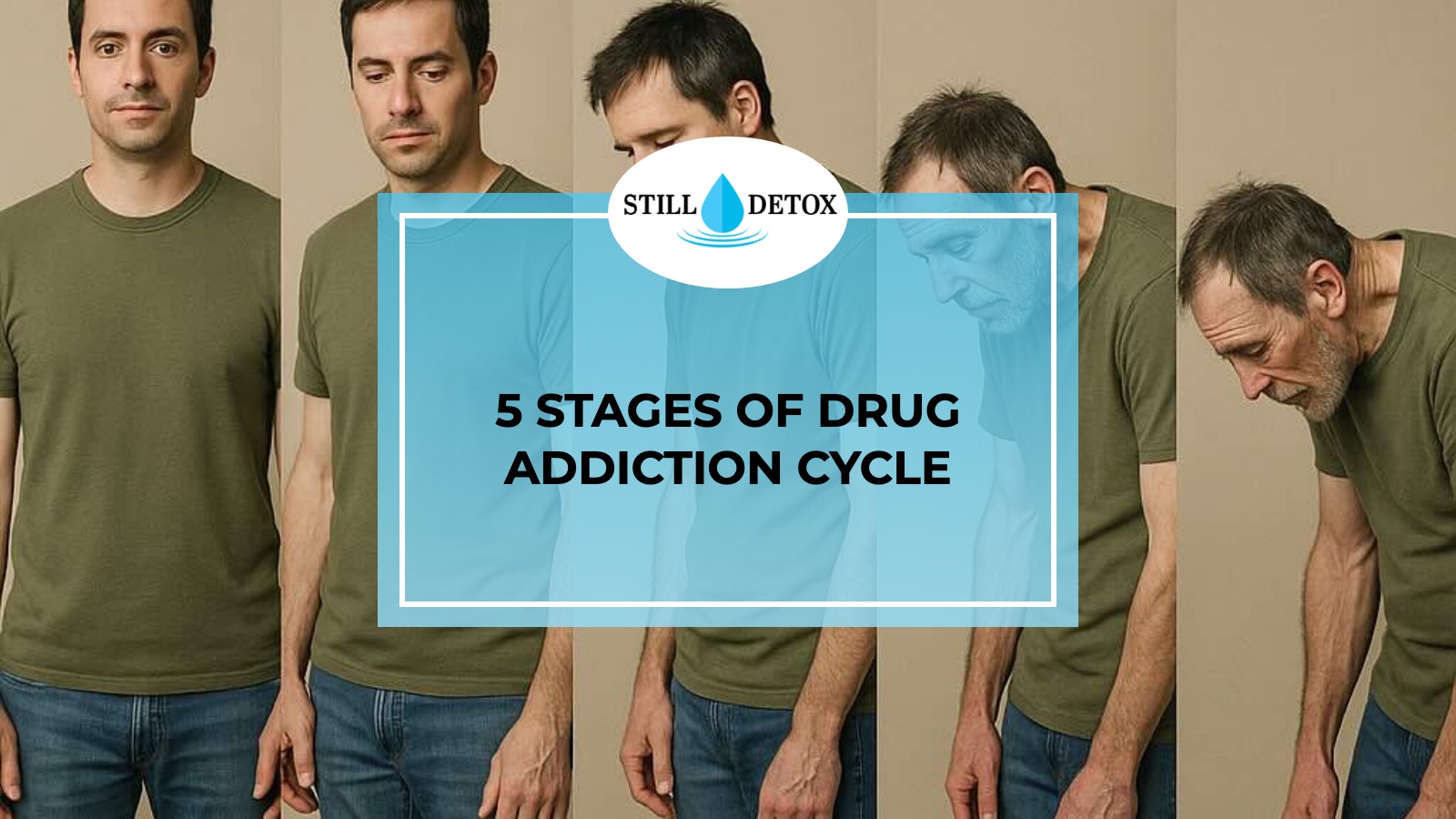
Addiction is a progressive, chronic condition that unfolds through distinct phases of drug addiction cycle, impacting millions across the U.S.
Understanding these 5 stages of addiction cycle;
- experimentation,
- regular use,
- substance abuse,
- dependence,
- and addiction
empowers individuals, families, and communities to recognize warning signs and seek timely intervention.
Addiction affects physical health, mental well-being, and social relationships, but early action can halt its progression. At Still Detox Alcohol & Drug Rehab, we are committed to educating the public about addiction’s stages and providing compassionate, evidence-based treatment to support recovery.
1. Phase of Drug Addiction Cycle: Experimentation
The path to addiction often starts with experimentation, where individuals try a substance out of curiosity, peer pressure, or to cope with challenges like stress, anxiety, or trauma. This phase is especially common among teens and young adults, with substances like alcohol, marijuana, or nicotine frequently involved.
Experimentation typically involves one-time or occasional use, often in social settings such as parties, concerts, or gatherings with friends, where users perceive minimal immediate harm. For example, a young adult might try marijuana at a music festival or drink excessively at a college event to fit in.
Approximately 20% of U.S. adults report having tried an illicit drug at least once, underscoring the prevalence of this stage. Repeated exposure, particularly for those with genetic predispositions, co-occurring mental health disorders like depression, or environmental stressors such as family conflict, heightens the risk of progressing to regular use.
Social media, music, and pop culture can glamorize drug use, normalizing experimentation and downplaying its potential consequences.[1]
2. Regular Use
Regular use develops as experimentation transitions into a consistent pattern, with individuals incorporating substances into their daily or weekly routines to achieve specific effects, such as relaxation, euphoria, or stress relief. This phase may involve drinking alcohol every evening, using prescription painkillers beyond medical need, or smoking marijuana to unwind.
Users often maintain social, academic, or professional responsibilities, but subtle shifts occur, such as neglecting hobbies, spending more time seeking substances, or prioritizing drug use over relationships.
Tolerance begins to emerge, requiring higher doses to achieve the same effects, which can lead to increased financial strain or health risks. For instance, someone regularly using prescription sedatives may need more pills to feel calm, potentially leading to risky behaviors like borrowing medication.
In 2023, about 15% of U.S. adults reported frequent alcohol or drug use, reflecting the commonality of this stage. Users may justify their habits as manageable, but stressors like job loss, breakup, or academic pressure can accelerate use, paving the way for abuse.[2]
3. Substance Abuse
Substance abuse represents a critical turning point where drug use becomes harmful, significantly disrupting daily life and priorities. Individuals may neglect work, school, or family obligations, engage in dangerous behaviors like driving while intoxicated, or encounter legal issues, such as arrests for drug possession or public intoxication.
Substances like cocaine, methamphetamines, or prescription opioids are often involved, as users chase intense highs despite mounting consequences.
In 2023, approximately 29.5 million U.S. adults had a substance use disorder, with many in this phase unaware of their escalating misuse. Physical symptoms, such as weight loss, fatigue, or frequent illnesses, and psychological effects, like irritability, paranoia, or anxiety, become more pronounced.
Relationships suffer as users prioritize drugs over loved ones, leading to conflicts or estrangement. Financial difficulties, such as accumulating debt to fund drug purchases, are common.
This stage is a critical window for intervention to prevent dependence, but denial or shame often delays seeking help.[3]
4. Dependence
Dependence occurs when the body and mind adapt to a substance, resulting in tolerance and withdrawal symptoms when use is reduced or stopped. Physical dependence involves bodily reliance, such as needing alcohol to avoid shaking or opioids to prevent nausea and muscle pain, while psychological dependence creates a perceived need to manage emotions, stress, or daily functioning.
For example, someone dependent on benzodiazepines may take them to avoid panic attacks, even if the original anxiety has worsened.
Users feel trapped, consuming drugs to maintain a sense of normalcy rather than for enjoyment, with withdrawal symptoms like sweating, insomnia, or seizures driving continued use. Substances like heroin, nicotine, or prescription painkillers are commonly associated with dependence, and withdrawal effects vary from mild discomfort to life-threatening conditions.
In the U.S., millions require daily substance use to function, reflecting the prevalence of this stage. Secrecy increases as individuals hide their habits from family or coworkers, and health risks, such as cardiovascular issues or liver damage, escalate significantly.[4]
5. Addiction: Last Phase of The Cycle
Addiction, clinically known as substance use disorder, is the most severe phase, marked by compulsive drug use despite profound consequences. Individuals lose control, prioritizing substances over health, relationships, employment, and personal safety.
Neurological changes in the brain’s reward, motivation, and decision-making systems perpetuate the cycle, making voluntary cessation nearly impossible without intervention.
For example, someone addicted to cocaine may continue using despite financial ruin or family breakdown. In 2023, only about 10% of U.S. adults with substance use disorders sought treatment, underscoring the barriers to recovery.
Physical health deteriorates, with risks of overdose, infections, or organ failure, while mental health issues, such as depression, anxiety, or psychosis, intensify. Social isolation is common as trust erodes, leaving individuals estranged from support networks. Addiction is a chronic disease, but recovery is achievable with professional treatment tailored to the individual’s needs.[5]
Recognizing the Signs Across Phases
Identifying addiction’s phases is essential for early intervention, as each stage presents unique behavioral, physical, and psychological signs. Families, friends, and individuals can use these indicators to prompt timely action, such as seeking counseling or treatment. The table below summarizes the key characteristics and risks of each phase:
| Phase | Key Signs | Risks |
|---|---|---|
| Experimentation | Occasional use, curiosity-driven, social settings | Escalation with repeated exposure, peer influence |
| Regular Use | Routine use, increased tolerance, minor disruptions | Tolerance buildup, lifestyle changes, denial |
| Substance Abuse | Neglecting responsibilities, risky behaviors | Legal issues, health decline, relationship strain |
| Dependence | Withdrawal symptoms, emotional reliance | Physical harm, secrecy, worsening mental health |
| Addiction | Compulsive use, severe life impacts | Overdose, chronic disease, social isolation |
Monitoring for signs like secrecy, mood swings, declining health, or financial troubles can facilitate early intervention. Families should watch for physical changes, such as weight loss or fatigue, and behavioral shifts, like withdrawal from social activities or unexplained absences, and encourage open discussions about substance use to address concerns promptly.[6]
Treatment and Recovery Options
Addressing addiction requires interventions tailored to its phase. Experimentation and regular use may be managed with education, counseling, or family-based interventions to prevent further escalation. Substance abuse and dependence often necessitate medically supervised detox to safely manage withdrawal symptoms, followed by therapies like cognitive behavioral therapy (CBT) to identify and address triggers while building coping skills.
Addiction requires comprehensive treatment, which may include inpatient or outpatient programs, medication-assisted treatment (e.g., buprenorphine for opioid addiction), and support groups like Narcotics Anonymous or SMART Recovery.
Relapse prevention strategies, such as mindfulness, stress management, and peer support, are vital for sustaining recovery.
In the U.S., only 10–15% of individuals with substance use disorders receive treatment annually, highlighting the urgent need for accessible care. At Still Detox, we provide individualized programs, including detox, CBT, and holistic therapies, to support recovery from any phase of addiction.
Our expert team helps clients rebuild healthy, fulfilling lives through evidence-based care. If you or a loved one is struggling with substance misuse, contact Still Detox at (561) 556-2677.[7]
References
- National Institute on Drug Abuse. Understanding Drug Use and Addiction
- Mayo Clinic. Drug Addiction Overview
- SAMHSA. 2023 National Survey on Drug Use and Health
- WebMD. Drug Abuse and Addiction
- NIDA. Addiction Science
- Healthline. Signs of Drug Addiction
- CDC. Drug Overdose Treatment and Recovery
- Medical News Today. Drug Addiction Explained
- NIDA. Health Consequences of Drug Misuse
- FDA. Substance Use Disorder Treatment