




Alcoholic ketoacidosis symptoms include repeated vomiting, abdominal pain, rapid breathing, and a sweet or acetone-like smell on the breath, usually appearing one to three days after a heavy drinking episode ends. The condition builds when the liver exhausts its stored sugar and switches to burning fat, flooding the blood with ketone acids.
Alcoholic ketoacidosis is a medical emergency. It resembles a severe hangover in its first hours, which is exactly why people delay seeking care.
Most people who develop it are not diabetic, and their blood sugar often reads normal. That single detail explains why emergency clinicians miss the diagnosis and why recognizing the warning signs early changes outcomes.
Key Takeaways
- Alcoholic ketoacidosis develops in people with chronic alcohol use who stop eating, and their blood glucose typically reads normal or low rather than markedly elevated.
- Wrenn and colleagues recorded symptoms across 74 patients in the American Journal of Medicine in 1991, finding nausea in 76 percent, vomiting in 73 percent, and abdominal pain in 62 percent of cases.
- The Centers for Disease Control and Prevention reported an average of 178,307 alcohol-attributable deaths per year in the United States between 2020 and 2021, a 29.3 percent increase over the 2016 to 2017 period.
- Beta-hydroxybutyrate dominates in alcoholic ketoacidosis, and the nitroprusside reaction used in standard urine dipsticks detects acetoacetate rather than beta-hydroxybutyrate.
- Treatment combines intravenous saline, dextrose, and thiamine administered before or alongside glucose, none of which can be replicated outside a medical facility.
What Is Alcoholic Ketoacidosis?
Alcoholic ketoacidosis is a metabolic emergency in which chronic alcohol use combined with inadequate food intake drives the liver to generate ketone acids faster than the kidneys and lungs clear them, producing a high anion gap metabolic acidosis.
How Alcoholic Ketoacidosis Differs From a Severe Hangover
Alcoholic ketoacidosis produces symptoms that intensify rather than fade as alcohol leaves the bloodstream, separating it from an ordinary hangover that resolves within 24 hours.
- Symptom trajectory diverges sharply: A hangover peaks as blood alcohol falls toward zero and then improves, while alcoholic ketoacidosis worsens across the following 24 to 48 hours as ketone concentrations climb.
- Vomiting becomes self-perpetuating: Repeated vomiting depletes fluid volume and potassium, which further suppresses food intake and accelerates ketone production.
- Breathing pattern changes: Kussmaul respiration, a deep and rapid breathing pattern, appears as the lungs attempt to blow off carbon dioxide and offset the acid load.
- Mental clarity persists: Patients typically remain alert and oriented despite profound acidosis, which reassures bystanders and delays emergency evaluation.
Who Develops Alcoholic Ketoacidosis
Alcoholic ketoacidosis concentrates in adults with long-standing alcohol use disorder whose nutritional reserves have already been depleted by months or years of heavy drinking.
- Chronic drinkers carry the highest risk: Sustained alcohol intake depletes hepatic glycogen stores, removing the buffer that normally prevents a shift to fat metabolism during fasting.
- Malnutrition is the essential precondition: Skipping meals for one to three days after a drinking episode triggers the metabolic switch that generates ketone acids.
- Age skews middle-aged: Milroy and colleagues documented a median age of 55 in autopsy-confirmed cases published in Academic Forensic Pathology in 2023.
- Occasional heavy drinkers are not exempt: Binge drinkers who vomit repeatedly and stop eating develop the same metabolic picture, though less frequently than daily drinkers.
Why Blood Sugar Stays Normal in Alcoholic Ketoacidosis
Blood glucose in alcoholic ketoacidosis reads normal or low because ethanol metabolism blocks the liver from manufacturing new glucose, unlike diabetic ketoacidosis where insulin deficiency drives glucose upward.
- Ethanol metabolism shifts cellular chemistry: Breaking down alcohol raises the ratio of NADH to NAD+ inside liver cells, which halts the reactions that build new glucose.
- Gluconeogenesis stalls: Impaired glucose production leaves the body dependent on fat as its primary fuel source.
- Insulin remains functional: Circulating insulin continues working, so glucose never accumulates the way it does when insulin is absent.
- Hypoglycemia sometimes appears: Blood sugar drops below normal in a subset of patients, adding confusion, sweating, and tremor to the clinical picture.
What Causes Alcoholic Ketoacidosis?
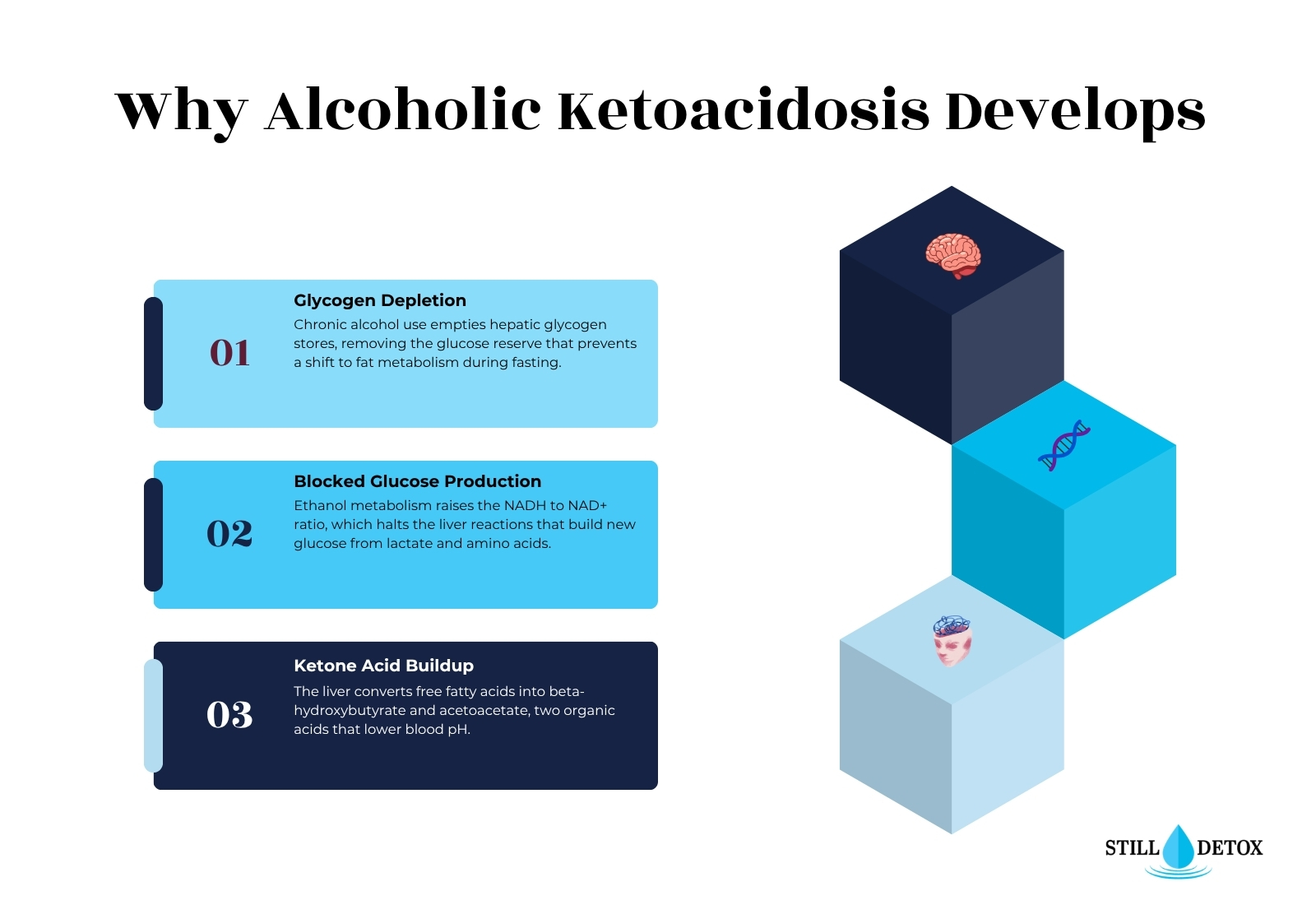
Alcoholic ketoacidosis originates from a chain of metabolic events that begins with glycogen depletion, accelerates through unopposed fat breakdown, and culminates in ketone accumulation that overwhelms the body’s buffering capacity.
Metabolic and Liver-Based Causes
The metabolic pathway driving alcoholic ketoacidosis centers on the liver’s inability to supply glucose while simultaneously being flooded with fatty acids.
- Glycogen depletion removes the reserve: Chronic alcohol intake empties hepatic glycogen stores, eliminating the four to six hours of glucose the liver normally releases during fasting.
- Blocked gluconeogenesis compounds the deficit: The shifted NADH to NAD+ ratio inhibits the enzymes that convert lactate and amino acids into glucose.
- Lipolysis accelerates: Falling insulin and rising counterregulatory hormones release free fatty acids from fat tissue into the bloodstream.
- Ketogenesis produces acid: The liver converts those fatty acids into beta-hydroxybutyrate and acetoacetate, two organic acids that lower blood pH.
- Beta-hydroxybutyrate predominates: The altered redox state pushes acetoacetate toward beta-hydroxybutyrate, which is the ketone standard urine tests fail to detect.
Hormonal Drivers That Sustain Ketone Production
Counterregulatory hormones sustain ketone production in alcoholic ketoacidosis long after the drinking episode has ended.
- Glucagon rises as glucose falls: Elevated glucagon signals the liver to continue converting fatty acids into ketone bodies.
- Cortisol amplifies fat breakdown: Stress-driven cortisol release increases the supply of free fatty acids reaching the liver.
- Catecholamines add to the load: Adrenaline and noradrenaline surge during vomiting and volume depletion, further stimulating lipolysis.
- Growth hormone contributes: Growth hormone opposes insulin action and sustains the fat-burning state.
Genetic and Hereditary Risk Factors
Genetic vulnerability shapes alcoholic ketoacidosis indirectly, by determining who develops the chronic drinking pattern that depletes glycogen in the first place.
- Heritability of alcohol use disorder is substantial: Twin and family studies estimate that roughly half of the variation in alcohol use disorder risk traces to inherited factors.
- Alcohol-metabolizing enzyme variants alter drinking patterns: Variations in alcohol dehydrogenase and aldehyde dehydrogenase genes change how quickly ethanol clears and how aversive drinking feels.
- Family history predicts earlier onset: A first-degree relative with alcohol use disorder shifts the age of heavy drinking earlier, extending years of exposure before middle age.
Environmental and Behavioral Causes
Environmental and behavioral triggers convert chronic alcohol use into an acute ketoacidosis episode within a matter of days.
- Binge episodes precede most cases: A period of binge drinking depletes remaining glycogen and provokes the vomiting that stops food intake.
- Abrupt cessation adds withdrawal stress: Stopping alcohol abruptly after chronic use raises catecholamine output at exactly the moment fat metabolism dominates.
- Food insecurity and housing instability compound risk: Limited access to regular meals removes the carbohydrate intake that would interrupt ketone production.
- Intercurrent illness accelerates onset: Infection, injury, or gastroenteritis suppresses appetite and increases metabolic demand simultaneously.
Comorbid Conditions That Raise the Risk
Several conditions common in chronic alcohol use raise alcoholic ketoacidosis risk through specific and identifiable mechanisms.
- Pancreatitis stops oral intake: Alcohol-induced pancreatitis produces severe abdominal pain and vomiting that prevent eating for days, creating the fasting state ketoacidosis requires.
- Alcohol-associated liver disease reduces glycogen capacity: A damaged liver stores less glycogen, shortening the interval between the last meal and the metabolic switch to fat.
- Gastrointestinal bleeding drives volume loss: Bleeding from varices or gastritis depletes circulating volume, which impairs kidney clearance of ketone acids.
- Wernicke encephalopathy shares the same nutritional deficit: Thiamine depletion accompanies the malnutrition that precipitates ketoacidosis, and Wernicke-Korsakoff syndrome frequently coexists.
- Diabetes creates diagnostic overlap: People with both diabetes and heavy alcohol use generate mixed metabolic pictures that complicate rapid diagnosis.
Alcoholic Ketoacidosis Timeline: How Symptoms Develop
Alcoholic ketoacidosis follows a predictable sequence that begins when a drinking episode ends and food intake stops, with symptoms escalating across roughly 72 hours before treatment reverses the acidosis.
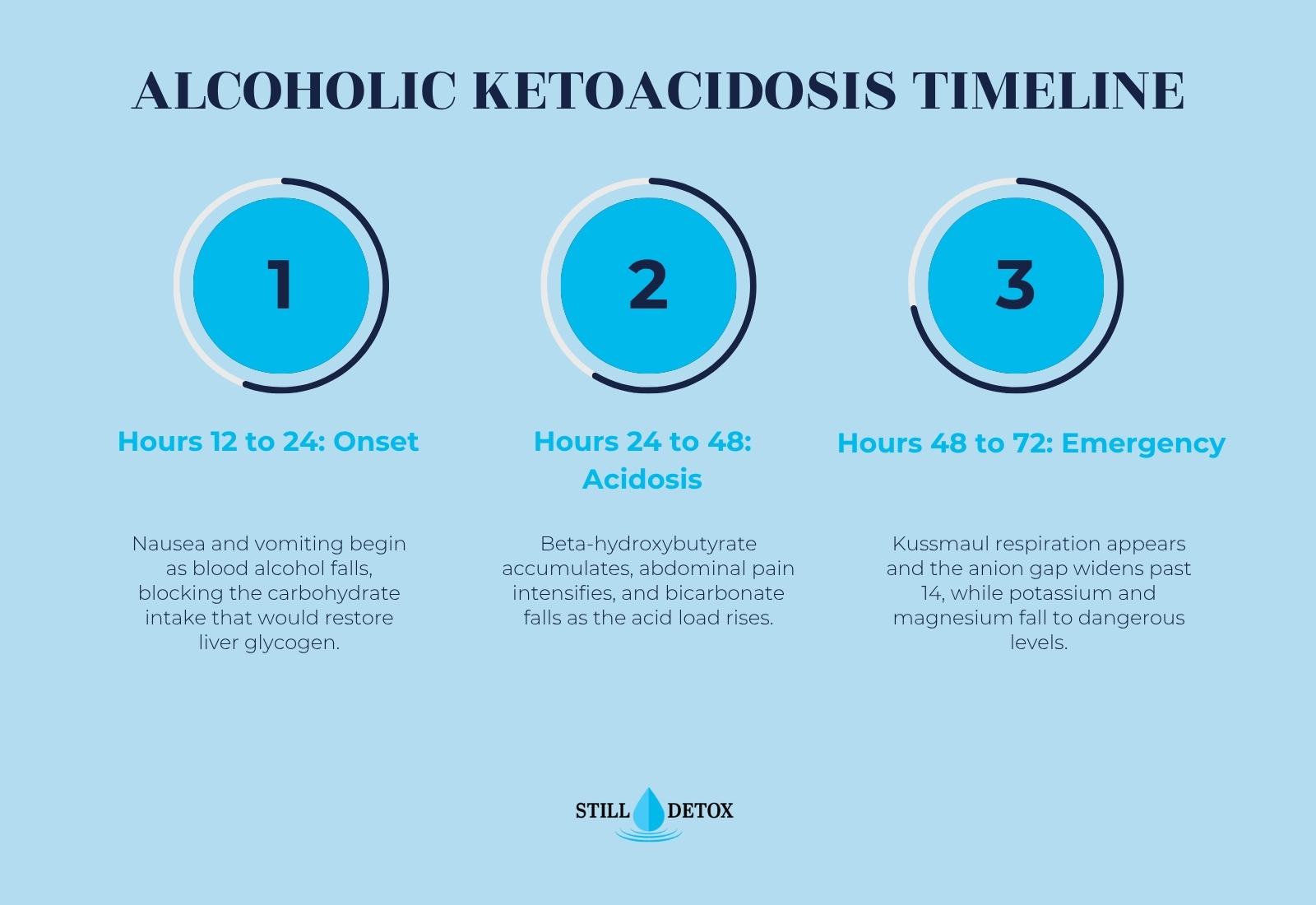
The typical progression unfolds across these intervals:
- Hours 0 to 12 after the last drink: Blood alcohol falls and nausea begins, which suppresses appetite and prevents the carbohydrate intake that would replenish glycogen.
- Hours 12 to 24: Vomiting establishes itself, hepatic glycogen empties completely, and the liver shifts toward fatty acid oxidation as its primary fuel pathway.
- Hours 24 to 48: Beta-hydroxybutyrate and acetoacetate accumulate in the blood, abdominal pain intensifies, and bicarbonate begins falling as the acid load rises.
- Hours 48 to 72: Kussmaul respiration appears, the anion gap widens beyond 14 millimoles per liter, and potassium, magnesium, and phosphate fall toward dangerous levels.
- Hours 0 to 4 after intravenous treatment begins: Saline restores circulating volume, dextrose suppresses further ketone production, and thiamine given before or alongside glucose prevents Wernicke encephalopathy.
- Hours 12 to 24 after treatment begins: The acidosis corrects, bicarbonate normalizes, and nausea and abdominal pain settle in uncomplicated cases.
- Days 1 to 3 after admission: Alcohol withdrawal risk peaks, and electrolyte repletion continues while clinicians monitor for refeeding syndrome as nutrition resumes.
Alcoholic Ketoacidosis Symptoms by Severity
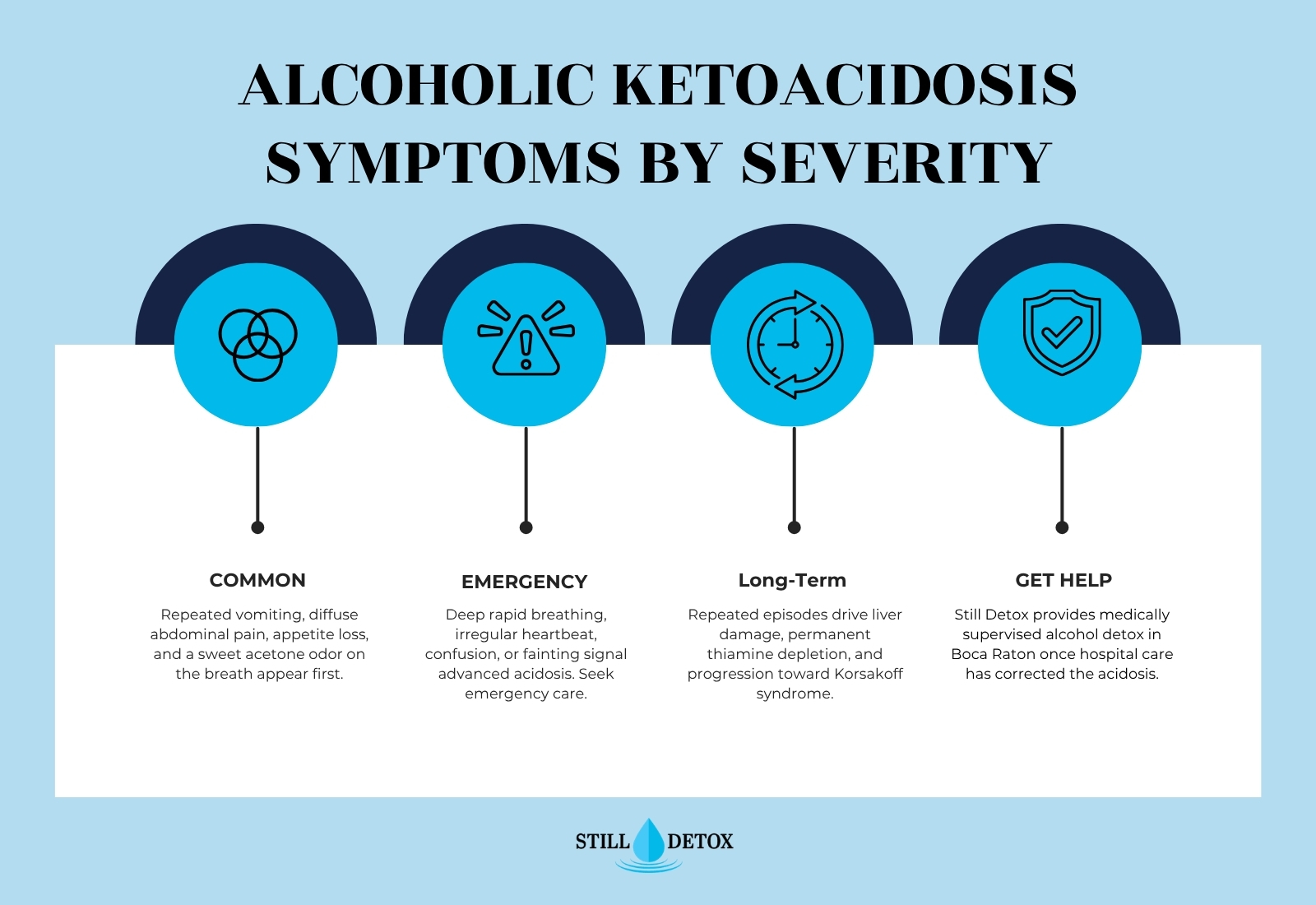
Alcoholic ketoacidosis symptoms escalate from gastrointestinal complaints that resemble a hangover to cardiovascular and respiratory findings that signal imminent decompensation.
Common Alcoholic Ketoacidosis Symptoms
Common alcoholic ketoacidosis symptoms center on the digestive tract and appear first, typically 12 to 24 hours after the drinking episode ends.
- Nausea dominates the early presentation: Wrenn and colleagues recorded nausea in 76 percent of their 74-patient series, making it the single most frequent complaint.
- Vomiting persists beyond the hangover window: Repeated vomiting continues past the point where blood alcohol has cleared, distinguishing it from ordinary post-drinking nausea.
- Abdominal pain is diffuse: Generalized abdominal pain affected 62 percent of documented cases and frequently prompts evaluation for surgical causes.
- Breath carries a sweet or acetone odor: Acetone evaporating through the lungs generates a smell often described as fruity or resembling nail polish remover.
- Fatigue and weakness deepen: Volume depletion and electrolyte loss produce profound weakness that patients often attribute to the drinking itself.
- Appetite disappears entirely: Complete loss of appetite sustains the fasting state that generates further ketone production.
Severe Symptoms That Signal a Medical Emergency
Severe alcoholic ketoacidosis symptoms reflect the cardiovascular and respiratory strain of uncorrected metabolic acidosis and require immediate emergency evaluation.
- Deep, rapid breathing: Kussmaul respiration indicates the lungs are compensating for a significant acid load and marks advanced acidosis.
- Racing or irregular heartbeat: Hypokalemia and hypomagnesemia destabilize cardiac conduction and generate arrhythmias that can prove fatal.
- Confusion or difficulty staying awake: Altered consciousness is unusual in isolated alcoholic ketoacidosis and points toward hypoglycemia, Wernicke encephalopathy, or a coexisting condition.
- Inability to keep down fluids for more than 12 hours: Persistent vomiting prevents any oral rehydration and guarantees continued volume depletion.
- Dizziness or fainting on standing: Orthostatic symptoms signal circulating volume loss severe enough to compromise organ perfusion.
- Severe abdominal pain with fever: This combination raises concern for pancreatitis or infection layered on top of the ketoacidosis.
- Seizure activity: Seizures suggest concurrent alcohol withdrawal, profound electrolyte derangement, or hypoglycemia, each of which demands immediate hospital care.
Long-Term Risks After Repeated Episodes
Repeated alcoholic ketoacidosis episodes signal an escalating alcohol use disorder and predict organ damage that accumulates independently of any single episode.
- Recurrent episodes mark disease progression: Each admission indicates a drinking pattern severe enough to deplete nutritional reserves, and recurrence without treatment is the expected course.
- Liver damage advances silently: Continued heavy drinking drives steatosis toward alcoholic hepatitis and cirrhosis, and how alcohol affects the brain follows a similarly progressive path.
- Thiamine depletion becomes permanent: Repeated malnutrition episodes without adequate thiamine repletion produce the irreversible memory impairment of Korsakoff syndrome.
- Pancreatic damage accumulates: Recurrent alcohol-induced pancreatitis destroys exocrine and endocrine tissue, generating malabsorption and secondary diabetes.
- Mortality risk rises with comorbidity: Deaths in alcoholic ketoacidosis trace primarily to accompanying illness such as gastrointestinal bleeding, pancreatitis, and withdrawal complications rather than to the acidosis alone.
How Alcoholic Ketoacidosis Is Diagnosed
Clinicians diagnose alcoholic ketoacidosis by combining a history of heavy alcohol use followed by reduced food intake with laboratory evidence of a high anion gap metabolic acidosis and normal or low blood glucose.
Laboratory Findings That Confirm Alcoholic Ketoacidosis
Laboratory testing confirms alcoholic ketoacidosis by demonstrating an acid-base pattern that separates it from other causes of metabolic acidosis.
- Arterial pH falls below 7.3: Blood gas analysis establishes the presence and depth of the acidosis.
- Bicarbonate drops under 15 milliequivalents per liter: Falling bicarbonate reflects the buffering capacity consumed by circulating ketone acids.
- Anion gap exceeds 14 millimoles per liter: A widened anion gap identifies unmeasured acids in the bloodstream.
- Serum beta-hydroxybutyrate runs high: Direct beta-hydroxybutyrate measurement provides the most reliable confirmation.
- Glucose reads normal or low: Normal glucose in the presence of ketoacidosis directs the diagnosis away from diabetic ketoacidosis.
- Potassium, magnesium, and phosphate fall: Vomiting and poor intake deplete these electrolytes, and phosphate falls further once dextrose infusion begins.
Why Urine Ketone Tests Read Negative
Standard urine ketone testing frequently misses alcoholic ketoacidosis because the chemistry it relies on cannot detect the dominant ketone in this condition.
- The nitroprusside reaction detects acetoacetate: Urine dipsticks use a nitroprusside reagent that reacts with acetoacetate and acetone but not with beta-hydroxybutyrate.
- Beta-hydroxybutyrate dominates in alcoholic ketoacidosis: The shifted redox state converts acetoacetate into beta-hydroxybutyrate, leaving little of the ketone the dipstick can find.
- Results paradoxically worsen during recovery: As treatment restores the redox balance, beta-hydroxybutyrate converts back to acetoacetate and urine ketones appear to rise even as the patient improves.
- Serum testing resolves the problem: Direct serum beta-hydroxybutyrate assay avoids the limitation entirely.
Assessing Alcohol Withdrawal Alongside Ketoacidosis
Clinicians assess alcohol withdrawal concurrently with alcoholic ketoacidosis because both conditions arise from the same cessation event and require simultaneous management.
- The Clinical Institute Withdrawal Assessment for Alcohol, revised (CIWA-Ar), guides withdrawal care: This 10-item scale scores nausea, tremor, sweating, anxiety, agitation, sensory disturbances, headache, and orientation, with a maximum total of 67 points.
- Score thresholds direct treatment intensity: Totals below 8 to 10 indicate mild withdrawal, 8 to 15 indicate moderate withdrawal, and scores above 15 signal severe withdrawal with elevated risk of delirium tremens.
- The Prediction of Alcohol Withdrawal Severity Scale adds forecasting: Clinicians use the Prediction of Alcohol Withdrawal Severity Scale on admission to identify who will develop complicated withdrawal before symptoms emerge.
- The Alcohol Use Disorders Identification Test screens the underlying condition: The 10-item AUDIT quantifies drinking pattern and consequences, with scores of 8 or above indicating hazardous use warranting intervention.
Alcoholic Ketoacidosis vs Diabetic Ketoacidosis: How to Tell the Difference
Alcoholic ketoacidosis and diabetic ketoacidosis both produce a high anion gap metabolic acidosis, but they differ in blood glucose, underlying cause, mental status, and the treatment each requires.
Key Differences Between Alcoholic and Diabetic Ketoacidosis
The following comparison isolates the features clinicians use to separate alcoholic ketoacidosis from diabetic ketoacidosis at the bedside.
| Feature | Alcoholic Ketoacidosis | Diabetic Ketoacidosis |
|---|---|---|
| Blood glucose | Normal or low | Markedly elevated, frequently above 250 mg/dL |
| Underlying condition | Chronic alcohol use with malnutrition | Type 1 or type 2 diabetes mellitus |
| Typical trigger | Binge episode followed by vomiting and fasting | Missed insulin, infection, or new-onset diabetes |
| Dominant ketone | Beta-hydroxybutyrate | Acetoacetate and beta-hydroxybutyrate |
| Mental status | Usually alert and oriented | Frequently drowsy or obtunded |
| Insulin required | No | Yes, by continuous infusion |
| First-line fluid therapy | Saline with dextrose and thiamine | Saline with insulin and potassium replacement |
Other Conditions That Mimic Alcoholic Ketoacidosis
Several conditions generate a high anion gap metabolic acidosis in people who drink heavily, and each carries a different treatment pathway.
- Starvation ketosis produces milder acidosis: Prolonged fasting without alcohol generates ketones, but bicarbonate rarely falls below 18 milliequivalents per liter.
- Lactic acidosis accompanies shock or seizure: Elevated lactate points toward sepsis, hypoperfusion, or seizure activity rather than ketone accumulation.
- Toxic alcohol ingestion widens the osmolar gap: Methanol and ethylene glycol raise the osmolar gap alongside the anion gap, and both require antidote therapy rather than dextrose.
- Salicylate toxicity generates a mixed picture: Aspirin overdose produces respiratory alkalosis layered over metabolic acidosis, a pattern distinct from alcoholic ketoacidosis.
How Alcoholic Ketoacidosis Is Treated
Treatment for alcoholic ketoacidosis proceeds in two phases: emergency correction of the metabolic derangement in a hospital, followed by structured care addressing the alcohol use disorder that produced the episode.
Emergency Stabilization in the Hospital
Hospital stabilization reverses alcoholic ketoacidosis by restoring volume, halting ketone production, and preventing the neurological complications of thiamine deficiency.
- Intravenous saline restores circulating volume: Fluid resuscitation improves kidney perfusion, which accelerates ketone clearance.
- Dextrose suppresses ketogenesis: Glucose infusion stimulates insulin release, which shuts down lipolysis and stops the liver from producing further ketone acids.
- Thiamine precedes or accompanies glucose: Administering thiamine before or alongside dextrose prevents glucose loading from precipitating Wernicke encephalopathy in a thiamine-depleted patient.
- Electrolyte repletion follows laboratory values: Clinicians replace potassium, magnesium, and phosphate as dextrose drives these ions into cells.
- Benzodiazepines manage concurrent withdrawal: Lorazepam, diazepam, and chlordiazepoxide suppress the autonomic hyperactivity of alcohol withdrawal, dosed against CIWA-Ar scores.
- Monitoring guards against refeeding syndrome: Rapid nutritional repletion drops phosphate further, and clinicians track it closely as eating resumes.
“The dangerous moment in alcoholic ketoacidosis is not the acidosis itself, which corrects within hours once fluids and dextrose are running. It is the 48 hours that follow, when alcohol withdrawal peaks in a patient whose electrolytes are already depleted. That is the window where people decompensate, and it is the reason discharge from an emergency department is the beginning of care rather than the end of it.”
Dr. Gladys Martinez, Medical Director, Still Detox
First-Line Therapies for the Underlying Alcohol Use Disorder
Evidence-based behavioral therapies treat the alcohol use disorder that generated the ketoacidosis episode and reduce the likelihood of recurrence.
- Cognitive behavioral therapy targets drinking triggers: This modality identifies the thoughts and situations that precede heavy drinking and builds specific alternative responses.
- Dialectical behavior therapy builds distress tolerance: This approach teaches emotion regulation skills for patients whose drinking follows emotional escalation.
- Motivational enhancement therapy resolves ambivalence: This brief structured approach strengthens internal motivation to change drinking behavior.
- Twelve-step facilitation connects patients to peer support: This structured modality actively links patients to mutual-help communities rather than simply recommending them.
Medications Used to Treat Alcohol Use Disorder
Three medications carry Food and Drug Administration approval for alcohol use disorder, and each targets a distinct mechanism.
- Naltrexone blocks opioid receptors: This medication reduces the rewarding effect of alcohol and lowers heavy drinking days, available in daily oral and monthly injectable formulations.
- Acamprosate stabilizes glutamate signaling: This medication supports abstinence maintenance in patients who have already stopped drinking.
- Disulfiram creates an aversive reaction: This medication blocks aldehyde dehydrogenase, generating flushing, nausea, and palpitations if alcohol is consumed.
- Thiamine supplementation continues after discharge: Oral thiamine repletion protects against progression toward Korsakoff syndrome in patients with ongoing nutritional deficits.
Second-Line and Adjunct Treatments
Second-line options extend treatment when first-line medications and therapies produce inadequate response.
- Gabapentin reduces withdrawal-related craving: Prescribers use this anticonvulsant off-label, particularly in patients with protracted anxiety and sleep disruption.
- Topiramate lowers heavy drinking days: This anticonvulsant carries off-label evidence for reducing drinking quantity.
- Group therapy addresses isolation: Structured group work targets the social withdrawal that sustains drinking patterns.
- Family therapy repairs the support system: Involving family members restores the relationships that support sustained recovery.
- Nutritional rehabilitation rebuilds reserves: Dietitian-guided repletion restores the glycogen and micronutrient stores whose depletion caused the ketoacidosis.
Emerging and Investigational Treatments
Several treatments for alcohol use disorder remain investigational in the United States but appear in current clinical trials and off-label practice.
- Baclofen is used off-label in the United States: This muscle relaxant holds regulatory approval for alcohol use disorder in France and is prescribed off-label elsewhere, with mixed trial results.
- Psilocybin-assisted therapy is in clinical trials: Investigators are testing this approach for alcohol use disorder, and it holds no Food and Drug Administration approval for that indication.
- GLP-1 receptor agonists are under investigation: Semaglutide and related agents are being studied for effects on alcohol craving, with no approved indication for alcohol use disorder.
- Transcranial magnetic stimulation is investigational for craving: This noninvasive brain stimulation technique carries approval for depression but remains investigational for alcohol use disorder.
Treatment at Still Detox
Still Detox provides medically supervised detoxification and long-term residential treatment in Boca Raton, Florida, admitting patients after emergency departments have stabilized the acute metabolic crisis of alcoholic ketoacidosis.
Medical Detox After Hospital Stabilization
The medically supervised detox program at Still Detox manages the alcohol withdrawal that follows ketoacidosis stabilization, during the 48 to 72 hour window when withdrawal severity peaks.
- Admission follows medical clearance: Still Detox is a detoxification and residential facility rather than a hospital, so patients enter after an emergency department or inpatient team has corrected the acidosis.
- Withdrawal management is physician-directed: Medical Director Dr. Gladys Martinez oversees withdrawal protocols, with nursing care directed by Britney Marshall, RN.
- Accreditation reflects independent review: Still Detox holds Joint Commission accreditation and licensure through the Florida Department of Children and Families.
- The alcohol withdrawal timeline guides the length of detox: Symptom trajectory rather than a fixed schedule determines when a patient steps down to residential care.
Long-Term Residential Treatment
Long-term residential care at Still Detox addresses the alcohol use disorder that produced the ketoacidosis episode, after withdrawal has resolved.
- Cognitive behavioral therapy anchors the clinical program: Still Detox delivers cognitive behavioral therapy and dialectical behavior therapy as core modalities.
- Twelve-step programming supplements clinical work: Structured twelve-step participation runs alongside individual and group therapy.
- Medication-assisted treatment is available: Medication-assisted treatment supports patients for whom naltrexone, acamprosate, or disulfiram is clinically indicated.
- An LGBTQ-affirming track is offered: Still Detox maintains a dedicated LGBTQ program within its Boca Raton facility.
Dual Diagnosis Care
Co-occurring mental health conditions receive concurrent treatment at Still Detox, because untreated depression and anxiety predict return to the drinking pattern that generates recurrent ketoacidosis.
- Concurrent treatment outperforms sequential treatment: Addressing a mood or anxiety disorder alongside alcohol use disorder produces better outcomes than treating either condition first.
- Psychiatric assessment identifies masked conditions: Chronic alcohol use conceals underlying psychiatric conditions that surface only after sustained abstinence.
- Nutritional and cognitive recovery are monitored: Patients recovering from severe malnutrition require ongoing assessment of thiamine status and cognitive function.
“By the time somebody arrives here after a ketoacidosis admission, they have usually been told at the hospital that they nearly died, and they still describe it as a bad stomach bug. That gap between what the labs showed and what the person believes happened is the first thing clinical work has to close. Nobody changes a drinking pattern they have not yet connected to the emergency that landed them in an ambulance.”
Britney Barnes, Clinical Director, Still Detox
Frequently Asked Questions
How do I know if I have alcoholic ketoacidosis?
Persistent vomiting, abdominal pain, and rapid breathing beginning one to three days after a heavy drinking episode point toward alcoholic ketoacidosis. A sweet or acetone-like smell on the breath strengthens that suspicion. Blood testing at an emergency department confirms the diagnosis by measuring bicarbonate, anion gap, and beta-hydroxybutyrate. Self-assessment cannot rule it out, because urine ketone strips frequently read negative.
Does alcoholic ketoacidosis go away on its own?
Alcoholic ketoacidosis occasionally resolves if a person resumes eating and drinking fluids, but relying on that outcome carries serious risk. Untreated acidosis deepens, potassium and magnesium fall further, and cardiac arrhythmias become possible. Emergency treatment corrects the metabolic derangement within hours. Waiting to see whether symptoms fade allows a treatable condition to progress toward cardiac and respiratory complications.
How long does alcoholic ketoacidosis last?
With intravenous fluids, dextrose, and thiamine, the acidosis typically corrects within 12 to 24 hours, and nausea and abdominal pain settle over the same period. Electrolyte repletion often continues for two to three days. Recovery lengthens when pancreatitis, gastrointestinal bleeding, or alcohol withdrawal complicates the presentation, and those complications determine the hospital stay far more than the acidosis itself.
Is alcoholic ketoacidosis the same as diabetic ketoacidosis?
No. Alcoholic ketoacidosis develops in people with chronic alcohol use whose blood glucose reads normal or low, and treatment centers on saline, dextrose, and thiamine. Diabetic ketoacidosis develops in people with diabetes whose glucose runs markedly high, and treatment requires an insulin infusion. Both produce a high anion gap metabolic acidosis, which is why clinicians measure glucose immediately.
Can you get alcoholic ketoacidosis from one night of drinking?
A single drinking episode rarely produces alcoholic ketoacidosis in a well-nourished person. The condition requires depleted liver glycogen, which chronic alcohol use generates over months to years. Occasional heavy drinkers who then vomit repeatedly and stop eating for several days sit at higher risk. Malnutrition, rather than the volume of alcohol on any single night, drives the metabolic shift.
Why does alcoholic ketoacidosis cause fruity breath?
Acetone, a breakdown product of acetoacetate, evaporates through the lungs and produces a sweet or nail-polish-like smell. That odor signals accumulating ketones in the bloodstream. Beta-hydroxybutyrate, the dominant ketone in alcoholic ketoacidosis, carries no smell, so breath odor varies considerably between patients. Absence of fruity breath never rules the condition out.
Can alcoholic ketoacidosis be treated at home?
No. Correcting alcoholic ketoacidosis requires intravenous saline, dextrose, and thiamine, along with laboratory monitoring of potassium, magnesium, and phosphate. Those interventions exist only in a hospital setting. Managing symptoms with oral fluids risks worsening electrolyte depletion, and consuming sugar without thiamine first can precipitate Wernicke encephalopathy. Emergency evaluation is the only safe response.
Who is most likely to develop alcoholic ketoacidosis?
Adults with long-standing alcohol use disorder who binge and then stop eating for one to three days face the highest risk. Milroy and colleagues reported a median age of 55 in autopsy-confirmed cases published in 2023. Poor nutrition, repeated vomiting, and untreated pancreatitis raise risk further. People with diabetes who also drink heavily develop overlapping metabolic pictures.
References
- Wrenn, K. D., Slovis, C. M., Minion, G. E., & Rutkowski, R. (1991). The syndrome of alcoholic ketoacidosis. The American Journal of Medicine, 91(2), 119-128.
- Long, B., Lentz, S., & Gottlieb, M. (2021). Alcoholic ketoacidosis: Etiologies, evaluation, and management. The Journal of Emergency Medicine, 61(6), 658-665.
- Esser, M. B., Sherk, A., Liu, Y., & Naimi, T. S. (2024). Deaths from excessive alcohol use, United States, 2016-2021. MMWR. Morbidity and Mortality Weekly Report, 73(8), 154-161. https://www.cdc.gov/mmwr/volumes/73/wr/mm7308a1.htm
- National Institute on Alcohol Abuse and Alcoholism. (2025). Alcohol use disorder (AUD) in the United States: Age groups and demographic characteristics. https://www.niaaa.nih.gov
- Milroy, C. M., Lal, A., & Parai, J. L. (2023). Deaths from alcoholic and diabetic ketoacidosis at autopsy, a comparison study. Academic Forensic Pathology, 13(2), 73-79.
- MedlinePlus. (2024). Alcoholic ketoacidosis. U.S. National Library of Medicine. https://medlineplus.gov/ency/article/000323.htm
- Sullivan, J. T., Sykora, K., Schneiderman, J., Naranjo, C. A., & Sellers, E. M. (1989). Assessment of alcohol withdrawal: The revised Clinical Institute Withdrawal Assessment for Alcohol scale (CIWA-Ar). British Journal of Addiction, 84(11), 1353-1357.
- American Psychiatric Association. (2022). Diagnostic and statistical manual of mental disorders (5th ed., text rev.).


