
Prozac (fluoxetine) is not addictive by clinical or pharmacological definition. It does not activate the brain’s dopamine reward system, it does not produce euphoria, and it carries no DEA-controlled substance classification.
The FDA approved fluoxetine in 1987 as a selective serotonin reuptake inhibitor (SSRI) to treat depression, OCD, panic disorder, bulimia nervosa, and PMDD.
Millions of patients use it safely each year without developing the compulsive drug-seeking behavior that defines addiction. Physical dependence is possible with long-term use, but it is a separate and clinically manageable physiological process.
Understanding this distinction helps patients, families, and clinicians make informed treatment decisions without confusion about the meaning of dependence and addiction.
Key Highlights
- Prozac is not classified as a controlled substance by the DEA, reflecting its low abuse potential and absence of euphoric or intoxicating effects.
- Up to 80% of patients who stop antidepressants abruptly develop discontinuation symptoms, according to the National Alliance on Mental Illness, but this reflects physical dependence, not addiction.
- A 2024 Lancet Psychiatry meta-analysis found fluoxetine had one of the lowest discontinuation rates among all SSRIs, with fewer than 15% of users meaningfully affected.
- Prozac does not stimulate dopamine release in the brain’s reward circuit, which is why it produces no high, no euphoria, and carries no recognized street or diversion value.
- Patients who misuse Prozac alongside other substances, such as alcohol, opioids, or stimulants, often present with a dual diagnosis that requires integrated, medically supervised treatment.
What Is Prozac (Fluoxetine)?
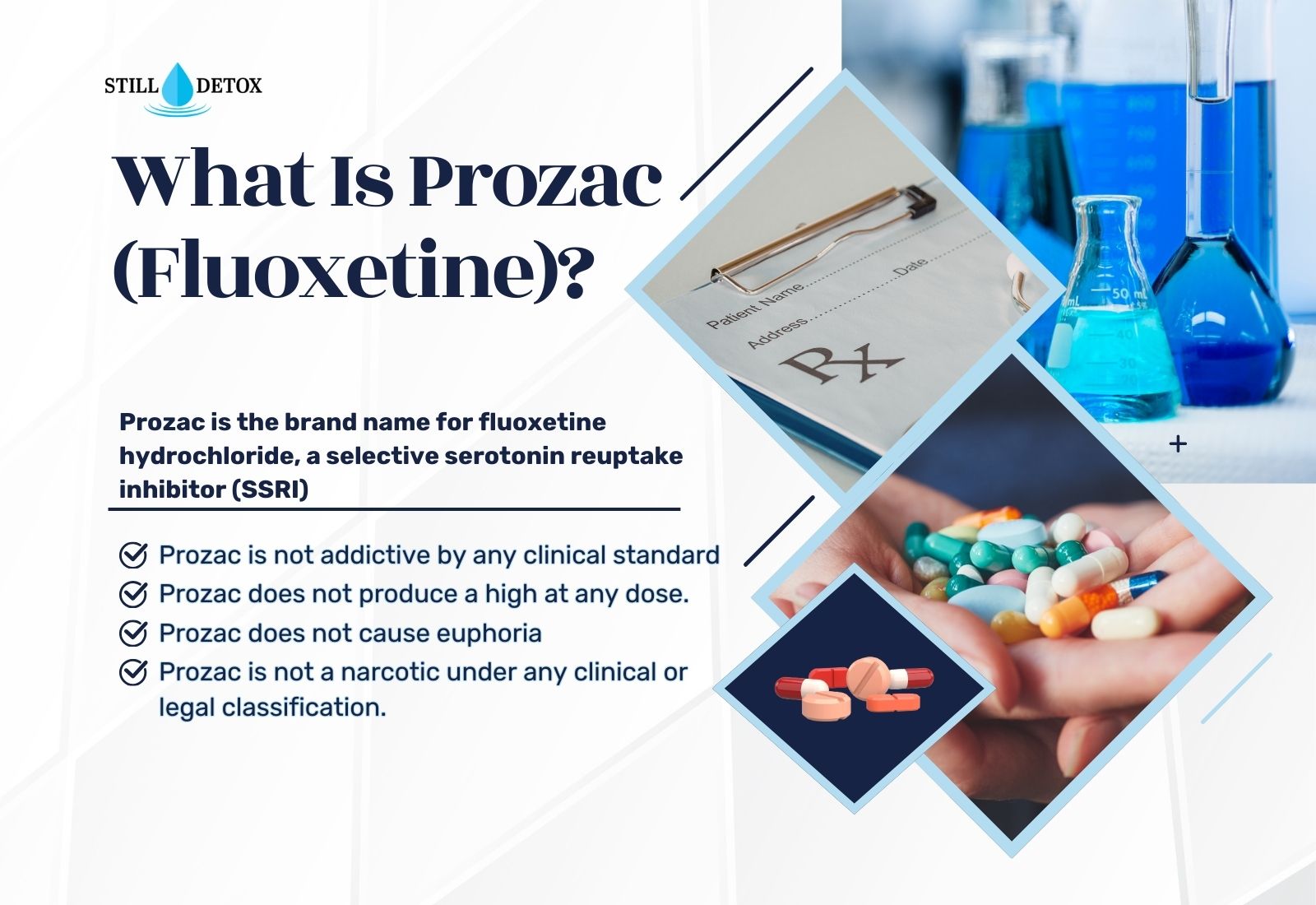
Prozac is the brand name for fluoxetine hydrochloride, a selective serotonin reuptake inhibitor (SSRI) approved by the FDA in 1987. It remains one of the most prescribed antidepressants in the United States, with over 20 million prescriptions written annually, according to a 2022 review published in the Journal of Affective Disorders.
Fluoxetine is FDA-approved to treat major depressive disorder (MDD), obsessive-compulsive disorder (OCD), panic disorder, bulimia nervosa, and premenstrual dysphoric disorder (PMDD). It works by blocking serotonin reabsorption in the brain, gradually increasing its availability between neurons over time.
Unlike fast-acting drugs, Prozac takes two to six weeks to produce measurable therapeutic effects. Its standard starting dose is 20 mg per day, adjusted based on clinical response and diagnosis. This slow, serotonin-based mechanism is a core pharmacological reason fluoxetine carries no recognized abuse potential.
Is Prozac Addictive?
No. Prozac is not addictive by any clinical standard. The DSM-5 defines addiction as compulsive drug-seeking behavior that continues despite harmful consequences, including cravings, tolerance escalation, and loss of behavioral control over substance use. Fluoxetine does not produce any of these responses in patients.
The DEA does not classify Prozac as a controlled substance under any schedule, reflecting its low misuse potential and the absence of dependence-forming pharmacological properties. Patients do not develop cravings for fluoxetine, and prescribed use does not escalate into compulsive, uncontrolled behavior.
Physical dependence is a separate concept frequently confused with addiction. Dependence means the body has adapted to a substance and may react when it is stopped abruptly, which is a physiological process that can occur with many non-addictive medications, including corticosteroids and certain blood pressure drugs. Prozac can cause this type of physiological adaptation, but it does not meet the behavioral or neurological criteria for addiction.
Can You Get High on Prozac?
No. Prozac does not produce a high at any dose. Fluoxetine acts on the serotonin system exclusively and does not stimulate the dopamine reward pathway responsible for euphoria and intoxication. Addictive drugs such as opioids, methamphetamine, and cocaine cause a rapid dopamine surge in the brain’s reward circuit, producing the intense pleasurable response that drives compulsive use. Prozac does not do this.
A 2019 study in the Journal of Psychopharmacology confirmed that SSRIs produce no recreational value, even at elevated clinical doses such as 80 mg per day. Some users in the early weeks of treatment report jitteriness or mild mood changes, but these are clinical side effects of early serotonin adjustment, not pleasurable or intoxicating sensations.
Taking dangerously high doses of fluoxetine does not intensify any pleasurable effects because no pleasurable mechanism exists to intensify. Instead, overdose can trigger serotonin syndrome, a life-threatening medical emergency involving rapid heart rate, high body temperature, confusion, and uncontrolled tremors that requires immediate emergency intervention.
Does Fluoxetine Cause Euphoria?
Prozac does not cause euphoria. Some patients in the first one to two weeks of treatment describe an unusual boost in energy or alertness, and this experience is sometimes misinterpreted as a euphoric effect. This reaction reflects early neurochemical adjustment in serotonin activity and is not a reward-driven dopamine response.
Genuine euphoria requires dopamine release in the nucleus accumbens, the brain’s primary reward center, which controls pleasure-seeking and reinforcement learning. Fluoxetine has no clinically meaningful activity in this pathway, which explains why Prozac has no street value, no documented recreational market, and no history of widespread diversion for non-medical purposes.
Patients with bipolar disorder may occasionally experience hypomanic episodes after starting an SSRI, including fluoxetine. This is a medical adverse event requiring immediate clinical reassessment of the treatment plan. It is not a recreational effect, and it is a recognized clinical reason to reassess whether SSRI therapy is appropriate for that individual.
Is Prozac a Narcotic?
No. Prozac is not a narcotic under any clinical or legal classification. Narcotics are opioid-class drugs that bind to mu, delta, and kappa opioid receptors in the brain, producing powerful analgesia and intense euphoria that rapidly drives physical dependence. Fluoxetine has zero opioid receptor activity and is pharmacologically unrelated to narcotic drug classes in every meaningful sense.
Narcotics such as oxycodone, hydrocodone, fentanyl, and heroin are classified as Schedule II or Schedule I controlled substances by the DEA because of their severe dependence potential and high risk of fatal overdose. Prozac is not scheduled under any DEA category and is not subject to narcotic prescribing restrictions, monitoring requirements, or diversion controls.
Physicians can legally prescribe fluoxetine to patients with documented histories of opioid addiction without the prescribing constraints, prior authorizations, or monitoring obligations applied to narcotic medications. This reflects fluoxetine’s fundamentally different mechanism, risk profile, and clean regulatory history regarding substance abuse.
Is Prozac a Controlled Substance or a Scheduled Drug?
Prozac is not a controlled substance and is not scheduled under the DEA’s federal scheduling system, which ranges from Schedule I through Schedule V. The DEA schedules substances based on accepted medical use, documented abuse potential, and the risk of physical or psychological dependence developing in users. Fluoxetine does not meet the threshold criteria for placement in any schedule category.
Controlled mental health medications include benzodiazepines such as Xanax, Valium, and Klonopin, which are classified as Schedule IV, and stimulants such as Adderall and Ritalin, which are classified as Schedule II. These carry documented addiction risk and require stricter prescribing oversight, usage monitoring, and patient history review before dispensing. Prozac does not belong to any of these regulatory categories.
The absence of DEA scheduling is a meaningful and deliberate clinical signal. It reflects decades of post-market safety surveillance showing that fluoxetine does not produce the behavioral or physiological addiction profile observed in scheduled and regulated controlled drugs.
Do People Abuse Prozac Recreationally?
Prozac recreational use is rare and clinically ineffective for achieving intoxication. Because fluoxetine does not trigger dopamine release in the reward pathway, it cannot produce the rush, high, or euphoria that motivates recreational drug use, and most attempts to misuse it yield no pleasurable or intoxicating effect whatsoever.
A small subset of individuals, typically those with co-occurring substance use disorders, may take fluoxetine in ways not prescribed by their physician. This includes taking doses higher than recommended, obtaining it without a valid prescription, or attempting to snort it to accelerate absorption. None of these methods produces a pleasurable, intoxicating, or euphoric effect.
Combining Prozac with MDMA, methamphetamine, or other serotonergic substances creates serious and potentially fatal health risks. This combination can overload the serotonin system and trigger serotonin syndrome. The interaction between Prozac and meth carries a specific clinical concern because both drugs affect interconnected monoamine neurotransmitter systems that become dangerous when simultaneously overactivated.
Prozac Dependence vs. Prozac Addiction: The Clinical Difference
Physical dependence occurs when the body adapts to a substance and requires its continued presence to maintain normal neurological function. After extended fluoxetine use, the brain recalibrates serotonin activity around the drug’s influence, and stopping abruptly forces a rapid readjustment that produces temporary discomfort. This is a predictable physiological response, not a behavioral addiction.
Addiction is defined by compulsive use despite harmful consequences, cravings that override rational judgment, and behavioral prioritization of drug-seeking above work, relationships, and personal health. Patients physically dependent on Prozac do not exhibit these behaviors. When a physician advises tapering, patients comply and discontinue successfully, which is the opposite of the addiction-driven resistance seen with genuinely addictive substances.
A 2017 study found that 20 to 30 percent of SSRI users experience discontinuation symptoms after stopping the medication. This finding reflects physiological adaptation to the drug rather than addiction. A 2024 Lancet Psychiatry meta-analysis confirmed fluoxetine had one of the lowest discontinuation rates among all SSRIs, with fewer than 15 percent of users experiencing meaningful symptoms.
Prozac Withdrawal Symptoms and Discontinuation Syndrome
Prozac discontinuation syndrome, also referred to as antidepressant discontinuation syndrome (ADS), occurs when fluoxetine is stopped abruptly or reduced too rapidly without a supervised taper. Symptoms typically begin two to four days after the final dose, though fluoxetine’s long half-life often delays and softens their onset compared to shorter-acting SSRIs.
Common Prozac discontinuation symptoms include:
- Brain zaps (brief, electric shock-like sensations in the head or body)
- Dizziness and lightheadedness that worsen with quick movement
- Nausea, stomach cramps, or loose stools
- Insomnia and vivid or disturbing dreams during sleep
- Irritability, heightened anxiety, and unexplained shifts in mood
- Physical fatigue and flu-like symptoms, including sweating
- Headache and difficulty with concentration or memory
Fluoxetine has a half-life of approximately four to six days, with its active metabolite, norfluoxetine, persisting in the system for up to 16 days after the last dose. This extended clearance window explains why Prozac produces milder and shorter discontinuation symptoms than short-acting SSRIs such as paroxetine or sertraline. With a properly structured medical taper, most discontinuation symptoms resolve within one to two weeks.
How Prozac Compares to Genuinely Addictive Drugs
Prozac and addictive controlled substances like alcohol and opioids differ in four critical dimensions: mechanism of action in the brain, presence or absence of euphoric effect, legal and regulatory classification, and the behavioral patterns they produce in users over time.
Prozac (Fluoxetine):
- Acts on serotonin reuptake only, with no dopamine reward pathway activity
- Produces no euphoria, no intoxication, and no recognized high at any dose
- Not scheduled by the DEA under any federal controlled substance classification
- Does not produce cravings, compulsive use, or dose-escalation behavior
- Has no established street value, diversion market, or documented recreational use pattern
- Discontinuation symptoms are mild to moderate, time-limited, and respond well to supervised tapering
Opioids, Benzodiazepines, and Stimulants:
- Directly activate or potentiate dopamine release in the brain’s reward circuitry
- Produce rapid, intense euphoria, sedation, or stimulation that reinforces repeated use
- Classified as DEA Schedule II, III, or IV with strict prescribing and monitoring requirements
- Generate powerful cravings, compulsive drug-seeking, and escalating dose tolerance
- Have well-documented histories of diversion, recreational use, and abuse across populations
- Withdrawal can be medically dangerous, prolonged, and in some cases, life-threatening without supervision
Signs of Prozac Misuse or Problematic Use
While fluoxetine abuse is uncommon, it occurs most frequently in individuals with co-occurring substance use disorders or undertreated mental health conditions. Identifying problematic use patterns early allows for timely clinical intervention before the situation escalates.
Signs that Prozac use may have become problematic include:
- Taking doses significantly higher than prescribed without physician guidance or approval
- Obtaining fluoxetine without a prescription or from unregulated and unverified sources
- Combining Prozac with alcohol, stimulants, or other prescription medications not directed by a treating physician
- Continuing use despite experiencing worsening mood instability, agitation, or marked behavioral changes
- Attempting to crush or snort the medication in order to change how quickly it reaches the bloodstream
These behaviors warrant immediate clinical evaluation by a licensed healthcare provider. In individuals also managing addiction to alcohol, opioids, or stimulants, problematic Prozac use often signals an underlying dual diagnosis that requires integrated, medically supervised behavioral health treatment.
How to Stop Taking Prozac Safely
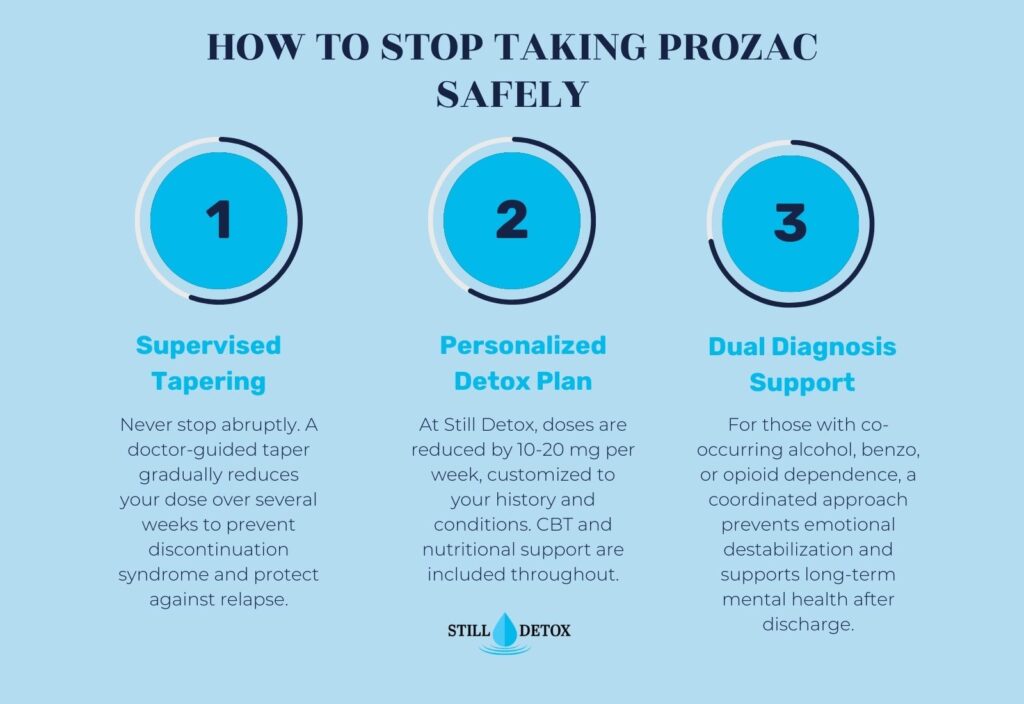
Stopping fluoxetine should always be done under direct medical supervision using a structured tapering schedule. Abrupt discontinuation significantly increases the risk of discontinuation syndrome, even considering fluoxetine’s protective long half-life. A gradual taper, slowly reducing the dose over several weeks, minimizes physical discomfort and protects against depression relapse.
At Still Detox, our clinical team follows evidence-based tapering protocols that typically reduce doses by 10 to 20 mg per week. Each taper schedule is customized based on the patient’s treatment duration, current dosage, and any co-occurring mental health or substance use conditions. Cognitive Behavioral Therapy (CBT) and structured nutritional support are integrated throughout the tapering process.
For individuals managing Prozac use alongside alcohol, benzodiazepine, or opioid dependence, our dual diagnosis model ensures that antidepressant transitions are coordinated safely within the primary detox process. This prevents emotional destabilization during withdrawal and supports durable long-term mental health stability after discharge.
When to Seek Professional Help
If you are struggling to stop Prozac, experiencing severe discontinuation symptoms, or currently using fluoxetine alongside other substances, professional medical support is not optional. These clinical situations carry risks that self-managed withdrawal cannot safely address, and complications can escalate without proper oversight.
Still Detox in Boca Raton, Florida, provides medically supervised detoxification, dual diagnosis treatment, and individualized antidepressant tapering support for patients across Florida and nationwide. Our team has guided over 700 patients through safe medication transitions, combining medical oversight with therapy, group support, and long-term aftercare planning.
Frequently Asked Questions
Is Prozac dangerous?
Prozac is considered safe when taken as prescribed under physician supervision. It carries an FDA black box warning regarding increased suicidal thinking in children, adolescents, and young adults during the first weeks of treatment, and can trigger serotonin syndrome when combined with other serotonergic drugs. It is not dangerous in the way that addictive or scheduled substances are when used as clinically directed.
Is Prozac an opioid?
No. Prozac is not an opioid. It is an SSRI with no opioid receptor activity whatsoever. Opioids such as oxycodone, heroin, and fentanyl bind directly to mu and delta opioid receptors, producing intense euphoria and severe physical dependence. Fluoxetine works exclusively on the serotonin system and is pharmacologically unrelated to opioids in every clinical sense.
Is Prozac good for anxiety?
Yes. Fluoxetine is clinically recognized as effective for several anxiety-related conditions. While its primary FDA approvals cover major depressive disorder, OCD, panic disorder, and bulimia nervosa, it is widely prescribed off-label for generalized anxiety disorder and social anxiety disorder. Its therapeutic effects build gradually over two to six weeks as serotonin availability stabilizes, which is why it is not appropriate for acute anxiety management.
Is Prozac a strong drug?
Prozac is clinically potent within its therapeutic class, but does not produce immediate noticeable effects and does not alter perception or consciousness. Its strength lies in its long half-life, high serotonin selectivity, and durability of effect, which is why it is one of the most prescribed antidepressants globally, with over 20 million annual U.S. prescriptions.
How long do Prozac side effects last?
Most common side effects, including nausea, headache, and sleep disturbance, occur in the first one to two weeks and resolve as the brain adjusts. Sexual side effects can persist throughout the treatment period. Any side effects not resolving within four weeks of starting or adjusting a dose should be reported to a prescribing physician for reassessment.
How long does it take to feel better after stopping Prozac?
Most patients begin feeling more stable within one to two weeks of completing a supervised taper. Because fluoxetine and its metabolite norfluoxetine clear slowly over four to six weeks after the last dose, discontinuation symptoms are typically mild. Full mood and sleep stabilization generally occurs within four to six weeks when a gradual medical taper has been followed correctly.
How long is Prozac in your system?
Fluoxetine has a half-life of four to six days, and its active metabolite, norfluoxetine, persists for four to 16 days. This means Prozac remains detectable in the body for up to four to six weeks after the last dose. This extended clearance window is precisely why Prozac produces milder discontinuation symptoms than shorter-acting SSRIs.
Do I need to taper off 10 mg Prozac?
Yes. Even at 10 mg, a physician-guided taper is the recommended approach. Abrupt cessation at any dose can trigger discontinuation symptoms, including brain zaps, dizziness, and irritability, particularly after months of consistent use. A structured taper reduces the risk of symptom rebound and depressive relapse regardless of the dose level.
References
- American Psychiatric Association. (2013). Diagnostic and statistical manual of mental disorders (5th ed.). American Psychiatric Publishing.
- Gabriel, M., & Sharma, V. (2017). Antidepressant discontinuation syndrome. CMAJ, 189(21), E747.
- Henssler, J., Heinz, A., Brandt, L., & Bschor, T. (2024). Incidence of antidepressant discontinuation symptoms: A systematic review and meta-analysis. The Lancet Psychiatry, 11(7), 526-535.
- National Alliance on Mental Illness. (2023). Antidepressant discontinuation syndrome. NAMI.
- National Institute on Drug Abuse. (2020). Understanding drug use and addiction DrugFacts. U.S. Department of Health and Human Services. https://nida.nih.gov/publications/drugfacts/understanding-drug-use-addiction
- Rosenbaum, J. F., Fava, M., Hoog, S. L., Ascroft, R. C., & Krebs, W. B. (1998). Selective serotonin reuptake inhibitor discontinuation syndrome: A randomized clinical trial. Biological Psychiatry, 44(2), 77-87.
- U.S. Drug Enforcement Administration. (2023). Drug scheduling. DEA. https://www.dea.gov/drug-information/drug-scheduling