

Seroquel (quetiapine fumarate) is an FDA-approved atypical antipsychotic medication used to treat schizophrenia, bipolar disorder, and major depressive disorder. It is not classified as a controlled substance, narcotic, or opioid. However, Seroquel does carry a real and documented abuse potential, and it is the most frequently misused second-generation antipsychotic in the United States.
People ask whether Seroquel is addictive for good reason. While it does not produce classic addiction the way opioids or benzodiazepines do, physical dependence, psychological reliance, and difficult withdrawal are all well-documented, especially in off-label users and people in substance use recovery.
Highlights
- Seroquel (quetiapine) is an FDA-approved atypical antipsychotic, not a narcotic, opioid, benzodiazepine, or controlled substance under the U.S. Controlled Substances Act.
- A 10-year study of the National Poison Data System (2003-2010) found quetiapine accounted for 60.6% of all second-generation antipsychotic abuse cases across 2,118 documented incidents.
- Off-label prescribing, primarily for insomnia and anxiety, accounts for roughly 20% of all quetiapine prescriptions and significantly increases misuse risk.
- Stopping Seroquel abruptly can trigger rebound insomnia, severe anxiety, nausea, and rebound psychosis in people with underlying psychiatric conditions.
- People with a history of polysubstance use carry the highest documented risk of Seroquel dependence.
What Is Seroquel (Quetiapine)?
Seroquel is the brand name for quetiapine fumarate, a second-generation (atypical) antipsychotic first approved by the FDA in 1997. It is available as immediate-release tablets in doses ranging from 25 mg to 800 mg, and as an extended-release version called Seroquel XR. By 2010, Seroquel had become the fifth-largest selling pharmaceutical in the United States, reflecting how broadly it was being prescribed beyond its original indications.
Quetiapine belongs to the dibenzothiazepine drug class. It is chemically unrelated to opioids, benzodiazepines, barbiturates, or stimulants.
What Is Seroquel Used For?
Seroquel has three FDA-approved indications and a wide range of off-label uses that have expanded its prescribing profile significantly over the past two decades.
FDA-Approved Uses
Seroquel is approved to treat:
- Schizophrenia in adults and adolescents aged 13 and older
- Bipolar I disorder, including acute manic episodes, depressive episodes, and long-term maintenance therapy
- Major depressive disorder (MDD) as an adjunct to antidepressant therapy in adults
These are serious psychiatric conditions that require close monitoring by a licensed prescriber. Seroquel should never be used to treat these conditions without proper clinical oversight.
Off-Label Uses
Quetiapine is frequently prescribed off-label for insomnia, generalized anxiety disorder, PTSD, agitation, and managing symptoms during substance withdrawal. Off-label prescriptions account for roughly 20% of all quetiapine dispensings, and few of these uses have been validated through large randomized controlled trials.
Physicians have also explored its use in alcohol dependence, opioid withdrawal, and polysubstance use treatment. If you take Seroquel specifically for sleep, it is worth understanding how other prescription sleep medications such as Ativan (lorazepam) used for sleep create similar patterns of dependence even at low therapeutic doses.
How Does Seroquel Work in the Brain?
Quetiapine works primarily as a dopamine D2 and serotonin 5-HT2A receptor antagonist. By blocking these receptor sites, it reduces the overactive neurotransmitter signaling that drives psychotic symptoms, mania, and severe mood instability. Seroquel also has a strong affinity for histamine H1 receptors, which is the primary reason it produces intense sedation.
Its blockade of adrenergic alpha-1 receptors contributes additional calming effects on anxiety and agitation. The drug’s half-life is approximately 6 to 7 hours in adults, requiring multiple daily doses to maintain therapeutic blood levels. These combined sedating properties are what drive its recreational misuse.
Is Seroquel a Controlled Substance, Narcotic, or Opioid?
No to all three. Seroquel is not scheduled under the U.S. Controlled Substances Act, is not a narcotic, and is not an opioid. It does not bind to opioid receptors, does not affect GABA-A receptors like benzodiazepines, and is not a stimulant or barbiturate. It belongs to the dibenzothiazepine drug class and is chemically unrelated to any of these categories.
Functionally, it acts as a sedative due to its strong antihistaminergic properties. It requires a prescription, not because of federal scheduling, but because of serious medical risks, including metabolic syndrome, weight gain, cardiac QTc prolongation, and tardive dyskinesia. For context on how non-opioid prescription medications are classified, reviewing whether cyclobenzaprine is a controlled substance offers a useful parallel.
Is Seroquel Addictive?
Seroquel is not addictive in the traditional clinical sense applied to opioids, benzodiazepines, or stimulants. However, calling it simply “non-addictive” misrepresents the real risks. Research from the Korean Society of Applied Pharmacology found quetiapine affects neurological systems tied to abuse liability and has documented potential to produce psychological dependence.
Physical dependence refers to the body adapting to a drug’s presence and experiencing withdrawal when that drug is removed. Psychological dependence involves craving the drug’s sedating or calming effects to function normally. Both can develop with Seroquel, particularly in people using it off-label for sleep or anxiety, even without meeting the full DSM-5 criteria for a substance use disorder.
People with a prior history of polysubstance use, benzodiazepine abuse, or those in incarcerated or inpatient psychiatric settings carry the highest documented risk of Seroquel misuse progressing to dependence.
Is Seroquel Addictive for Sleep?
Using Seroquel specifically for sleep significantly increases the risk of psychological habituation. The sedative effect becomes the primary reason someone takes it nightly, and the brain begins associating Seroquel with the only way to fall asleep. When stopped, rebound insomnia is a near-universal consequence. This mirrors the rebound sleep disruption seen with benzodiazepines prescribed for insomnia, where discontinuation becomes increasingly difficult over time.
How Is Seroquel Abused?
Seroquel abuse involves using quetiapine outside of a prescription, in higher doses than prescribed, or through alternate routes of administration. SAMHSA data indicate that of all emergency department visits involving antipsychotic drug misuse, the majority involve quetiapine. The most common abusers are individuals already diagnosed with a substance use disorder.
Oral ingestion of higher-than-prescribed doses is the most frequent form of misuse. The goal is typically intense sedation, reduced anxiety, or an amplified calming effect when coming down from stimulants.
Snorting Seroquel: What Happens and Why It Is Dangerous
Snorting Seroquel bypasses normal oral absorption and accelerates the drug’s entry into the bloodstream, producing a faster and more intense onset of sedation and dopamine-related effects. People who misuse Seroquel intranasally often combine it with cocaine or methamphetamine to counterbalance stimulant-induced anxiety, a combination referred to on the street as a “Q-Ball.”
Nasal administration dramatically increases the overdose risk and causes direct damage to nasal tissues. The same pharmacokinetic risks that make snorting prescription pills like Ritalin dangerous apply to Seroquel: bypassing the digestive system removes the natural absorption delay that protects against toxic blood concentrations.
Intravenous Seroquel use carries the additional risks of pulmonary infections, blood-borne disease transmission, cardiac arrhythmias, and life-threatening overdose when combined with other CNS depressants.
Seroquel Street Names
Because of its powerful sedating effects, quetiapine has developed a significant black market presence. Common Seroquel street names include:
- Susie-Q
- Baby Heroin
- Squirrel
- Q-Ball (when combined with cocaine)
- Quell
The nickname “Baby Heroin” refers exclusively to its sedative potency. Seroquel is pharmacologically and chemically unrelated to heroin or any opioid.
Signs of Seroquel Abuse
Recognizing Seroquel misuse early can make a significant difference in outcomes. Both behavioral and physical signs are worth monitoring.
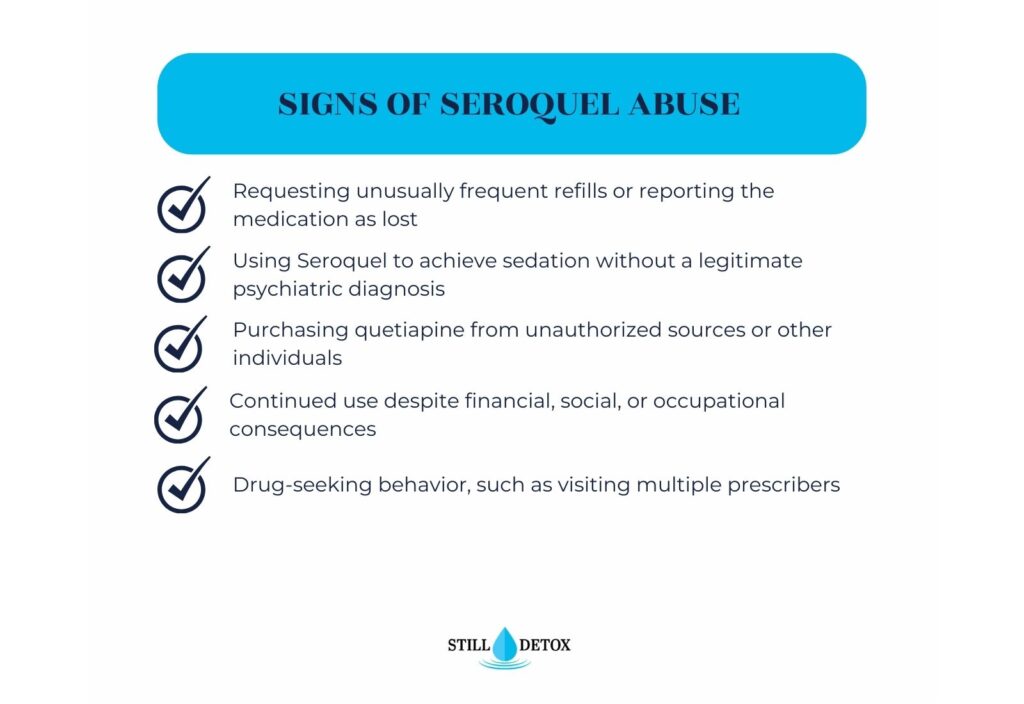
Behavioral signs of Seroquel abuse include:
- Requesting unusually frequent refills or reporting the medication as lost
- Purchasing quetiapine from unauthorized sources or other individuals
- Using Seroquel to achieve sedation without a legitimate psychiatric diagnosis
- Combining it with alcohol, cocaine, opioids, or other CNS depressants
- Continued use despite financial, social, or occupational consequences
- Drug-seeking behavior, such as visiting multiple prescribers
Physical signs include extreme drowsiness at inappropriate times, slurred speech, poor balance, confusion, and signs of nasal damage if the drug is being snorted. High-dose Seroquel misuse combined with other substances can trigger psychotic episodes. People misusing multiple substances are at elevated risk of psychosis driven by substance use, a serious medical emergency requiring immediate intervention.
Seroquel Withdrawal Symptoms
Seroquel withdrawal can begin within 24 to 72 hours of abrupt discontinuation or significant dose reduction. The WHO has specifically identified quetiapine as particularly difficult to stop compared to other antipsychotic medications, which is a meaningful clinical distinction.
Common Seroquel withdrawal symptoms include:
- Severe rebound insomnia
- Nausea, vomiting, and diarrhea
- Intense anxiety and agitation
- Irritability and mood instability
- Sweating, chills, and headaches
- Dizziness and flu-like symptoms
- Rebound psychosis in people with underlying schizophrenia or bipolar disorder
How Long Does Seroquel Withdrawal Last?
Most acute Seroquel withdrawal symptoms resolve within 1 to 4 weeks for typical therapeutic-dose users. Long-term high-dose users and people with co-occurring psychiatric disorders may experience protracted symptoms, including persistent insomnia, anxiety, and mood disruption, lasting several months. The withdrawal timeline parallels patterns seen in gabapentin withdrawal, where neurological rebound is severe, and duration depends heavily on the dose and duration of prior use.
Stopping Seroquel without a supervised taper is never recommended. Abrupt discontinuation in someone with schizophrenia or bipolar disorder can trigger a psychiatric emergency.
Seroquel Detox and Treatment
Medical detox from Seroquel centers on a slow, clinically monitored taper rather than abrupt cessation. The rate of dose reduction depends on the prescribed dose, duration of use, and the patient’s psychiatric and medical history. No FDA-approved medication exists specifically for quetiapine withdrawal, so symptom management and psychiatric stabilization are the primary treatment goals.
At Still Detox, our clinical team designs individualized taper protocols guided by psychiatric evaluation and daily monitoring. For patients using Seroquel alongside other substances, dual-diagnosis treatment addresses the full scope of co-occurring disorders. After medical detox, evidence-based behavioral therapy and relapse prevention planning are essential components of sustained recovery.
If you or someone you know is struggling with Seroquel misuse or dependence, reach out to Still Detox today for a confidential assessment.
Frequently Asked Questions
Is Seroquel habit-forming?
Yes, Seroquel can become habit-forming, particularly when used off-label for sleep or anxiety. Its sedative effects create a conditioned reliance over time: the brain associates Seroquel with being the only way to rest or feel calm. The WHO has noted quetiapine is especially difficult to discontinue compared to other antipsychotics, indicating strong physical and psychological habituation develops with prolonged use.
Is Seroquel hard to get off of?
Yes. Stopping Seroquel abruptly triggers significant withdrawal symptoms, including rebound insomnia, severe anxiety, nausea, and potential psychosis in people with underlying psychiatric conditions. The WHO classifies quetiapine as one of the more difficult antipsychotics to discontinue. Long-term or high-dose users consistently experience the most challenging withdrawal process. A medically supervised taper is the safest and most effective approach.
What is the most abused antipsychotic?
Seroquel (quetiapine) is the most commonly abused atypical antipsychotic medication by a significant margin. A 10-year retrospective analysis of National Poison Data System records from 2003 to 2010 found quetiapine accounted for 60.6% of all documented second-generation antipsychotic abuse cases. Its high prescription volume, combined with powerful sedating effects, likely contributes to its prominence in abuse statistics.
Is it bad to take Seroquel every night?
Taking Seroquel every night off-label for sleep is not recommended without close ongoing medical supervision. Nightly use creates physical dependence, increases the risk of metabolic side effects and weight gain, and almost invariably leads to severe rebound insomnia when stopped. Long-term nightly users frequently require a supervised taper, and the sleep disruption on discontinuation can be worse than the original insomnia.
What does a quetiapine high feel like?
A quetiapine high is dominated by heavy sedation, deep relaxation, and a blunting of anxiety rather than euphoria. It does not produce the rush or pleasure associated with opioids or stimulants. At higher doses, users report dissociation, confusion, and extreme drowsiness. These effects are driven by quetiapine’s antihistaminergic and antidopaminergic properties. The absence of classic euphoria is one reason Seroquel’s abuse potential was historically underestimated.
What does Seroquel do to a person who does not need it?
In someone without schizophrenia or bipolar disorder, Seroquel primarily induces powerful sedation, slowed cognition, and reduced anxiety due to histamine and dopamine receptor blockade. It does not correct a chemical imbalance in someone without the conditions it treats. Instead, it suppresses normal neurological activity, which can cause extreme drowsiness, impaired coordination, confusion, and the risk of dependence if used repeatedly without a medical indication.
References
- Klein, L., Bangh, S., & Cole, J. B. (2017). Intentional recreational abuse of quetiapine compared to other second-generation antipsychotics. Western Journal of Emergency Medicine, 18(2), 243-250.
- Kim, S., Lee, G., Kim, E., Jung, H., & Chang, J. (2017). Quetiapine misuse and abuse: Is it an atypical paradigm of drug-seeking behavior? Journal of Research in Pharmacy Practice, 6(1), 12-15.
- Pinta, E. R., & Taylor, R. E. (2007). Quetiapine addiction? American Journal of Psychiatry, 164(1), 174-175.
- Sansone, R. A., & Sansone, L. A. (2010). Is Seroquel developing an illicit reputation for misuse/abuse? Psychiatry, 7(1), 13-16.
- Evoy, K. E., Teng, C., Encarnacion, V. G., Frescas, B., Hakim, J., Saklad, S., & Frei, C. R. (2019). Comparison of quetiapine abuse and misuse reports to the FDA adverse event reporting system with other second-generation antipsychotics. Substance Abuse: Research and Treatment, 13, 1-9.
- U.S. Food and Drug Administration. (2013). Seroquel (quetiapine fumarate) tablets: Full prescribing information. https://www.accessdata.fda.gov/drugsatfda_docs/label/2013/020639s058lbl.pdf
- Substance Abuse and Mental Health Services Administration. (2011). Drug abuse warning network: Emergency department visits involving mental health drugs. https://www.samhsa.gov/data/sites/default/files/DAWN2k11ED/DAWN2k11ED/DAWN2k11ED.htm