


A lean gut is the swollen, bloated belly that develops from regularly drinking lean, the codeine cough syrup mixture also called purple drank or sizzurp. It is not ordinary body fat.
The swelling comes from how codeine slows the digestive system, which is why a person can stay slim everywhere except the stomach. That distended look signals real harm happening inside the body.
Here is what actually causes a lean gut, how serious it is, and how the bloating can be reversed.
Key Takeaways
- The rounded, distended stomach comes from opioid-induced constipation and trapped waste, so someone can look thin everywhere else while the belly stays swollen.
- Lean is a rising concern among young users. A NIDA-funded National Drug Early Warning System analysis flagged the promethazine-and-cough-syrup combination as an emerging signal, detected at more than double its early-2024 level.
- According to addiction medicine specialists, physical dependence on codeine can develop after roughly two weeks of regular use, making early help important.
- Codeine is a Schedule II opioid, and a lean gut points to digestive and systemic harm rather than a cosmetic side effect.
- Once codeine use stops and withdrawal is managed medically, gut function usually begins improving within days and continues recovering over the following weeks to a few months.
What Is a Lean Gut?
A lean gut is the bloated, distended stomach that frequent lean users develop because codeine disrupts normal digestion.
What a Lean Gut Looks and Feels Like
A lean gut produces a tight, swollen abdomen that often looks out of proportion to the rest of a slim body.
- Visible distension: The stomach appears rounded and firm, frequently described by users as looking skinny everywhere but the belly.
- Physical discomfort: The buildup of waste creates a heavy, tight, and uncomfortable feeling that worsens with continued use.
- Mistaken status symbol: Some users wrongly treat the look as a sign of heavy use of the codeine cough syrup mixture, when it actually marks ongoing digestive damage.
Lean Gut vs Regular Belly Fat
A lean gut differs from ordinary belly fat because it is driven by blocked digestion rather than stored calories.
- Different cause: Belly fat builds from excess calories over time, while a lean gut comes mainly from codeine slowing the bowel and trapping waste and gas.
- Different body pattern: Belly fat usually appears alongside weight gain elsewhere, while a lean gut leaves the limbs and face looking thin.
- Different fix: Diet and exercise alone reduce fat, but a lean gut only resolves once codeine use stops and digestion recovers.
What Causes a Lean Gut?
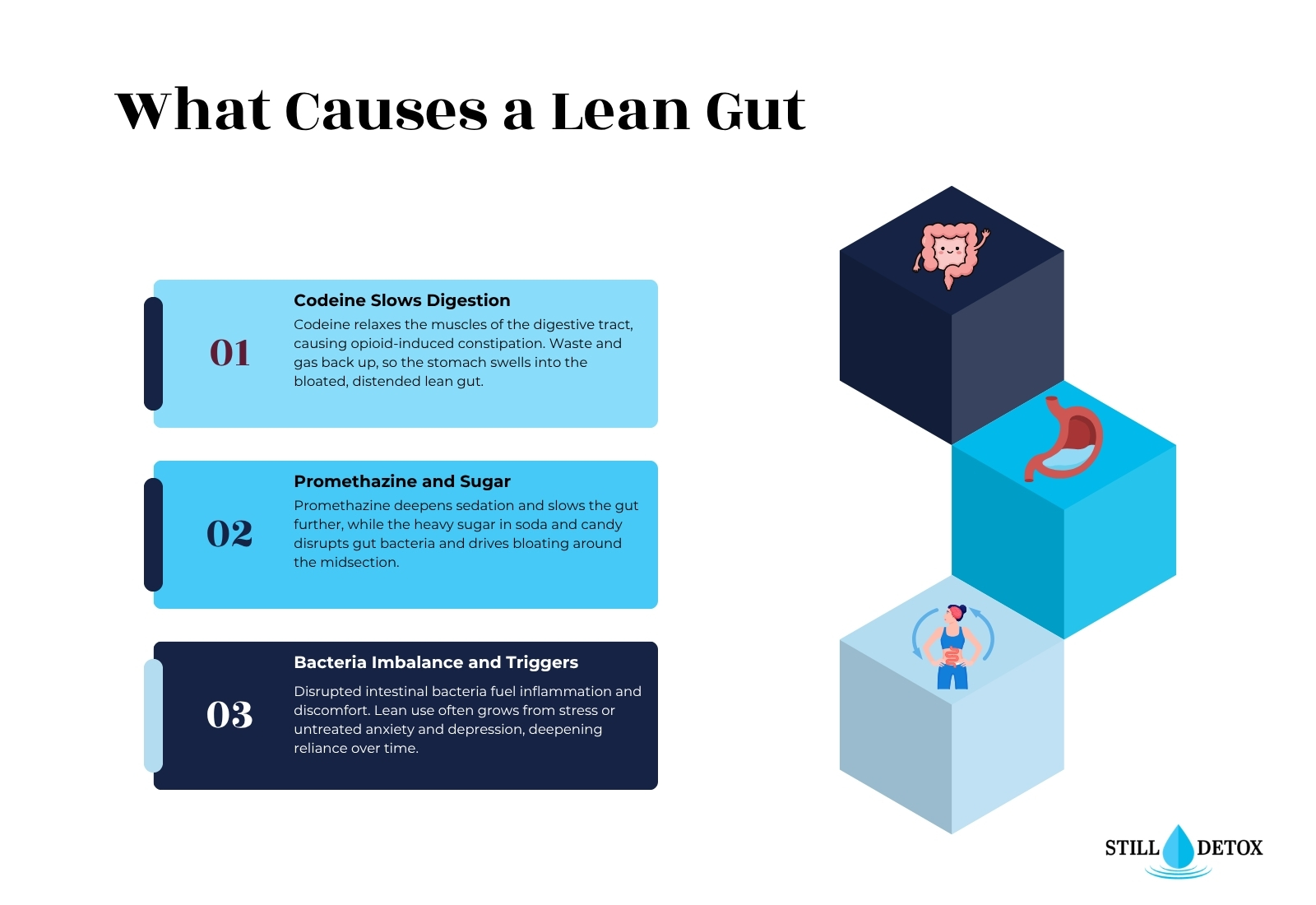
Lean causes a lean gut because its ingredients slow digestion, disrupt gut bacteria, and flood the body with sugar.
How Codeine Slows Digestion
Codeine triggers a lean gut by binding to opioid receptors in the bowel and stalling normal movement.
- Opioid-induced constipation: Codeine relaxes and slows the muscles of the digestive tract, so waste backs up and the stomach swells.
- Trapped gas and pressure: Slowed movement lets gas and stool accumulate, producing the bloated, distended look.
- Escalating risk: Repeated use deepens this slowdown and can drive opioid use disorder, where cravings and loss of control take hold.
How Promethazine and Sugar Make It Worse
Promethazine and the sugary mixers in lean compound the digestive damage that codeine starts.
- Added sedation: Taking promethazine and codeine together deepens drowsiness and further slows the gut.
- Sugar overload: The soda and candy in lean deliver heavy doses of sugar that disrupt gut bacteria and encourage bloating around the midsection.
- Bacterial imbalance: Disrupted intestinal bacteria fuel inflammation and discomfort, adding to the swollen feeling.
The Triggers Behind Lean Use
Lean use often grows out of stress, emotional pain, or untreated mental health conditions.
- Self-medication: Many people use lean to numb anxiety, low mood, or stress, which deepens reliance over time.
- Co-occurring conditions: Lean use frequently overlaps with untreated anxiety or depression, so treating only the substance rarely solves the problem.
How a Lean Gut Develops and Heals
A lean gut develops gradually with regular lean use and reverses gradually once use stops, following a general pattern that varies by person.
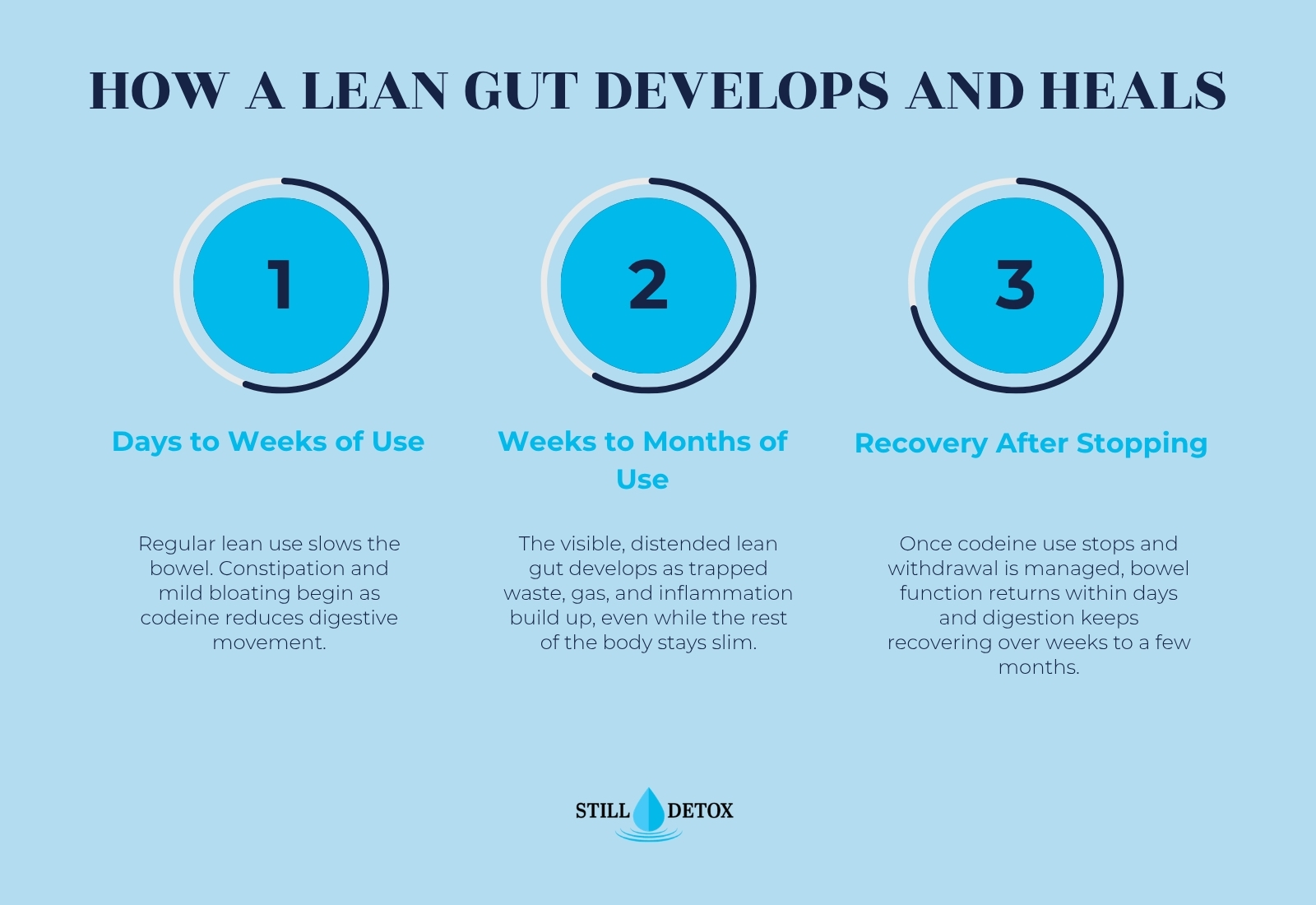
- Days to weeks of regular use: Constipation and mild bloating begin as codeine slows the bowel.
- Weeks to months of continued use: The visible, distended lean gut develops as waste, gas, and inflammation build up.
- First days after stopping: Withdrawal symptoms appear, and clinicians track them using the Clinical Opiate Withdrawal Scale (COWS) to guide care.
- First weeks of recovery: As opioid withdrawal settles, bowel movement returns and bloating starts to ease.
- Following months: Gut bacteria rebalance and digestion continues recovering with proper nutrition and hydration.
Health Risks of Lean Beyond a Lean Gut
Lean threatens far more than the stomach because codeine and promethazine depress the central nervous system and the body becomes dependent.
Common Signs of Lean Use
Common signs of lean use show up quickly and affect both the body and behavior.
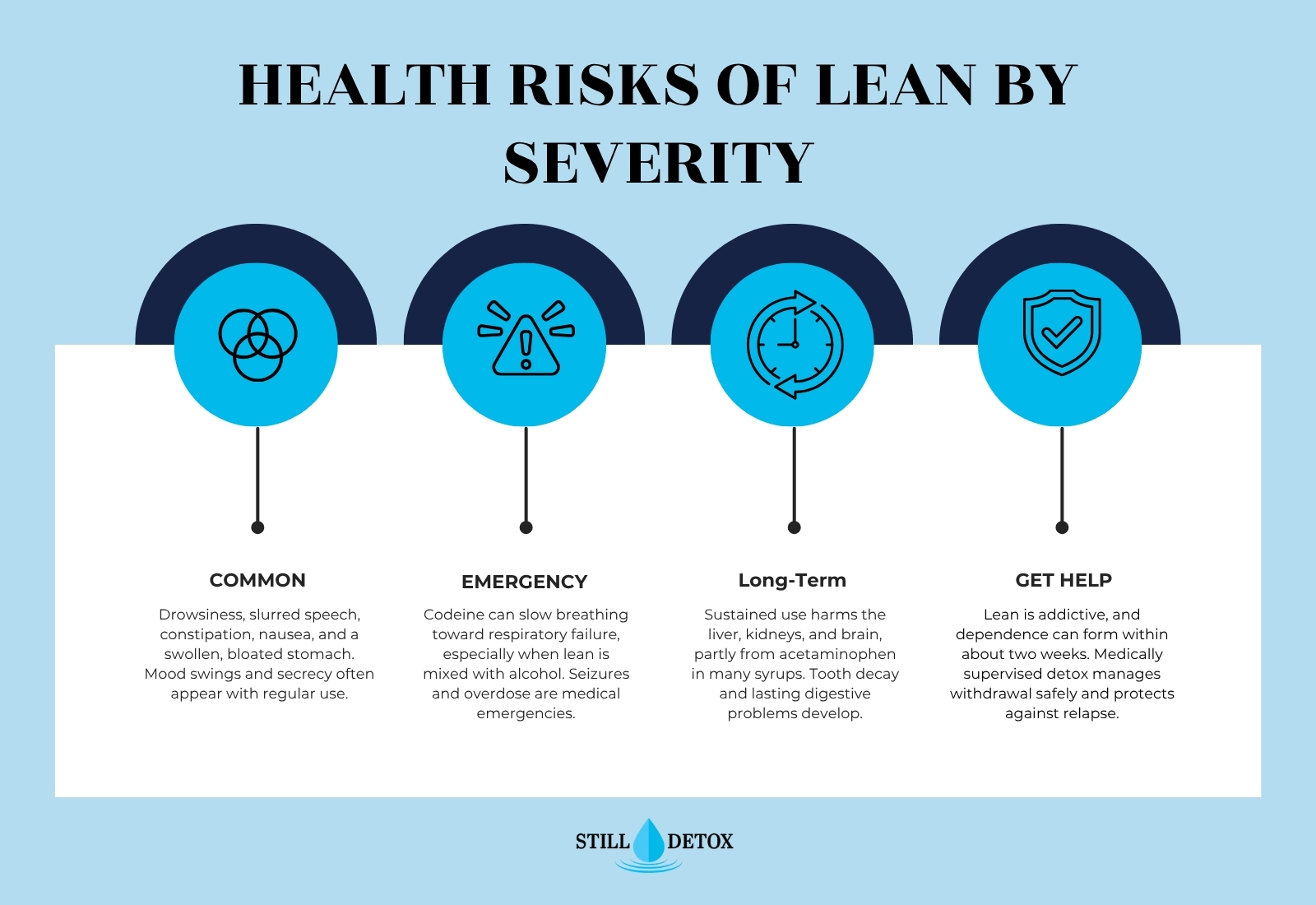
- Physical effects: Drowsiness, slurred speech, constipation, nausea, and a swollen stomach are frequent early signs.
- Behavioral changes: Mood swings, secrecy, and withdrawing from family or friends often accompany regular use.
Serious and Life-Threatening Risks
Lean carries severe risks because codeine slows breathing and heart rate to dangerous levels.
- Respiratory depression: Codeine can slow breathing toward respiratory failure, especially when lean is mixed with alcohol.
- Overdose danger: Combining lean with other depressants sharply raises overdose risk, and combining codeine with other substances intensifies the threat.
- Seizures: Heavy use can lower oxygen to the brain and trigger seizures in people already at risk.
Long-Term Consequences
Long-term lean use damages major organs and entrenches addiction.
- Organ damage: Sustained use harms the liver, kidneys, and brain, partly from acetaminophen in many cough syrups.
- Worsening mental health: Anxiety and depression often deepen, and recognizing the signs of opioid addiction early improves outcomes.
- Dental and digestive harm: Constant sugar and codeine drive tooth decay and lasting digestive problems.
How to Get Rid of a Lean Gut
A lean gut clears when lean use stops and the body gets support to manage withdrawal and rebuild digestion.
Stop Lean Safely With Medical Support
Stopping lean works best under medical care because codeine withdrawal is uncomfortable and hard to manage alone.
- Medically supervised detox: A medically supervised detox manages withdrawal symptoms safely and lowers relapse risk during the hardest early days.
- Symptom relief: Clinicians can ease nausea, anxiety, and cravings so the body can begin healing.
Rebuild Gut Health
Rebuilding the gut restores normal digestion after codeine has slowed it for weeks or months.
- High-fiber foods: Fruits, vegetables, and whole grains ease constipation and help restore regular bowel movement.
- Fermented foods and hydration: Yogurt and other fermented foods support gut bacteria, and steady water intake aids digestion.
- Gentle movement: Walking and light exercise stimulate the bowel and reduce bloating.
Address the Reasons for Use
Lasting recovery means treating the stress or mental health struggles that drive lean use.
- Therapy: Approaches such as cognitive behavioral therapy uncover triggers and build healthier coping skills.
- Ongoing support: Continued care reduces relapse and supports long-term physical and mental health.
Treatment for Lean Addiction at Still Detox
Still Detox in Boca Raton, Florida treats lean addiction by combining medical detox with nutrition support and care for underlying mental health.
Medical Detox
Still Detox provides medically supervised detox that manages codeine withdrawal with clinical oversight.
- Around-the-clock care: The Boca Raton team monitors withdrawal and adjusts support throughout the detox process.
- Personalized plans: Each plan is built around the person’s history, level of use, and health needs.
Nutritional and Gut Recovery Support
Still Detox pairs detox with nutritional guidance to help repair the digestive damage behind a lean gut.
- Guided nutrition: Structured nutritional support helps restore gut balance and ease bloating during recovery.
- Whole-body focus: Care addresses physical healing alongside the work of staying off lean.
Dual Diagnosis and Counseling
Still Detox treats the mental health conditions that often sit beneath lean use.
- Counseling: Therapy explores why use started and builds coping strategies for the future.
- Integrated care: Treating substance use and co-occurring mental health conditions together supports a more complete recovery.
Frequently Asked Questions
Does lean make you fat?
Lean does not mainly make you fat in the usual sense. The lean gut is bloating from opioid-induced constipation and trapped waste, though the heavy sugar in mixers can add some weight gain around the middle.
Why does lean make your stomach big?
Lean makes the stomach big because codeine slows the muscles of the bowel, so waste and gas back up and the abdomen swells. The sugar in soda and candy worsens the bloating.
Is a lean gut permanent?
A lean gut is usually not permanent. Once codeine use stops and digestion recovers, the bloating typically eases over weeks to a few months, especially with proper nutrition and medical support.
How long does it take to get a lean gut?
A lean gut develops with regular use rather than a single drink. Constipation and bloating can start within days to weeks, while the visible distended look usually builds over weeks to months of continued use.
Is lean addictive?
Yes, lean is addictive because it contains codeine, an opioid. Physical dependence can develop within about two weeks of regular use, and stopping often brings withdrawal symptoms like nausea, anxiety, and cravings.
How do you get rid of a lean gut?
You get rid of a lean gut by stopping lean use, ideally with medical detox, then rebuilding digestion with fiber, hydration, fermented foods, and gentle exercise. Treating the reasons for use helps prevent relapse.
Is a lean gut dangerous?
A lean gut can be dangerous because it signals serious digestive disruption. Left unchecked, ongoing lean use raises the risk of hemorrhoids, intestinal blockages, and the broader dangers of codeine such as slowed breathing.
Can you have a lean gut without being overweight?
Yes. Many people with a lean gut are slim everywhere else, because the swelling comes from blocked digestion rather than stored body fat.
References
- Miech, R. A., Johnston, L. D., Patrick, M. E., O’Malley, P. M., & Bachman, J. G. (2024). Monitoring the Future National Survey Results on Drug Use, 1975–2024: Overview and Detailed Results for Secondary School Students. Institute for Social Research, University of Michigan.
- National Institute on Drug Abuse. (2024). Reported use of most drugs among adolescents remained low in 2024. National Institutes of Health. nida.nih.gov
- National Drug Early Warning System. (2025). Emerging signal: promethazine and cough syrup combinations. University of Florida (NIDA-funded).
- Drug Enforcement Administration. (2024). Codeine: drug fact sheet. U.S. Department of Justice. dea.gov
- Centers for Disease Control and Prevention. (2024). Prescription opioids and opioid-induced constipation. U.S. Department of Health and Human Services. cdc.gov
- Substance Abuse and Mental Health Services Administration. (2023). Key substance use and mental health indicators in the United States: Results from the 2023 National Survey on Drug Use and Health.
- American Psychiatric Association. (2022). Diagnostic and Statistical Manual of Mental Disorders (5th ed., text rev.; DSM-5-TR).
- Bogunovic, O. (2025). Clinical commentary on codeine dependence and lean misuse. McLean Hospital.