

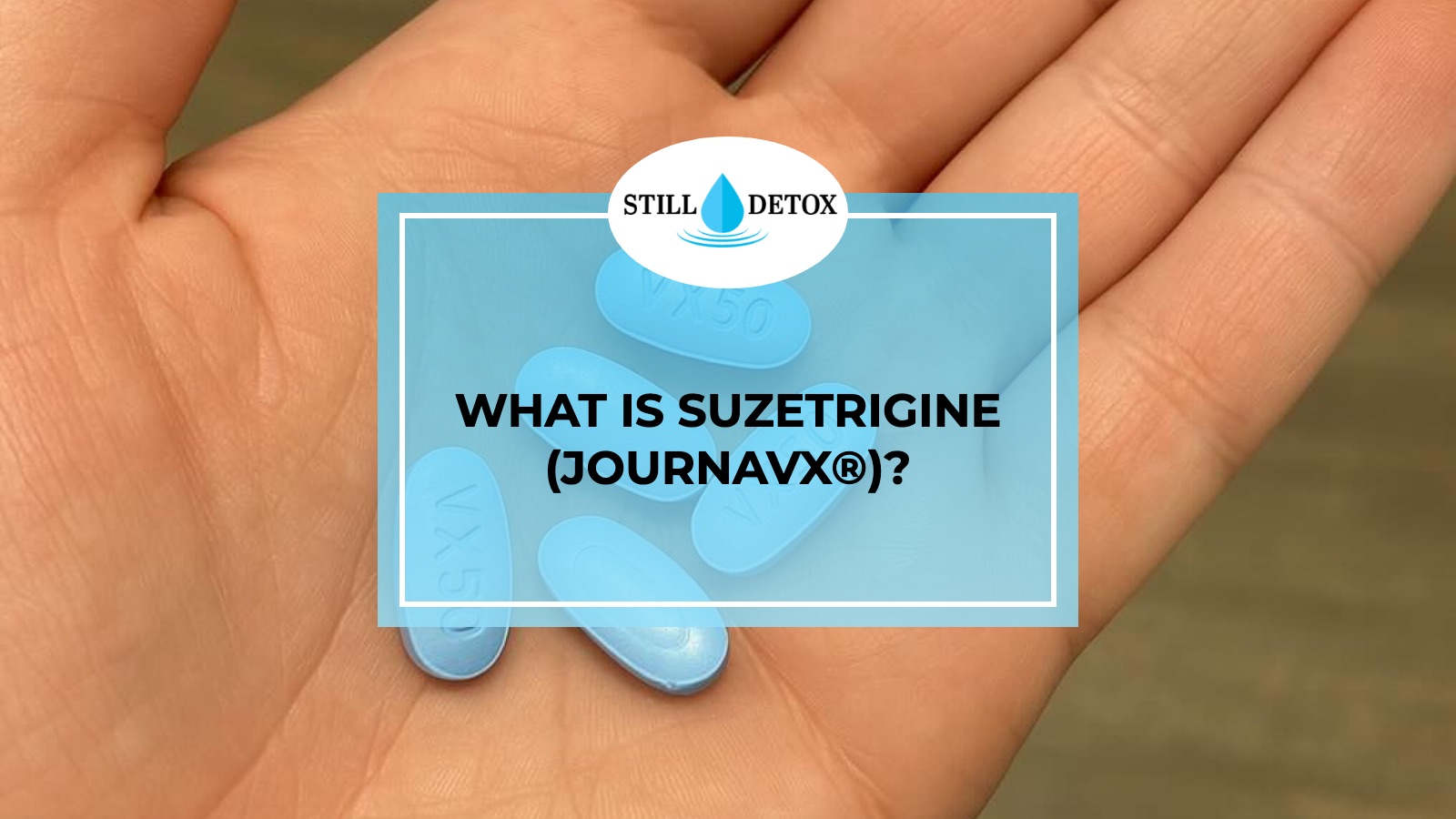
Suzetrigine (JOURNAVX®) arrived in 2025 as a genuinely different kind of pain medicine: a non-opioid tablet for short-term, moderate-to-severe acute pain in adults. It works on the NaV1.8 sodium channel out on the pain-sensing nerves rather than the brain’s opioid receptors, which is one reason the FDA did not place it under the Controlled Substances Act. In other words, it was designed to help with post-procedure pain without the classic opioid trade-offs of euphoria, respiratory depression, and opioid-type dependence.
That clinical story is encouraging and gives hope, especially for people in recovery who still need adequate pain control, but it also raises a practical question: what happens in the real world once a new pain drug exists? Below we look at the addiction and diversion angle with the same care we would for any newly launched analgesic: what the data show about abuse potential, how nonmedical demand might emerge anyway, and where people tend to look when they try to obtain prescription drugs outside normal channels.
What the science says about addiction potential
The FDA’s multidisciplinary review; spanning chemistry, pharmacology, and clinical data, concluded that suzetrigine does not demonstrate abuse liability and should not be scheduled as a controlled substance. Human abuse-potential work did not show opioid-like reinforcing effects, and the label reflects that assessment. Independent reviews of the mechanism (NaV1.8 blockade in peripheral nociceptors) point in the same direction: the drug is not expected to produce the euphoria or cravings associated with mu-opioid agonists.
That said, “low abuse liability” is not the same as “no risk ever.” History reminds us that even non-controlled analgesics can acquire a nonmedical following for reasons that have little to do with classical addiction; curiosity, attempts to “potentiate” other drugs, self-experiments when misinformation spreads, or simple availability. (Gabapentinoids are a well-known example: not scheduled federally for years, yet widely misused in some settings to enhance other substances.) Suzetrigine’s mechanism and trial profile make those patterns less likely, but the general lesson remains useful: once a medicine is on the market, motives for misuse can be surprisingly creative.
How nonmedical interest tends to start
Early in a drug’s life cycle, nonmedical demand usually comes from stories rather than science: a friend of a friend who “felt great on it,” a social post that overpromises, or a blog that confuses “non-opioid” with “risk-free.” Price and access also shape behavior; if a drug is new and insurance coverage is inconsistent, people sometimes go hunting for “deals.” Those searches commonly use broad phrases; “buy [drug] online,” “[drug] without prescription,” “overnight shipping” and often lead to the same ecosystem that has pushed fake “Xanax,” “Adderall,” and “oxy” for years: rogue online pharmacies, social-media DMs, and pop-up e-commerce sites that imitate real pharmacies. Public-health and law-enforcement briefings have repeatedly shown how these sellers operate and how often the pills aren’t what they claim to be.
That’s the paradox with a medicine like suzetrigine. The abuse-liability profile is favorable, yet counterfeit risk isn’t about the molecule at all it’s about the marketplace. When demand meets unregulated supply, what’s in the tablet becomes guesswork. The FDA and DEA have documented a surge of counterfeit prescription pills in recent years, many of them pressed with fentanyl or methamphetamine and sold as brand-name or generic medications. Even if a site claims to sell a non-opioid pain pill, the counterfeit risk is still real, because counterfeiters copy whatever is in demand.
Where people try to purchase outside the system and why that’s risky
- Rogue “pharmacies” on the open web. These sites often advertise dramatic discounts or “no prescription needed,” mimic real pharmacy branding, and ship from unknown locations. Regulatory sweeps and warning letters appear regularly because the vast majority of online pharmacies operate illegally, and many sell unapproved or counterfeit drugs.
- Social platforms and messaging apps. Sellers move quickly, change handles, and route payments through multiple services. DEA’s counterfeit-pill campaign highlights how pills sourced this way frequently contain unexpected and dangerous substances.
- Cross-border “discount” outlets. Even when a website uses the language of Canadian or international pharmacies, U.S. agencies warn that many are not licensed and may ship substandard or counterfeit products. Trade and customs shifts in 2025 also increased scrutiny on mail-order drugs.
For a new pain drug, the most common harm we see early on isn’t addiction in the classical sense; it’s poisoning from counterfeit tablets and complications from unmonitored use alongside other prescriptions.
The counterfeit problem is larger than any one drug class; it’s a supply-chain reality.
Signs that use is drifting from medical to problematic
With suzetrigine specifically, the red flags we’ve heard in clinics aren’t about craving a “high.” They sound more like this: taking it beyond the typical post-procedure window “just in case,” using it to avoid addressing anxiety or insomnia that followed surgery, or combining it impulsively with other medications because an online post promised synergy. When the goal shifts from managing acute pain to managing feelings or boosting another drug, it’s worth pausing for a conversation. People also tell us they feel uneasy when they start shopping for extra tablets outside their prescription, refreshing dubious websites, considering a “trial order,” or hiding purchases from family. Those moments are understandable, and they’re also workable signals that support could help.
What a recovery-safe pain plan can look like
Many patients; especially those with a history of substance use, prefer to line up a plan ahead of time so there’s less scrambling when pain actually arrives. In practice, that often means setting expectations for the short suzetrigine course, pairing it with non-opioid basics (acetaminophen/NSAIDs when appropriate), leaning on local measures (nerve blocks, ice/heat, splints), and checking in if pain is running hotter or longer than expected. If someone is on medications for opioid or alcohol use disorder or takes antidepressants, mood stabilizers, or stimulants; team-based review helps catch interactions (CYP3A inhibitors/inducers and some hormonal contraceptives are the main watch-outs in the label). The through-line is simple: steadiness tends to come from clarity and collaboration, not from gritting your teeth alone.
FAQ
Can suzetrigine cause addiction?
Current FDA analyses and human abuse-potential data indicate no evidence of abuse liability, and JOURNAVX is not controlled under the CSA. That’s different from opioids. Even so, any prescription pain plan deserves thoughtful follow-up so short-term use doesn’t drift into “use for other reasons.”
Why do people search for it online if it isn’t addictive?
Usually because it’s new, marketed as non-opioid, and sometimes not yet covered predictably by insurance. Curiosity, price, and access drive a lot of online searching, which unfortunately funnels people toward rogue sellers and counterfeits.
Are counterfeits really a concern for a non-opioid drug?
Yes. Counterfeiters imitate whatever is popular or profitable, not just opioids. Federal agencies have documented widespread counterfeit prescription pills sold online and via social media; contents can include fentanyl or methamphetamine even when the pill looks legitimate.
What if I’m in recovery and need post-op pain control?
Many people in recovery do well with a plan that uses non-opioid options first, including suzetrigine when appropriate, plus local anesthesia and non-drug supports. If worries about relapse or interactions are getting loud, that’s a good moment to loop in a clinician who understands both pain care and substance use recovery so the plan feels safe to you. (If it helps, our team can coordinate those details with your surgeon.)
References
- FDA approval of JOURNAVX (suzetrigine) for acute pain.
- FDA Controlled Substances Staff (CSS) review.
- Mechanism of suzetrigine (NaV1.8 inhibition) and abuse-related findings – Osteen JD et al., 2025.
- JOURNAVX HCP brochure (not controlled; no evidence of addictive potential in available data).
- DEA “One Pill Can Kill” (counterfeit prescription pill threat, 2025 update).
- FDA: Counterfeit medicine risks and reporting.
- (Context) Diversion of prescription medicines & online pharmacy risk – AAFP overview; see also FDA warning-letter updates.
- Non-opioid analgesics: landscape and rationale – Pulskamp TG et al., 2024/2025.
If you’re still struggling on your pain medication addiction and want to change your life, our clinicians are glad to talk through options, timing, and interactions at your pace: send a note or call (561) 556-2677.
Feeling heard is part of feeling better.