

Alcoholic gastritis is irritation and inflammation of the stomach lining caused by drinking alcohol, and it can bring pain or discomfort in the upper belly, nausea, vomiting and, in some cases, bleeding in the stomach. Alcohol is one of the most common substances that irritate the stomach lining.
Most people with gastritis have no symptoms, according to NIDDK, so the warning signs of bleeding and the safe way to stop drinking matter more than waiting for pain.
What is alcoholic gastritis?
Alcoholic gastritis is inflammation of the stomach lining caused by alcohol. NIDDK lists alcohol among the irritating substances behind acute erosive gastropathy, in which the stomach lining quickly develops erosions, ulcers and bleeding.
Gastritis means the stomach lining, called the mucosa, is inflamed. When the lining is damaged with little or no inflammation, doctors call it gastropathy. This article uses "gastritis" for both.
There are 2 ways doctors describe how long gastritis lasts:
- Acute gastritis: Acute gastritis develops suddenly and lasts a short time.
- Chronic gastritis: Chronic gastritis develops slowly and can linger for months to years.
Reactive gastropathy, the type caused by contact with irritating substances such as alcohol and NSAIDs, occurs in about 15% of people in the United States, according to NIDDK.
How does alcohol damage the stomach lining?
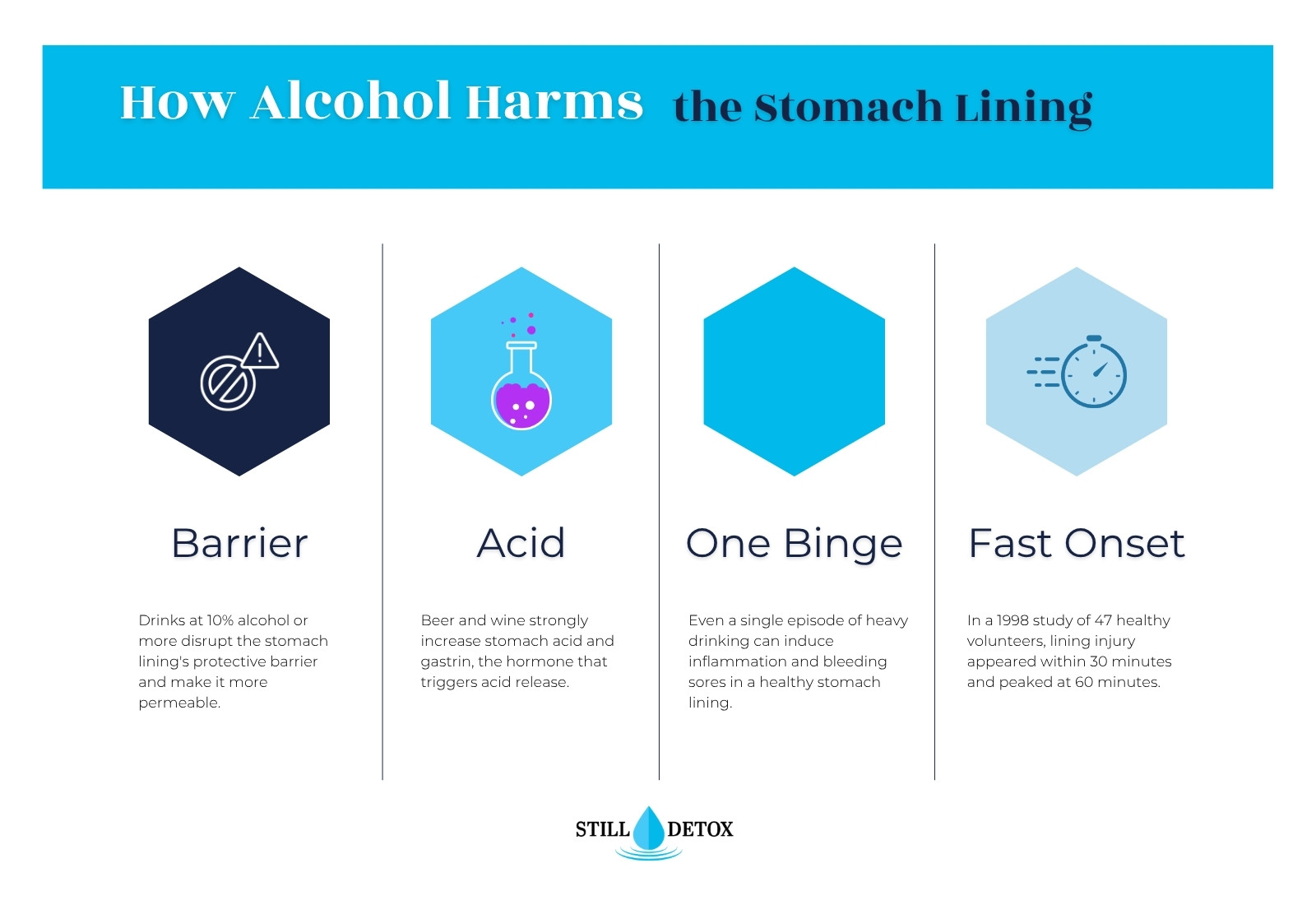
Alcohol at a concentration of 10% or more disrupts the protective barrier of the stomach lining and makes it more permeable. Even one episode of heavy drinking can inflame the lining and cause bleeding sores, according to a review published by NIAAA.
Low or moderate amounts of alcohol do not cause this damage in healthy people, but the amount needed varies between drinkers and depends on whether they drink on an empty stomach. Prolonged drinking also disturbs the small blood vessels in the lining and leads to progressive damage.
NIAAA defines binge drinking as a pattern of drinking that brings blood alcohol concentration to 0.08% or higher. For a typical adult, that pattern means 5 or more drinks for men, or 4 or more drinks for women, in about 2 hours.
Alcohol damage to the stomach lining starts fast. In a 1998 study of 47 healthy volunteers, stomach lining injury appeared within 30 minutes of drinking and peaked after 60 minutes, and none of the volunteers reported any belly pain. A 1997 review published by NIAAA noted that researchers had not yet determined exactly how alcohol damages the lining.
Beer and wine, which the 1997 NIAAA review describes as having a lower alcohol content, strongly increase stomach acid and the hormone that triggers it.
What are the symptoms of alcoholic gastritis?
Symptoms of alcoholic gastritis may include pain or discomfort in the upper abdomen, nausea and vomiting, according to NIDDK. NIDDK also notes that the majority of people with gastritis have no symptoms at all.
There are 6 symptoms NIDDK lists for gastritis:
- Upper belly pain: Pain or discomfort in the upper abdomen.
- Nausea or vomiting: Feeling sick to the stomach, or throwing up.
- Early fullness: Feeling full too soon during a meal.
- Too full after meals: Feeling too full after eating.
- Poor appetite: Loss of appetite.
- Weight loss: Losing weight.
Pain or discomfort in the upper abdomen, the first gastritis symptom NIDDK lists, is the medical name for what many people call stomach pain or burning after drinking.
When is stomach pain after drinking an emergency?
Stomach pain after drinking is an emergency when it comes with signs of bleeding. NIDDK advises seeking medical help right away for symptoms of stomach bleeding.
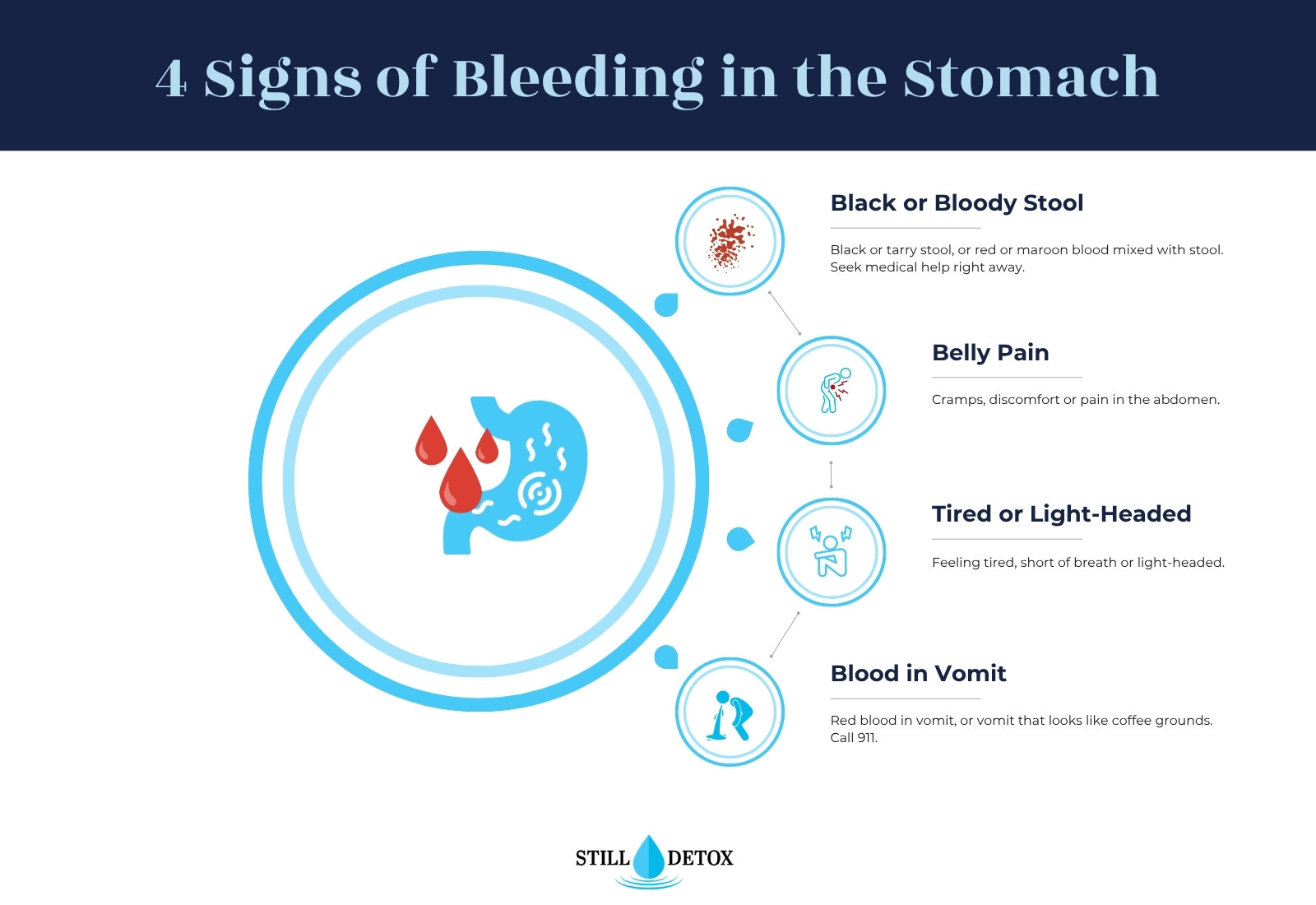
There are 4 signs of bleeding in the stomach, according to NIDDK:
- Black or bloody stool: Black or tarry stool, or red or maroon blood mixed with stool.
- Belly pain: Cramps, discomfort or pain in the abdomen.
- Tired, breathless or light-headed: Feeling tired, short of breath or light-headed.
- Blood in vomit: Red blood in vomit, or vomit that looks like coffee grounds.
What else causes gastritis besides alcohol?
Gastritis also comes from H. pylori bacteria, NSAID pain relievers such as ibuprofen, aspirin and naproxen, bile reflux, cigarette smoking, and serious illness. The primary cause of chronic gastritis is H. pylori infection, according to StatPearls.
About 35% of people in the United States carry H. pylori, according to NIDDK. Stress gastritis is a separate form caused by severe injuries, burns, critical illness or sepsis, which reduce blood flow to the stomach lining.
Why are ibuprofen and aspirin riskier when you drink?
Ibuprofen and aspirin are riskier when you drink because both are NSAIDs, and the FDA-required label warns that an NSAID "may cause severe stomach bleeding." The Drug Facts label on Advil and on Bayer aspirin says the chance of stomach bleeding is higher if you have 3 or more alcoholic drinks every day while using the product.
A review published by NIAAA adds that aspirin and ibuprofen may make alcohol-related stomach sores worse.
How do doctors diagnose alcoholic gastritis?
Doctors diagnose alcoholic gastritis with a physical exam and may order an upper GI endoscopy with biopsies or other tests. StatPearls notes gastritis is difficult to diagnose from symptoms alone, so an exam of the lining itself is needed.
There are 4 tests doctors may use:
- Upper GI endoscopy: A flexible tube with a camera lets the doctor see the lining of the esophagus, stomach and duodenum.
- Blood tests: Blood tests check for other causes of gastritis or signs of complications, and a complete blood count (CBC) checks for anemia.
- Stool tests: Stool tests check for H. pylori and for blood in the stool.
- Urea breath test: A breath test checks for H. pylori infection.
How is alcoholic gastritis treated?
Alcoholic gastritis is treated by removing the irritant, which means stopping alcohol, and doctors may prescribe proton pump inhibitors (PPIs) or H2 blockers to reduce stomach acid. Treatment depends on the type of gastritis and its cause.
There are 4 treatments doctors use, depending on the cause:
- Stopping alcohol: Treatment includes removing contact with the irritating substance, which for alcoholic gastritis means alcohol. People with severe AUD may need medical help to stop, because alcohol withdrawal is potentially life-threatening after heavy drinking over a long period, according to NIAAA.
- Acid reducers: PPIs, H2 blockers and antacids lower the amount of acid in the stomach.
- Treating H. pylori: A combination of medicines kills H. pylori bacteria when the infection is present.
- Treating bleeding: Doctors may stop severe bleeding during an upper GI endoscopy, or with surgery in severe cases.
Always talk to your health care provider before stopping any medicine, including a pain reliever you take every day.
"Stopping alcohol is what gives the stomach lining a chance to heal, but after months of heavy drinking, stopping suddenly can bring on seizures. That is why we want people to stop with medical support, not alone."
Britney Marshall, RN, Director of Nursing, Still Detox
People who drink heavily in South Florida can start with alcohol addiction treatment in Boca Raton, where medical detox includes 24/7 nursing, CIWA-Ar assessments and vital signs checked every 4 hours.
What complications can alcoholic gastritis cause?
Alcoholic gastritis produces peptic ulcers in some people and bleeding in the stomach, which is most often mild but may be severe. People with AUD also develop shrinkage of the stomach lining, called atrophy, significantly more often than healthy people of the same age and sex.
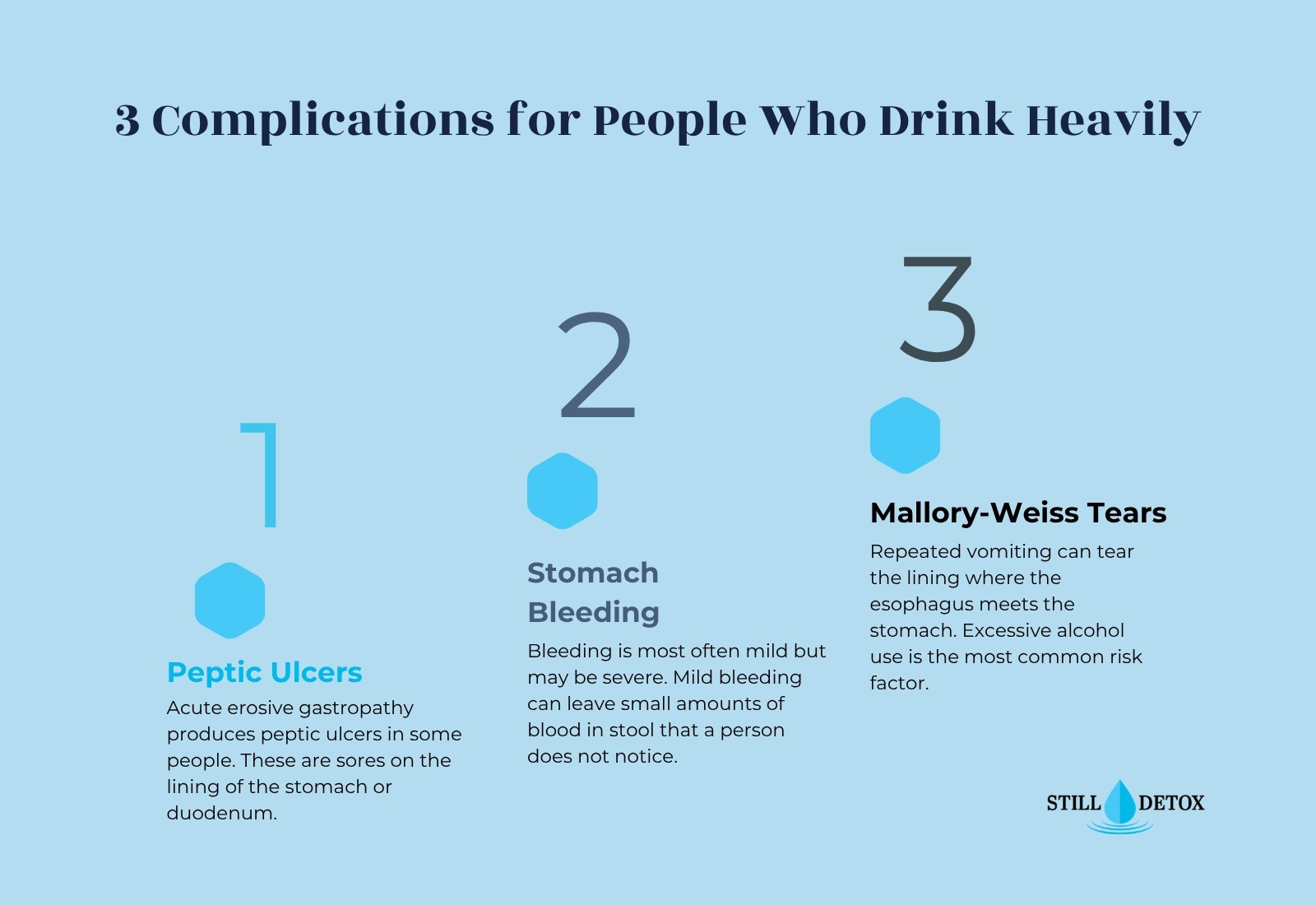
There are 3 complications to know about for people who drink heavily:
- Peptic ulcers: Acute erosive gastropathy produces peptic ulcers in some people, which are sores on the lining of the stomach or duodenum.
- Bleeding: Mild bleeding can leave small amounts of blood in stool that a person does not notice, called occult bleeding.
- Mallory-Weiss tears: Repeated vomiting can tear the lining where the esophagus meets the stomach, and excessive and chronic alcohol use is the most common risk factor, found in 50% to 70% of cases.
Two long-term types of gastritis, chronic H. pylori gastritis and autoimmune gastritis, raise the chance of growths in the stomach lining that may be benign or may be stomach cancer, according to NIDDK.
Is it safe to stop drinking on your own?
Stopping on your own is not safe for everyone. NIAAA states that alcohol withdrawal is potentially life-threatening for people who have been drinking heavily for a long time and then suddenly stop, and people with severe alcohol use disorder (AUD) may need medical help.
The alcohol withdrawal timeline starts within hours of the last drink, when signs may appear, and symptoms peak around 72 hours. Alcohol withdrawal seizures typically occur between 8 and 48 hours after stopping, and about 3% to 5% of people in withdrawal progress to alcohol withdrawal delirium, formerly called delirium tremens.
Clinicians use the CIWA-Ar scale to rate withdrawal severity. StatPearls defines mild withdrawal as a CIWA-Ar score of 8 or less, and moderate to severe withdrawal needs inpatient care with frequent reassessment.
NIAAA considers alcohol use disorder (AUD) a brain disorder that can be mild, moderate or severe, a definition that reflects how alcohol affects the brain.
If you live in New Jersey, Philadelphia or Delaware, the Mays Landing facility provides alcohol rehab and detox in Atlantic County, New Jersey, with 24/7 nursing, IV fluids and nutritional support during detox.
What else do people ask about alcoholic gastritis?
How long does alcoholic gastritis last?
NIDDK, MedlinePlus and StatPearls do not give a fixed healing time for alcoholic gastritis in people who drink heavily. In a 1998 study of healthy volunteers given a single drink, damage from drinks stronger than 10% alcohol took more than 24 hours to heal. Acute gastritis lasts a short time, while chronic gastritis can linger for months to years.
Does gastritis go away if you stop drinking?
Gastritis caused by alcohol is treated by removing contact with alcohol, and MedlinePlus notes that some causes of gastritis go away over time. The outlook depends on the cause but is often very good. People with severe AUD may need medical help to stop drinking, because NIAAA calls alcohol withdrawal potentially life-threatening after heavy drinking over a long period.
What does alcoholic gastritis feel like?
Alcoholic gastritis can feel like pain or discomfort in the upper abdomen, with nausea, vomiting or feeling full too soon during a meal, according to NIDDK. Many people feel nothing at all.
Why does my stomach still hurt 2 days after drinking?
Stomach pain 2 days after drinking can come from gastritis, because NIDDK names drinking a large amount of alcohol as a cause of acute erosive gastropathy. In a 1998 study of healthy volunteers, lining damage from drinks stronger than 10% alcohol took more than 24 hours to heal. Pain in the upper belly that does not go away is a reason to contact a health care provider, according to MedlinePlus.
What is the worst alcohol for gastritis?
Lower-strength and stronger drinks act on the stomach in different ways, according to a 1997 review published by NIAAA. Beer and wine strongly increase stomach acid, and drinks at 10% alcohol or more disrupt the stomach lining's barrier.
How do I know if alcohol has damaged my stomach?
Only a doctor can confirm damage, often with an upper GI endoscopy, because gastritis is hard to diagnose from symptoms. Signs of bleeding, such as black stools or vomit that looks like coffee grounds, need medical help right away.
Can I ever drink alcohol again with gastritis?
MedlinePlus advises avoiding long-term use of substances that irritate the stomach, such as aspirin, anti-inflammatory drugs or alcohol. The amount of alcohol that injures the stomach varies from person to person, and none of the medical sources cited here sets a safe amount for someone with gastritis.
Sources
- National Institute of Diabetes and Digestive and Kidney Diseases. (2019, August). Gastritis & gastropathy (definition and facts; symptoms and causes; diagnosis; treatment). National Institutes of Health. niddk.nih.gov
- MedlinePlus. (2025, January 24). Gastritis. National Library of Medicine. medlineplus.gov
- Azer, S. A., Awosika, A. O., & Akhondi, H. (2024). Gastritis. In StatPearls. StatPearls Publishing. ncbi.nlm.nih.gov
- Bode, C., & Bode, J. C. (1997). Alcohol's role in gastrointestinal tract disorders. Alcohol Health and Research World, 21(1), 76-83. ncbi.nlm.nih.gov
- Knoll, M. R., Kölbel, C. B., Teyssen, S., & Singer, M. V. (1998). Action of pure ethanol and some alcoholic beverages on the gastric mucosa in healthy humans. Endoscopy. pubmed.ncbi.nlm.nih.gov
- Roberts, D. M. (1972). Chronic gastritis, alcohol, and non-ulcer dyspepsia. Gut, 13(10), 768-774. ncbi.nlm.nih.gov
- Kassama, Z., & Goosenberg, E. (2025). Mallory-Weiss syndrome. In StatPearls. StatPearls Publishing. ncbi.nlm.nih.gov
- Required warnings for OTC internal analgesic products, 21 C.F.R. § 201.326 (2026); and Advil (ibuprofen) Drug Facts label, DailyMed. dailymed.nlm.nih.gov
- National Library of Medicine. (2025, December 5). Bayer Aspirin Extra Strength caplets (aspirin) [Drug Facts label]. DailyMed. dailymed.nlm.nih.gov
- National Institute on Alcohol Abuse and Alcoholism. (2025). Alcohol's effects on the body and Understanding alcohol use disorder. National Institutes of Health. niaaa.nih.gov
- National Institute on Alcohol Abuse and Alcoholism. (2026, January). Understanding alcohol drinking patterns. National Institutes of Health. niaaa.nih.gov
- Canver, B. R., & Gomez, A. E. (2024). Alcohol withdrawal syndrome. In StatPearls. StatPearls Publishing. ncbi.nlm.nih.gov
- MedlinePlus. (2025, January 1). Alcohol withdrawal. National Library of Medicine. medlineplus.gov